
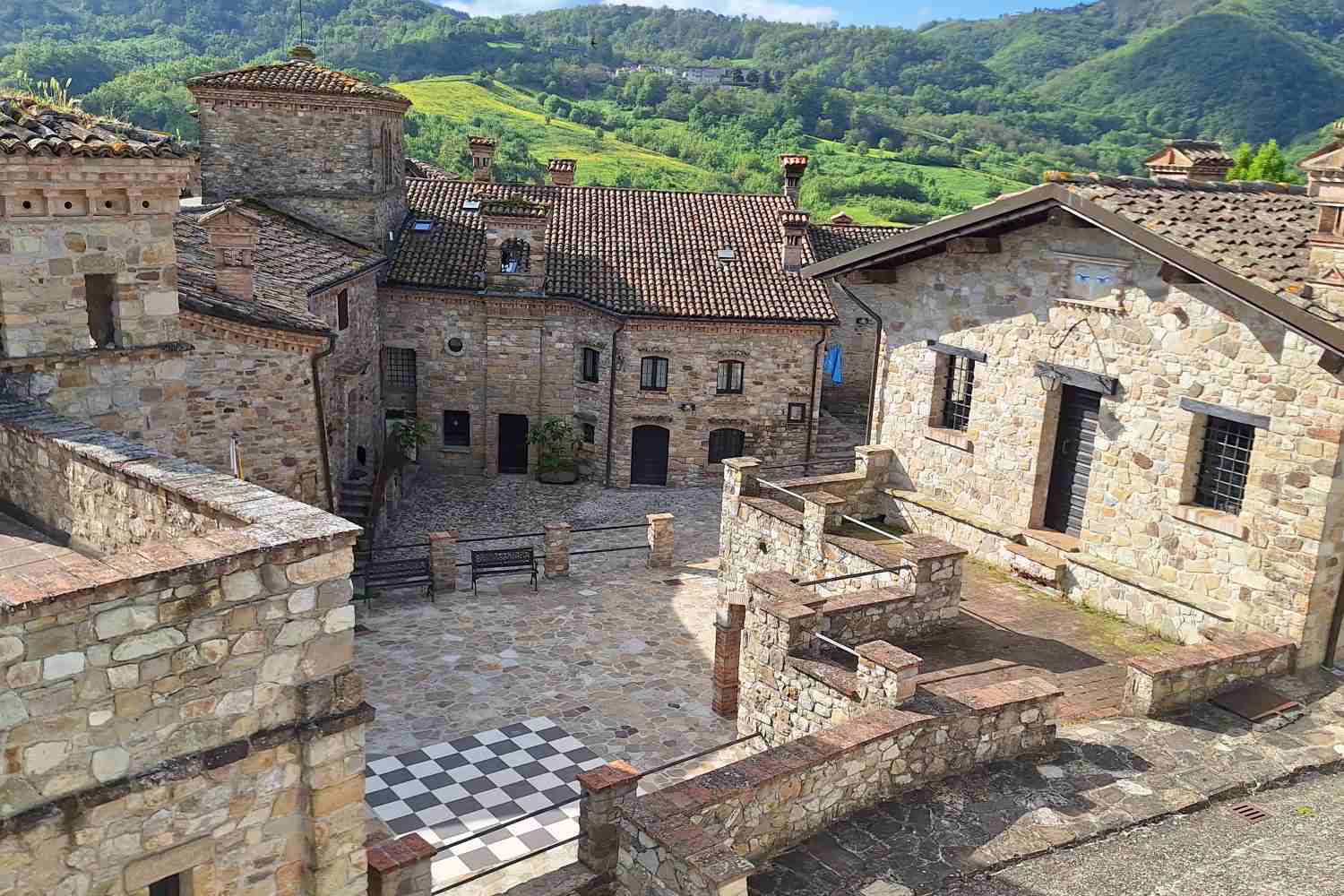
On one of our camper trips we decided to visit a place in the hills of Reggio Emilia whose name alone promised something special: Votigno di Canossa, a small medieval village named a World Heritage Site by UNESCO. Immersed in an uncontaminated and silent landscape, Votigno is a perfectly preserved corner of history, where time seems to have stopped in the Middle Ages.
Once we reached the hills, the village appeared almost suddenly: all around there was only greenery and nature. We parked the camper in one of the free spaces just outside the village and the view immediately left us and our kitten Charlie speechless. In fact, in the midst of greenery, a small rise in the car park offered a small glimpse of Votigno which at first glance seemed magnificent.
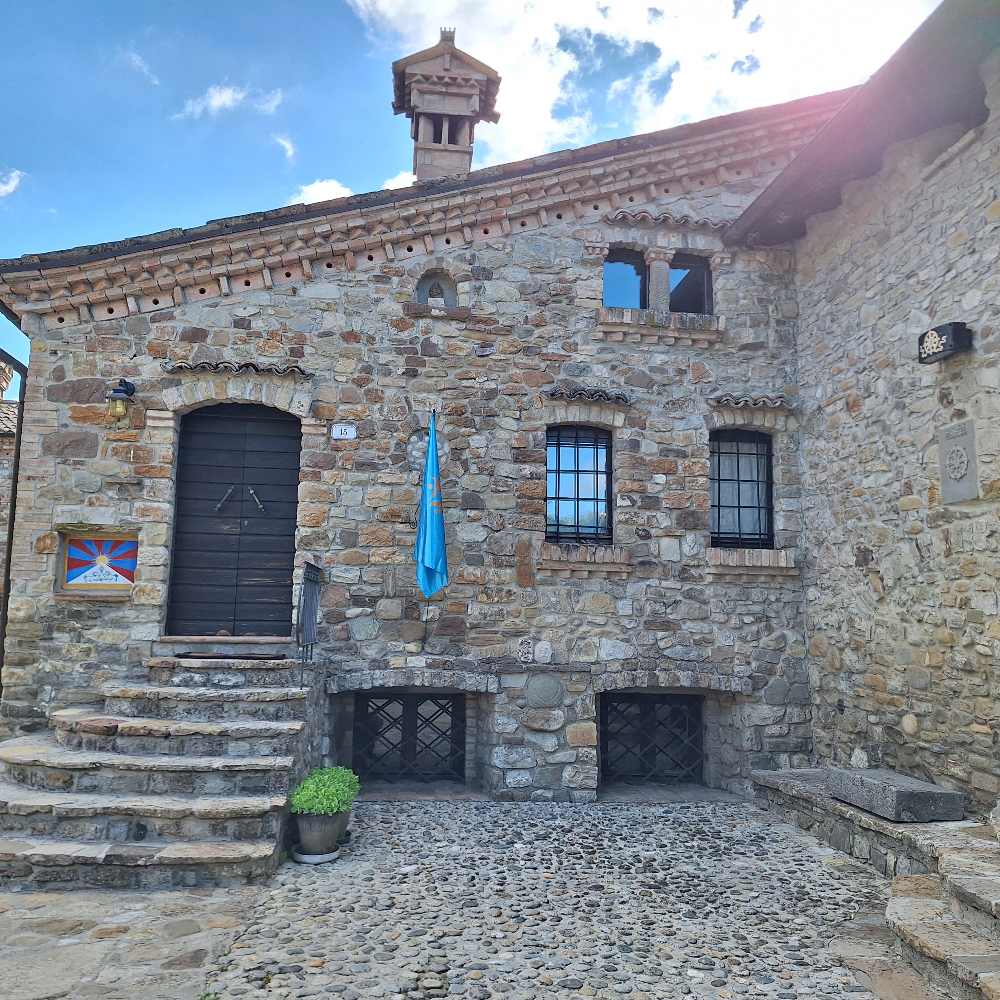
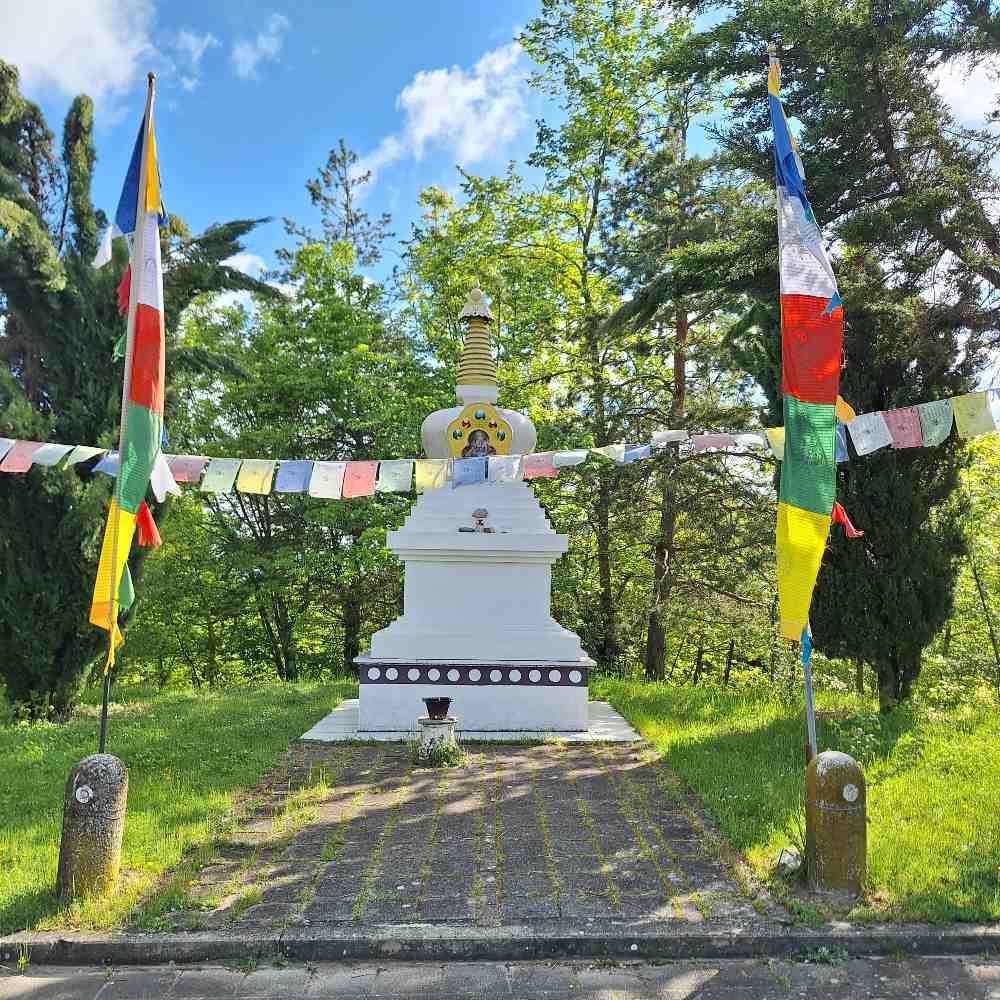
Welcoming us are the typical symbols of Buddhism
Even before entering the village, we were greeted by a statue of Buddha framed by colorful Tibetan flags, red, green, yellow, blue and white, which fluttered in the wind creating a surprisingly oriental atmosphere and by a white stupa, symbols of Tibetan culture, which made us understand that our experience would not only be medieval but also spiritual.
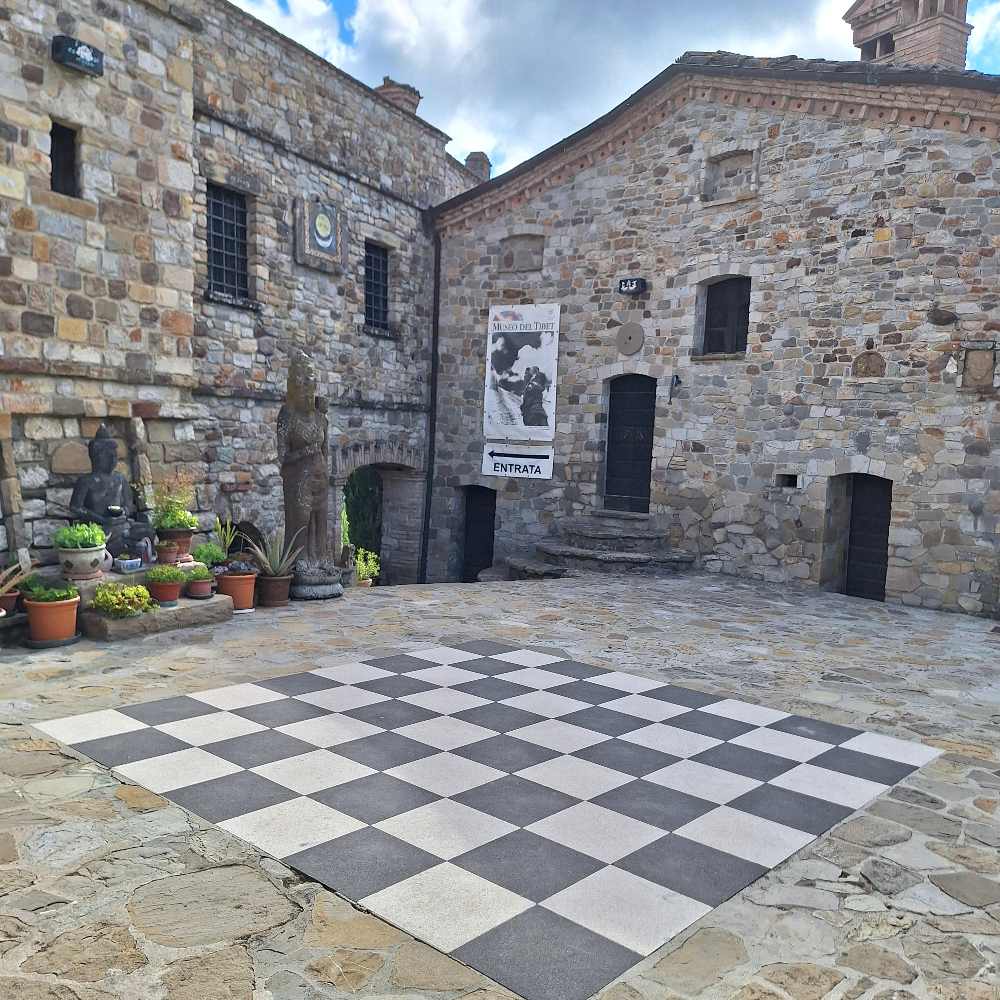
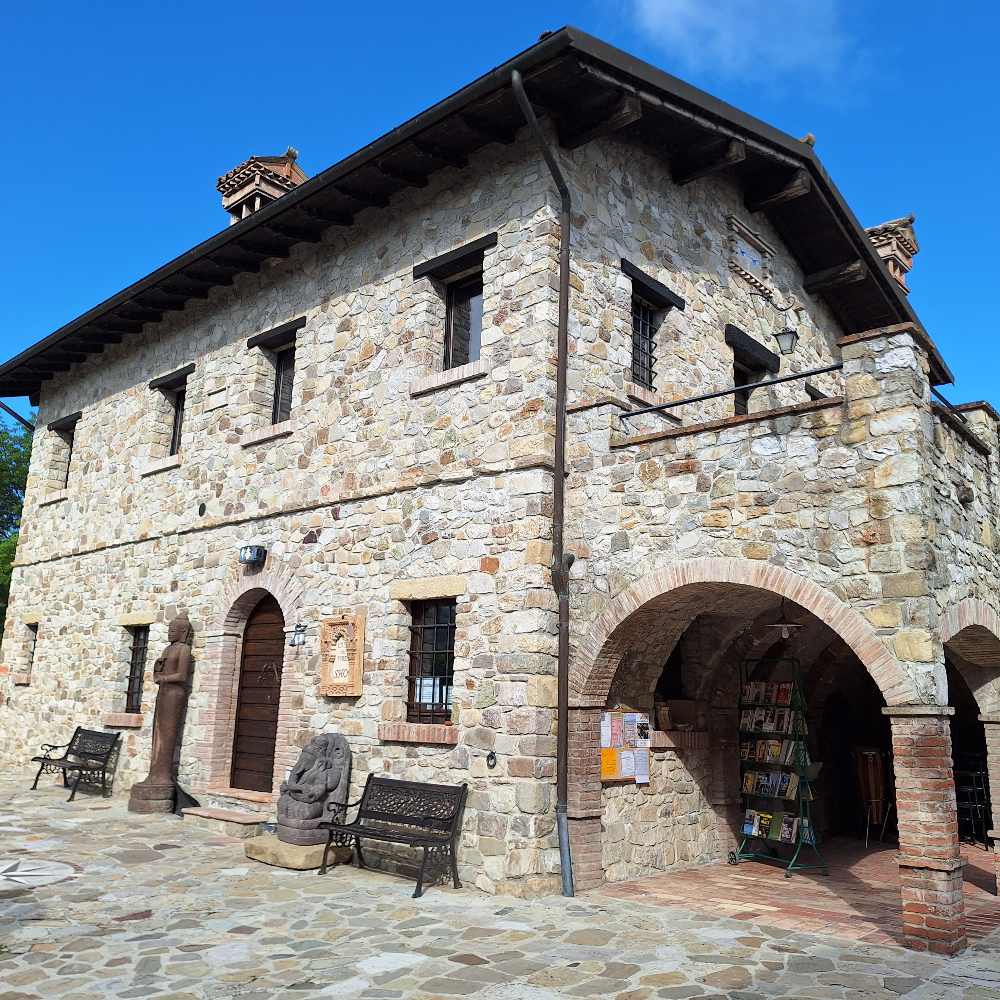
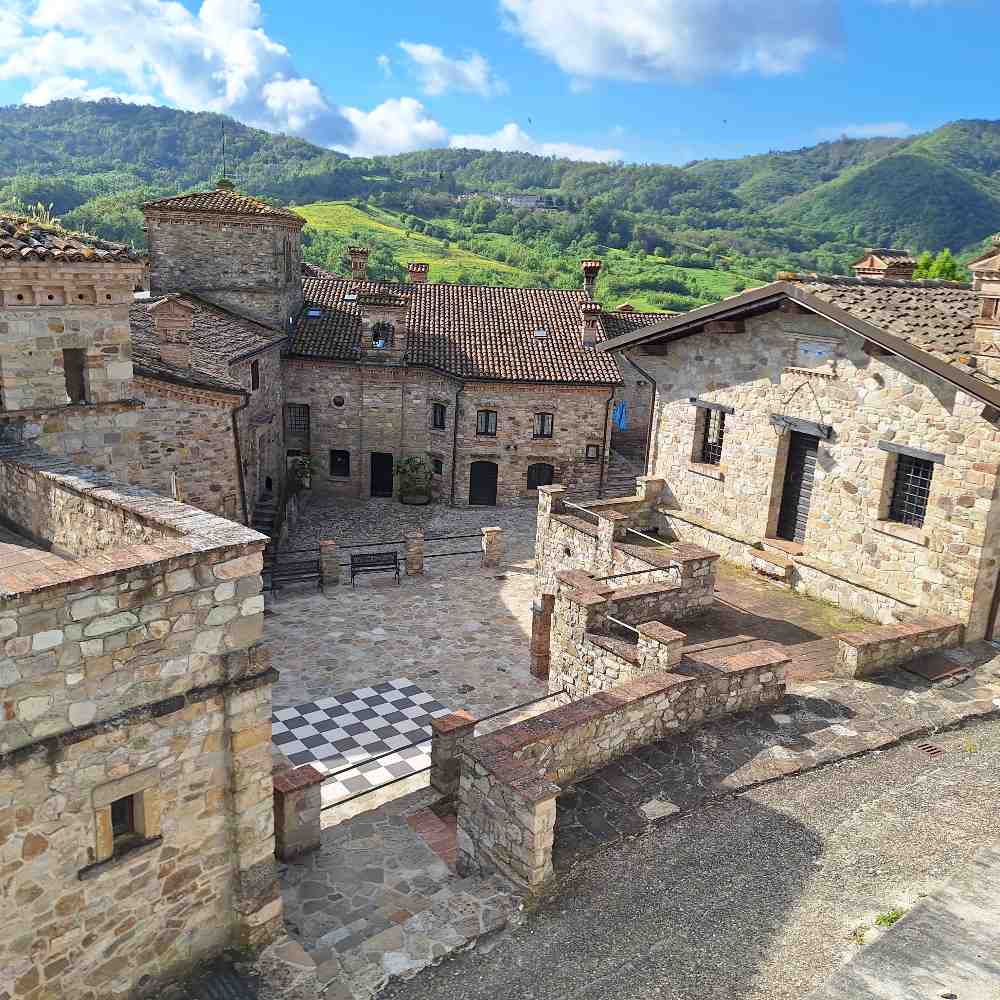
Passing through the gate, the plaques with phrases of great oriental thinkers accompanied us towards the heart of the village, where statues, sculptures and symbols typical of Buddhism awaited us. The village is small, but incredibly well-kept: between the stone buildings and the central square there is a huge human-sized chessboard, surrounded by statues of Buddha, which reminded me a lot of the chess scene in the first film by Harry Potter.
The Tibet House also visited by the Dalai Lama
The highlight of the village is certainly the Casa del Tibet, a cultural center founded in 1990 by the Reggio Emilia doctor Stefano Dallari to preserve and spread Tibetan culture. Not many people know that this place had the honor of hosting the Dalai Lama in 1999, during his stay in the lands of Canossa. The spiritual Master’s visit left an indelible mark: photographs, objects and memories are still on display, making the Tibet House an authentic living museum of spirituality.
Here you can observe statues, mandalas, traditional clothing and ancient manuscripts, while anecdotes are told about the life of the Dalai Lama and Dr. Dallari’s cultural expeditions to Tibet. The atmosphere is so immersive that you feel transported away from your everyday life, almost truly in Asia.
A medieval village between history and spirituality
In addition to the House of Tibet, Votigno retains traces of its medieval history. The watchtower and stone walls recall the strategic role of the village during the period of Matilda of Canossa, when these hills served as a refuge and military defense. The restorations of the 1960s, carried out by artisans and volunteers, brought Votigno back to its former glory, allowing you to walk through silent alleys and small squares that seem suspended in time.
Walking among the buildings, we discovered corners dedicated to spiritual figures such as Gandhi, as well as themed shops where we could purchase Tibetan objects such as bracelets, incense and small works of art. The combination of history, spirituality and nature makes this village a unique place, capable of surprising even those who, like us, travel often.
Practical advice for the visit
For those wishing to visit Votigno di Canossa, I recommend checking the availability of the Casa del Tibet, open on Sunday afternoons with an entrance fee of 3 euros. The village can also host private events, weddings or parties, which is why it may sometimes not be accessible to the public.
And then what can I say: let yourself be guided by the silence of the hills and the calm of the places: every step between the medieval streets and the Tibetan symbols will make you feel far away from time and space, in a surprisingly Asian corner of Italy. Votigno di Canossa is a village that combines history, art and spirituality and which makes this little journey something to remember and keep in your heart forever.
You might also be interested in:
