
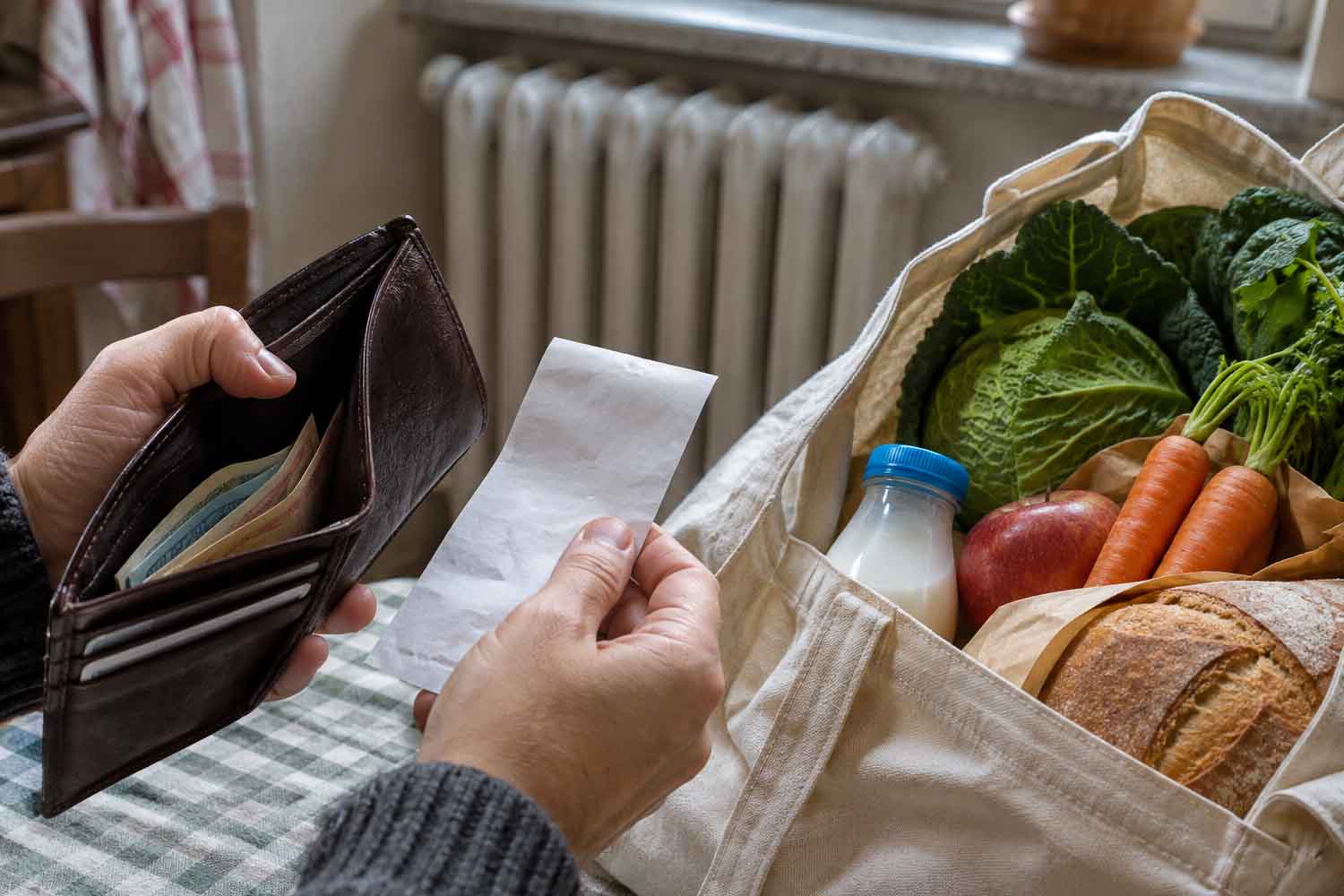
Energy costs 31.9% more than a year ago, fresh food costs 7.5% and Italian inflation starts running again, reaching 5.5% in October 2026, against 4.2% in September. An acceleration of 1.3 percentage points in just one month, which brings the cost of living back to just above the levels of August 2023. And we are already in the period in which the heating is turning back on.
It is Istat who put these numbers on paper, which on 17 November 2026 published the definitive data on consumer prices, also correcting the preliminary estimate of 5.4% upwards. Compared to September, the general price index increased by 1%. Energy and food are especially important, followed by transport and the products we purchase most frequently.
The problem is that this new outbreak comes when many families have already begun to change their habits to contain expenses. And from supermarkets to bills, the margin for saving is becoming increasingly narrow.
Energy, prices rising by 31.9%: this is who is driving inflation
The main culprit for the acceleration is the energy sector. In September prices were 22.6% higher than the same month in 2025. In October the annual increase reached 31.9%, still influenced by international geopolitical tensions. The growth is particularly marked for regulated energy products, which went from +25.8% in September to +61.6% in October. Even unregulated ones, which include energy sold on the free market and fuel, recorded an acceleration, from +22.5% to +29.8%.
And we’re not just talking about comparisons with the previous year. In one month, regulated energy increased by 20.3%, unregulated energy by 5.3%. Italy, moreover, continues to depend significantly on energy imports and fluctuations in international markets. A vulnerability that we have known about for years and that comes back to bite every time gas and oil become more expensive.
Geopolitics explains an important part of what is happening. As for managing the consequences, however, political choices also come into play. The Meloni Government has the responsibility to decide which tools to use to protect incomes and contain the impact of price increases. And while the 2027 budget law is being discussed, the Istat numbers add a rather concrete problem to the economic agenda.
The shopping cart rises to 2.3%, fresh foods to 7.5%
Even at the supermarket, prices continue to rise. The so-called shopping cart, which includes food and home and personal care products, recorded an annual increase of 2.3%, compared to 1.5% in September. A figure apparently lower than general inflation, which however hides much more significant increases in some categories. Unprocessed food, for example, increased by 7.5% compared to October 2025, while in September growth stood at 5.5%. We are talking about fresh products, such as fruit, vegetables, meat and fish, which regularly end up on our tables.
The prices of high-frequency purchase products, however, grew by 5.8%, compared to 5.2% in the previous month. A category that includes various goods and services purchased often, from food to fuel. And if the cart increases less than the general index, it simply means that the different product categories have different weights in the statistical calculation. For those who frequently purchase fresh food, the checkout experience can be very different from the national average.
Almost three in ten families had already reduced their food spending
There is another Istat data that makes this new acceleration particularly worrying. According to the report on household consumption expenditure in 2025, published last October, 29.4% of Italian families had already limited their food spending, reducing the quantity or quality of the products purchased. Almost three out of ten families. The figure was a slight improvement compared to the 31.1% of 2024, but still described a situation in which a significant part of the population had already begun to give up an essential need.
In 2025, families spent an average of 552 euros per month on food and non-alcoholic drinks, compared to 533 euros the previous year. A growth of 3.6%, also influenced by the increase in prices. The situation is particularly delicate in the South. In Southern Italy, in fact, food absorbed 25.4% of overall family spending, compared to a national average of 19.8%.
It means that for many families a significant portion of their disposable income is already allocated to purchases that are difficult to postpone. When you increase energy and food at the same time, the space for everything else is reduced. And the 29.4% figure concerns 2025, therefore precedes the new acceleration in prices recorded in autumn 2026.
Rising prices and falling savings: how much margin do families have left?
The trend in savings also suggests that Italian families are going through a complicated phase. According to Istat’s quarterly accounts, in the second quarter of 2026 the propensity to save among consumer families had fallen to 6.7%, from 7.9% in the first three months of the year.
The propensity to save measures the share of disposable income that families manage to put aside. Its decrease may depend on various factors, but it nevertheless indicates that, in that quarter, a smaller percentage of available resources was allocated to savings.
Meanwhile, core inflation, calculated excluding energy and fresh food, rose from 1.6% to 2%. Transport-related services also became more expensive, with an annual increase of 3.2%, compared to 1.6% in September. In short, the increase in prices is affecting multiple sectors, although energy is still exerting the greatest push.
For families, the consequence depends above all on the trend in income. If wages and pensions grow less than prices, purchasing power decreases. And when a large portion of the budget is already committed to housing, food and transportation, recovering that loss becomes complicated.
Inflation reached 3.4%: the cost of living also weighs on the prospects for 2027
Finally, Istat indicates an acquired inflation of 3.4% for 2026. This is the average growth in prices that would be recorded for the entire year if the values remained unchanged in the last two months. The data does not yet represent the definitive result for 2026, but it shows how much the price increases have already affected the annual trend.
In its note on the prospects of the Italian economy for 2026-2027, the Institute predicts a slowdown in inflation next year, accompanied by a strengthening of per capita wages. An evolution that would help ease the pressure on purchasing power, provided economic conditions move in the hypothesized direction.
The challenge for the Government remains that of supporting incomes and reducing the country’s vulnerability to energy fluctuations. Because lower inflation in the coming months would mean prices rising more slowly, without erasing the increases already accumulated. Meanwhile, we are in November, winter has yet to begin and Italian families are having to deal with an annual increase in energy of 31.9%. The Budget law has its parliamentary times. The bills, definitely less.
