
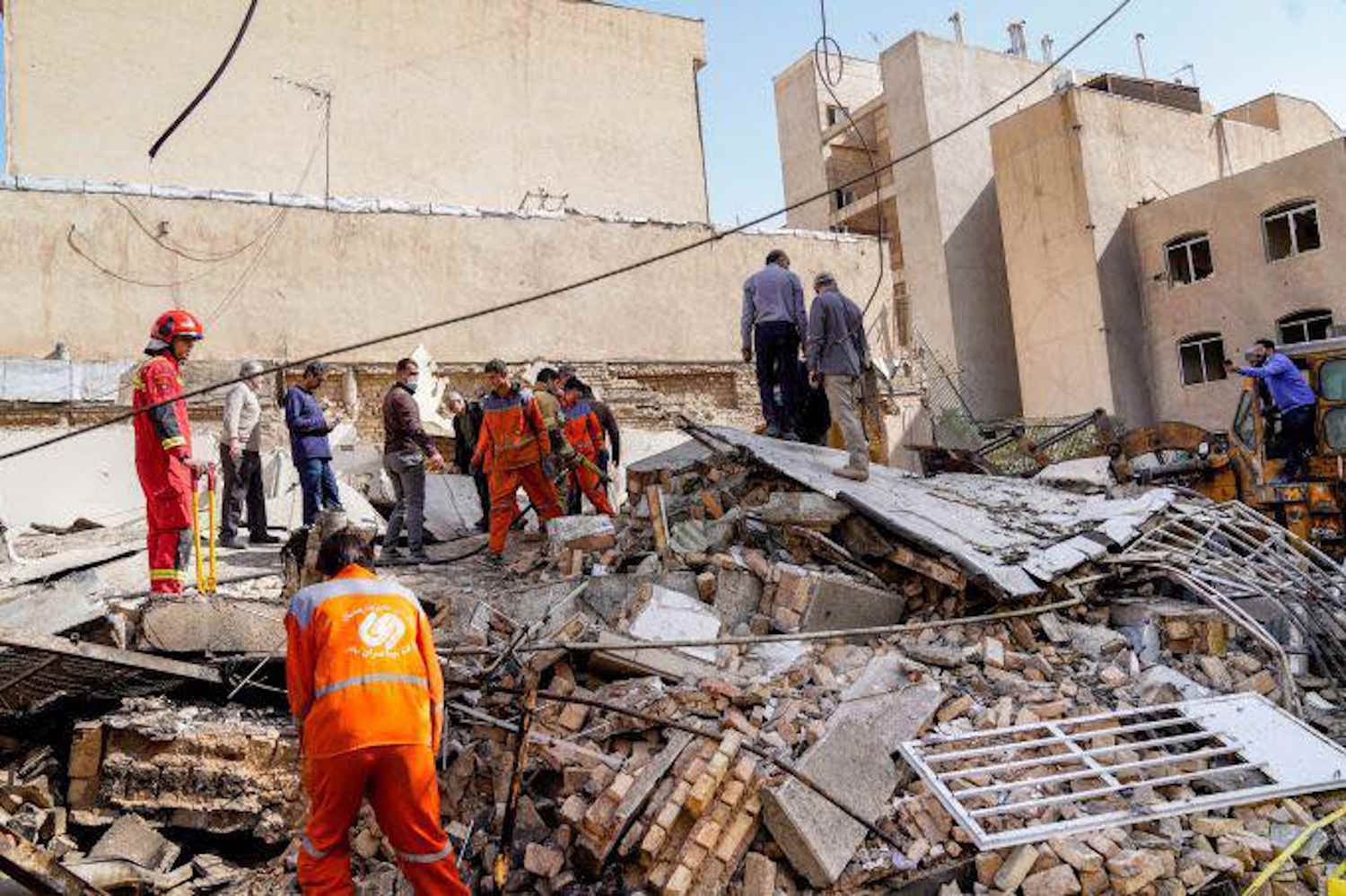
The silence of the classrooms broken by the sirens. The notebooks left on the desks. And, under the rubble, bodies too small to be part of a war. In Minab, in southern Iran, a girls’ primary school became the scene of one of the most serious tragedies of these weeks of tension.
His name was Shajareye Tayabeh and that day it was full of girls, teachers, school staff. Then came the bombing.
The toll is devastating: 165 deaths in a single attack. Among them mostly girls. A massacre which, in addition to the numbers, is striking for what it represents: a school, that is, the place that should safeguard the most fragile and luminous part of society.
According to Iranian authorities, the attack was carried out by Israel and the United States. Washington rejected the accusations: the Secretary of State Marco Rubio stated that US forces “would not deliberately target a school.” Israel also said it had no information on an operation in the area. But amidst these conflicting versions, the certainty remains that a school has been destroyed and hundreds of families torn apart.
For this reason, the United Nations High Commissioner for Human Rights has called for the immediate opening of an investigation.
A swift, impartial and thorough investigation into the circumstances of the attack is needed, the spokeswoman said Ravina Shamdasaniexplaining that responsibility for the investigations falls on the forces that conducted the operation.
The school was located about 600 meters from a base of the Pasdaran, the Guardians of the Revolution, and not far from the Strait of Hormuz, one of the most delicate strategic passages on the planet.
But inside that school, at that moment, there were little girls.
Videos released immediately after the explosion show a gutted building, collapsed walls, rescuers digging through the rubble looking for those trapped. Scenes that remind us of how fragile the border between war and everyday life is when conflicts come close to civilian places.
At the moment it is not yet clear what really happened, but in the meantime a collective funeral was held in Minab for the 165 victims, all buried in a mass grave. And it wasn’t the only school affected. High school also on Saturday Hedayat of Tehran had been attacked: two students had died.
When war enters schools, the world should stop, to remember that among the rubble there are no military strategies or geopolitical balances. There are little girls and their lives cut short too soon.
The new Supreme Leader
Meanwhile, after the death of the Supreme Leader Ali Khamenei in the bombings blamed on Israel and the United States, Iran quickly named its successor. The choice fell on the son of the missing leader, Mojtaba Hosseini Khamenei. In the past few hours, the Assembly of Experts officially appointed him the new Supreme Leader, on the recommendation of the Revolutionary Guards.
Mojtaba Khamenei, 56, is Ali Khamenei’s second son and had long been considered among the possible heirs. Born in Mashhad in 1969, he fought in the final years of the Iran-Iraq war and then undertook religious studies in Qom, despite not yet having the highest clerical rank. Over the years he has built solid relationships with the security apparatus, in particular with the Pasdaranwhich today represent one of his main political supports. His rise occurs at a very delicate moment: open war, internal tensions, economic crisis and the real risk of being targeted.
The new leader is also at the center of controversy for his alleged wealth. According to a Bloomberg investigation, he is linked to a vast international real estate portfolio, with properties also in the United Kingdom and Switzerland, with an estimated value of over 100 million pounds in Great Britain alone, acquired – according to the accusations – through shell companies and funds from the Iranian oil trade.
On the political level, Mojtaba was close to the former president Mahmoud Ahmadinejad and, according to several observers, he would have had a significant role in the disputed 2009 elections. To date, Mojtaba Khamenei is considered one of the most influential men in the country, supported by the Revolutionary Guards and with a weight that – according to some analyzes – extends over a significant part of the national economy.
