
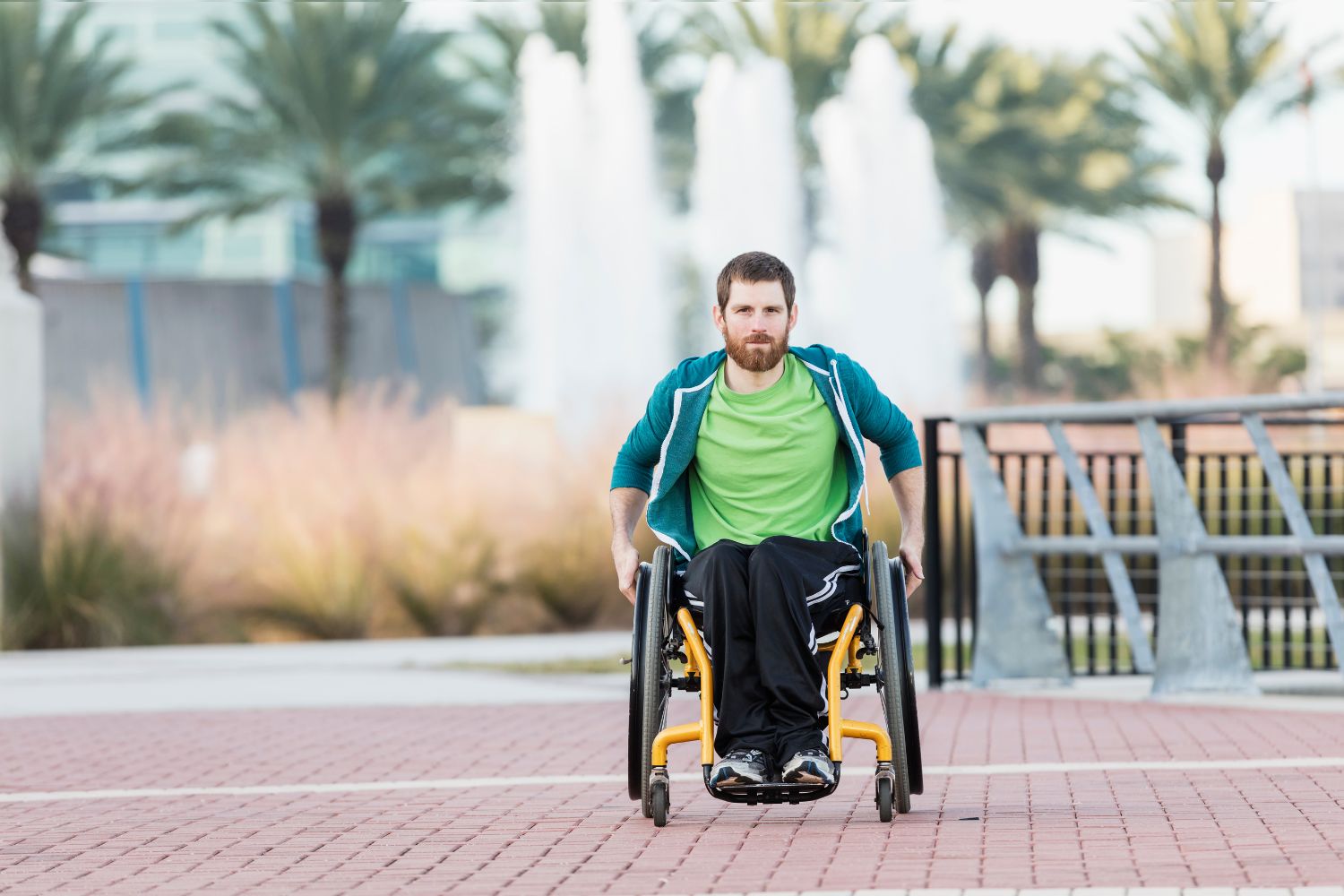
Getting on a bus or any public transport, crossing the street, entering an office, are daily gestures that we take for granted, but which for many people with disabilities still remain concrete obstacles today, made up of steps, impassable sidewalks and inaccessible services.
Yet, in Italy the rules have existed for decades. Already with law 41 of 1986, Municipalities were called upon to equip themselves with PEBA, Plans for the elimination of architectural barriers, fundamental tools for making public spaces truly inclusive. A commitment that should have transformed cities into places accessible to all.
Reality, however, tells another story. Almost forty years later, the implementation of these plans is still partial and uneven. According to a survey by the Luca Coscioni Association, only a third of Italian capitals have adopted a PEBA. A figure that highlights a structural delay and a clear distance between what is foreseen by the laws and what happens in daily life.
What are PEBAs
These are the plans for the elimination of architectural barriers, tools designed to map obstacles and plan concrete interventions, so as to make public spaces and buildings usable by everyone, without exclusions.
Introduced already in 1986 and strengthened a few years later with the extension to urban spaces (provided for by law 41/1986, with law 104/1992, the extension to urban spaces was established), these plans represent a compass for administrations: they identify the barriers present in the territory, classify them by priority and propose solutions, times and costs to remove them.
Yet, despite the obligation established by law, not all Italian municipalities have equipped themselves with this tool. To understand where we really are, an Observatory on PEBA has been launched in the 119 provincial capital municipalities.
The report
From the monitoring of the 118 capital municipalities (excluding Rome, where responsibility lies with the Municipalities), as of February 2026, it emerges that:
Forty years after the law establishing the PEBA, Italy is still dramatically behind in respecting the rights linked to accessibility and the elimination of physical and sensorial barriers, say the Association.
The reality remains, in fact, only one: a city is not truly a city if it is not accessible to everyone. And as long as even a single step, a closed door or an inaccessible bus continues to exclude someone, it will not be a technical problem, but a collective responsibility that we can no longer afford to ignore.
HERE you will find all the data capital by capital.
