
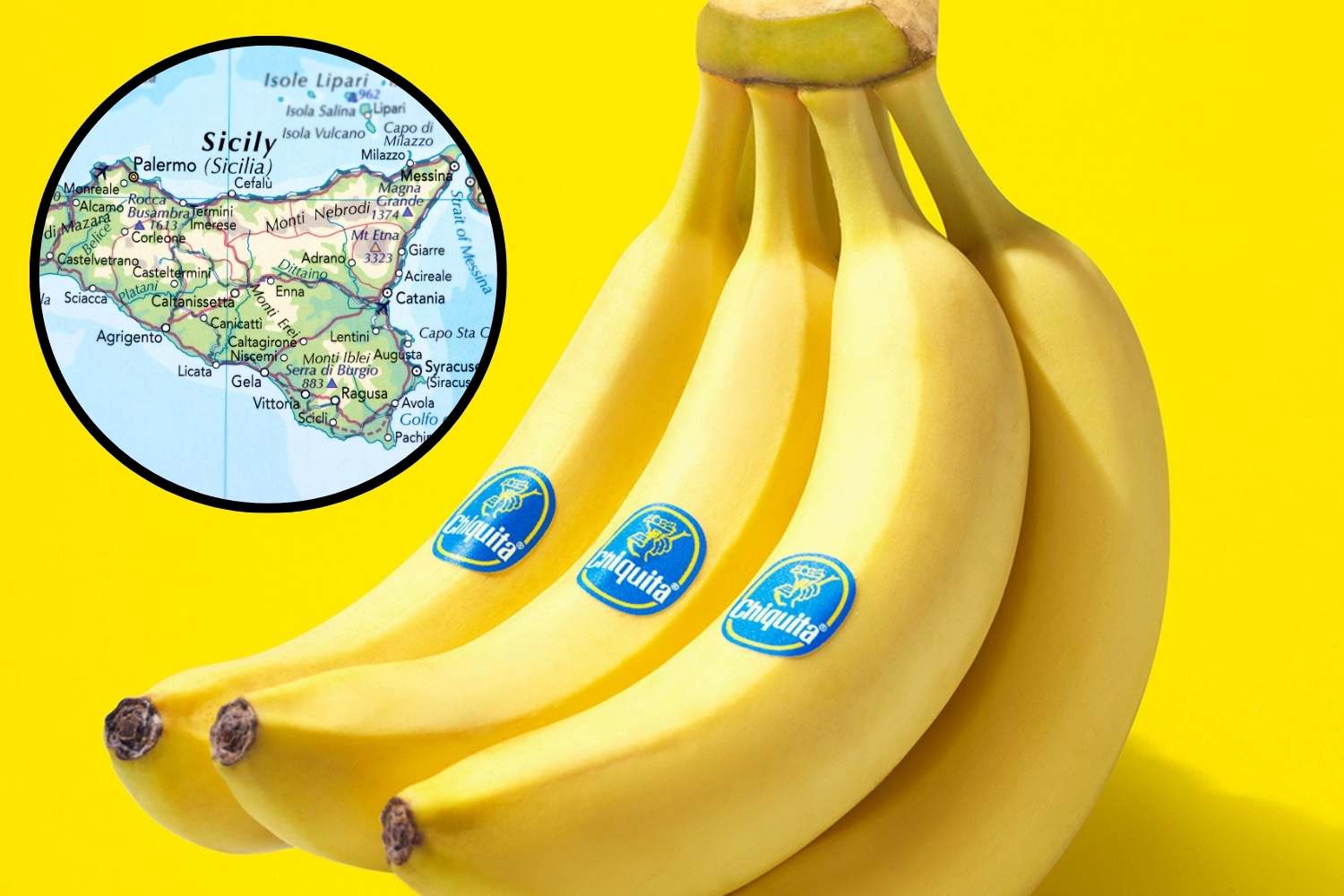
In recent years, in Sicily there has been a growth in the cultivation of exotic fruits, a phenomenon made possible by the climate change that have made some areas of the island most suitable for the growth of plants once considered typical of other continents.
An example of all is the avocado, originally from tropical and subtropical climates, which has found in Sicily an ideal terrain, showing that the Mediterranean can now welcome exotic crops (a lean consolation, if you think that all this is the result of a global warming that brings with it very serious consequences).
Chiquita, a world leader in the production of bananas, has now taken advantage of this situation, who decided to start his first Italian cultivation in Marina di Ragusa, in collaboration with the Bio Bio Alba Biological Cooperative.
The planting of the first 20,000 organic Cavendish plants has already started, and the fruits are expected in 2026. Cultivating in Sicily allows to bring production closer to local consumers, decreasing the need for international transport and promoting a shorter and more sustainable chain.
So commented Costabile Romano, commercial director of Chiquita in Italy:
For Chiquita this initiative represents a double opportunity: on the one hand, strengthening the link with Italian consumers, who have a strong sensitivity for the origin of the products and which have always considered Chiquita a real love brand, thanks to the historical presence of the brand in the country and the trust built in decades of relationships with families and shopkeepers; on the other, contribute to enhancing local production by inserting it in an international context. The “Italian product” banana is not only a label, but a declaration of intent: we want those who decide to choose it immediately perceive the link between a global brand of trusted and the Italian agricultural excellence.
All very beautiful, but some perplexities remain. The entry of a multinational like Chiquita in the Sicilian market could change existing balances, both from an ecological and socio-economic point of view. On the environmental side, the intensive cultivation of bananas, even if biological, involves risks related to monocultures, water consumption and possible impacts on local biodiversity.
On a social and economic level, the small Sicilian producers, who already cultivate bananas on a reduced scale, could find themselves confronting changes in the local market, even if Chiquita collaborates with local agricultural realities.
The multinational then brings with it a wealth of past criticism linked to Greenwashing and social issues. For this, it will be important to observe how the company will manage this new production in Sicily.
