
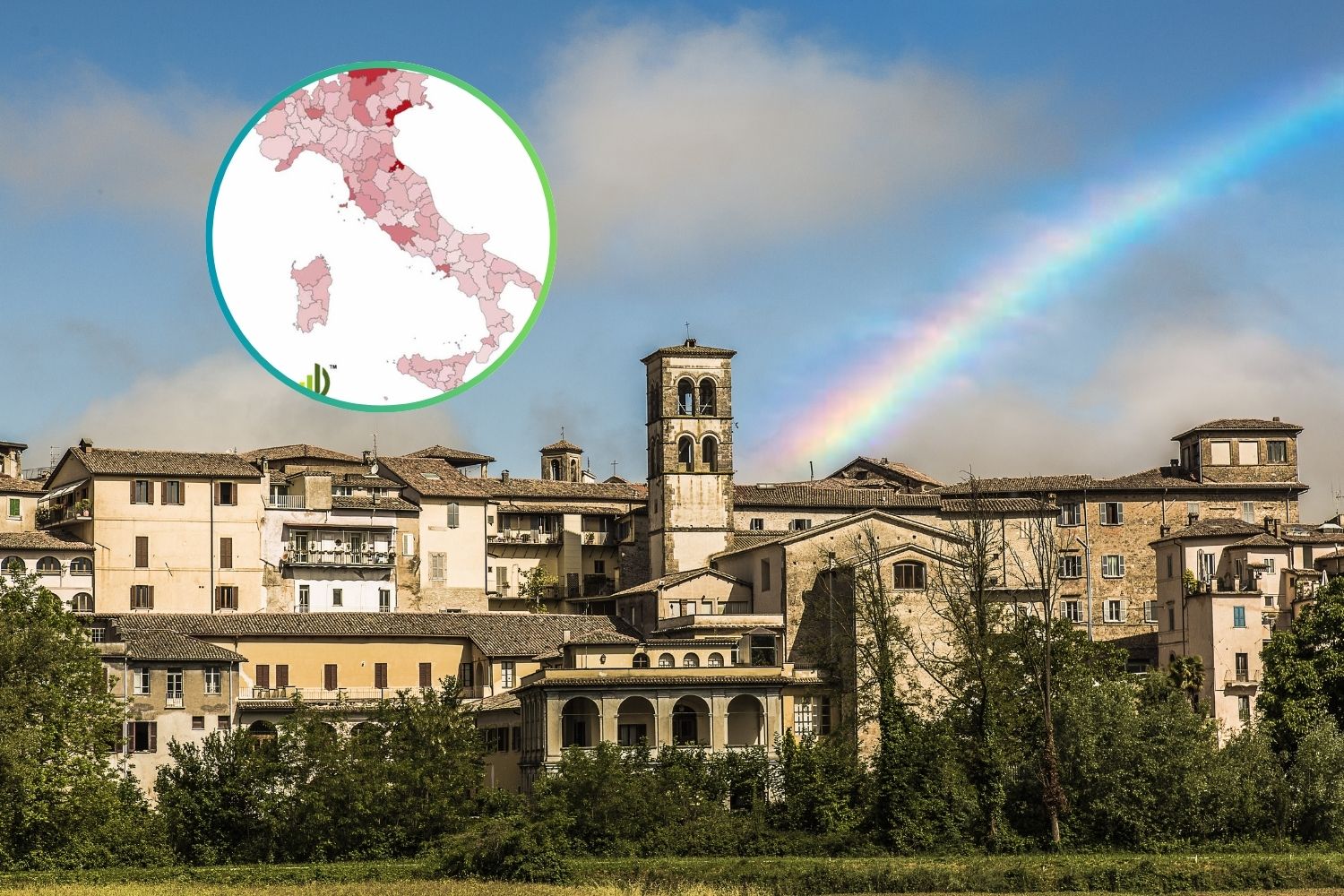
In some Italian cities, summer is no longer a season, but a siege. Rimini, Venice, Bolzano: postcard names that today resemble red areas. The calls are clogged, the beaches are saturated, the historic centers become themed parks. According to the overall tourist overcrowding index (ICST) processed by Demoskopika, anthropic pressure in these areas has exceeded the critical threshold.
The numbers are clear: in Rimini the 17,000 tourists per km² are touching, in Venice there are almost 47 tourists for each resident, and Bolzano has the record of almost 70 tourists per inhabitant. It is not just a problem of traffic or crowding: it is a systemic interference. Massa tourism changes the identity of the cities, distorts daily life, and makes wonders uninhabitable.
Italy that nobody sees
But there is also another Italy, silent and invisible. It is the one that does not make news, does not selfie does not appear in the plans of the tour operators. Provinces such as Rieti, Benevento, Isernia, Enna, Campobasso. Internal, marginal areas, sometimes forgotten even by the Italians themselves.
Here the tourism has never really been. Some record less than a kilo of waste for tourists, tourists/residents report close to zero, tourist density of less than 100 people per km². Yet, in these places there are intact medieval villages, authentic kitchens, centuries -old traditions and unspoiled landscapes.
Far from the rhetoric of the “tourist Renaissance”, these areas live a form of systemic insulation. But it is from here that a new idea of tourism could be born: kinder, slower, more human.
The possible alternative
Talk about undertourism It does not mean moving masses from one city to another, but rethinking the concept of travel itself. It means promoting less known destinations, redistributing flows, enhancing local communities. It means, above all, listening to the territory before selling it.
In a country like Italy, where every corner hides a treasure, it makes no sense that the 90% of tourism focuses in 10 cities. Rebaring is not only an act of environmental and social justice, but also a huge economic opportunity.
The 10 Italian provinces less affected by tourism in 2025
The forgotten cities or missed opportunity? Here are the 10 Italian provinces where tourism, in 2025, is almost absent. They are not “less beautiful”, but only less told. Perhaps, the time has come to reverse the course.
| Position (in the queue) | City/province | ICST (normalized index) | Tourists per inhabitant | Tourist density (tourists/km²) | Tourist waste (kg) |
|---|---|---|---|---|---|
| 107 | Rieti | 90.9 | 1.1 | 57.7 | 1.2 |
| 106 | Benevento | 91.0 | 0.5 | 62.6 | 0.5 |
| 105 | Reggio Calabria | 91.7 | 1.0 | 153.2 | 1.0 |
| 104 | Isernia | 91.8 | 1.0 | 50.5 | 1.0 |
| 103 | Avellino | 92.5 | 0.8 | 108.3 | 0.8 |
| 102 | Campobasso | 92.6 | 1.8 | 129.5 | 1.9 |
| 101 | Enna | 92.7 | 0.9 | 54.8 | 0.9 |
| 100 | Praise | 95.6 | 0.8 | 235.3 | 0.9 |
| 99 | Viterbo | 93.4 | 3,9 | 332.2 | 4.3 |
| 98 | Asti | 93.6 | 1.9 | 261.1 | 2.3 |
A cultural choice, not just logistics
Deciding to visit Benevento instead of Florence, or Isernia instead of Rome, is not just a matter of crowd. It is a declaration of intent. It is to choose to walk in silence, to talk to those who stay, to rediscover the wonder outside the windows. It is to give oxygen to an Italy that asks nothing but be seen, respected and finally loved.
