
Surely most of us have a good familiarity or at least a superficial knowledge of cultivated asparagus, but how many people are as familiar with wild asparagus? Those who have tasted them, as a gift from a friend or perhaps after having collected them personally, will undoubtedly have realized how much wilder asparagus is tastier than cultivated ones. And also much more nutritious, we add.
Wild asparagus ( Asparagus acutifolius) belong to the family of Liliaceaethe same as common asparagus (asparagus officinalis).
They grow in uncultivated meadows, clearings and wooded areas up to 1300 metres. Very widespread in central-southern Italy, they are present almost everywhere in our peninsula, with the exception of Piedmont, Valle d’Aosta and Trentino.
Description of wild asparagus
Botanically, wild asparagus is the shoots of a rhizomatous plant called asparagine. The rhizome develops deep into the soil, creating a reticular structure.
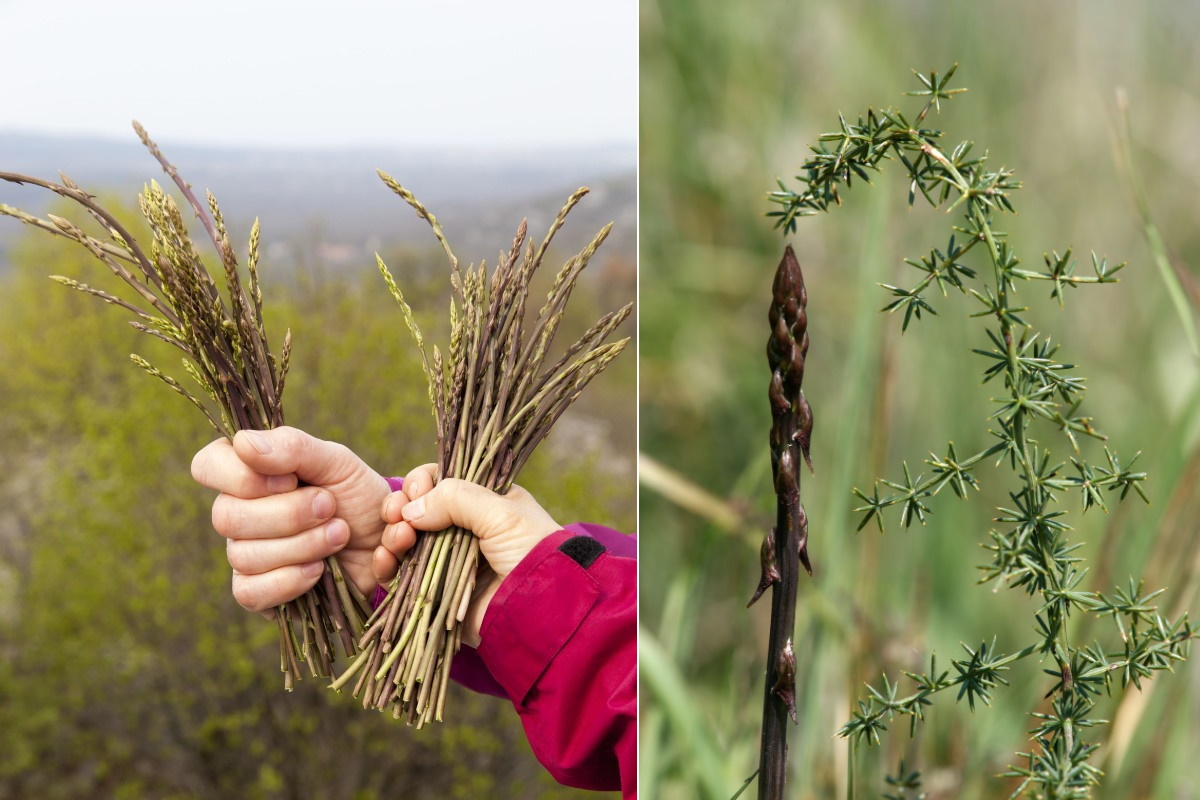
The aerial part of the plant, which emerges from the rhizome, is in the form of a long woody stem of light green or intense green color with purple shades near the tip.
The top of the shoot, i.e. the most tender and edible part, is called the shoot.
Wild asparagus, the rare species
In addition to theAsparagus actifoliusin Italy we can find 2 other species of asparagus in the wild: theAsparagus stipularis el’Asparagus albus, both very rare.
The first, characterized by a darker colour, almost black, grows up to 500 meters above sea level, in the coastal areas of Sicily, Sardinia and Lampedusa.
The second species has very hard thorns and is characterized by its characteristic white stems. Typically Sicilian, white asparagus also grows in Sardinia, Corsica and some areas of Calabria, in the valleys and along the slopes up to 1000 meters above sea level.
How to recognize wild asparagus
Compared to their cultivated relatives, wild asparagus stand out because they are thinner and above all for the presence of thorns at the base of the leaf system. Precisely for this reason, they are commonly called prickly asparagus or prickly asparagus.
As for the taste, they have a more bitter flavor, which is more intense and penetrating on the palate than that of cultivated asparagus. Precisely by virtue of their stronger and more persistent flavour, they are considered a very delicious food and boast numerous admirers.
Wild asparagus can be confused with butcher’s broom. The plant with thorny twigs and red berries that we use for our Christmas decorations, in fact, produces shoots in spring that are very similar to those of wild asparagus. The tops of the butcher’s broom, however, are smoother and tending towards purple.
Furthermore, wild asparagus closely resembles the tops of hops in appearance, which is why they are commonly but incorrectly called “wild asparagus”.
The only slight difference is that the asparagus shoots are, so to speak, slightly more jagged than the hop shoots.
Wild asparagus, nutritional values
Wild asparagus is made up of 90% water. They contain little sodium, a low percentage of lipids (about 0.17 grams) and very few calories (only 25 per 100 grams). Their composition, therefore, makes them particularly suitable for inclusion in low-calorie diets.
They are very rich in provitamin A and vitamins of groups B, C, E and K.
Provitamin A plays a fundamental role against free radicals, as well as protecting hair, skin and mucous membranes. B vitamins are able to activate metabolic processes, transforming food into energy, while vitamin C helps strengthen the immune system and protects blood vessels.
Vitamin E has antioxidant properties and counteracts skin aging. Finally, vitamin K is essential for maintaining the structure and correct functionality of the skeletal system and for the fluidity and coagulation of the blood.
Wild asparagus also contains mineral salts including potassium, magnesium, calcium, iron and phosphorus.
The high percentage of potassium, a mineral capable of promoting the physiological regulation of body fluids, combined with the low quantity of sodium, determines an overall anti-cellulite effect and an action to combat water retention.
Of note is the presence of folic acid (vitamin B9), essential for the correct development of the fetus and highly recommended for pregnant women.
Another important molecule contained in wild asparagus is asparagine, an amino acid that has diuretic, purifying and detoxifying properties for the liver and kidneys.
Rutin and quercitin, on the other hand, are two flavonoids which respectively have the task of protecting blood vessels and carrying out an antioxidant and anti-inflammatory action. (CREA nutritional tables)
The properties of wild asparagus
From what has been illustrated so far, it is clear that wild asparagus has high beneficial properties for our health, to the point that it can be considered a true nutraceutical food, i.e. one with therapeutic virtues for our body.
In summary, wild asparagus has properties:
The remineralising properties of wild asparagus are due to the high mineral content, while the laxative effect is conferred by the good percentage of fibre, which facilitates intestinal transit.
Wild asparagus, anti-tumor properties
The scientifically proven anti-tumor action of wild asparagus is attributable to the presence of two saponins (protodioscin and protodiogenin). These substances have proven capable of inhibiting and counteracting the proliferation of cancer cells in the colon.
Wild asparagus contains a much higher quantity than cultivated ones, even ten times higher.
The only recommendation regarding the assimilation of saponins concerns the method of cooking the sprouts: wild asparagus should not be boiled.
Saponins, in fact, are extremely resistant to heat, but are soluble in water. Therefore, if the asparagus is boiled, these substances will be lost, dissolved in the cooking water. For this reason, it is preferable and highly recommended to consume asparagus raw, in the form of a salad, or quickly sautéed in a pan.
Wild asparagus, contraindications
One of the main advantages of wild asparagus, namely the presence of uric acid, also turns out to be the origin of its major contraindication. The consumption of wild asparagus is in fact not recommended for those suffering from gout, kidney problems and inflammation of the urinary system.
Furthermore, wild asparagus contains a good percentage of acetylsalicylic acid, so anyone who is intolerant to this component should avoid ingesting them or in any case eat them in moderation.
Wild asparagus, harvesting regulations
Due to the wicked and disrespectful action of some asparagus pickers, who have repeatedly damaged the mother plant, in some Italian regions the harvesting of these vegetables has been regulated both in terms of the period allowed and the maximum quantity that can be harvested.
In particular, the regions of Veneto, Tuscany and Sicily have issued regulations to regulate in detail the harvesting of wild asparagus. In some municipalities it is even necessary to issue a special card.
In the Lazio Region there is no organic discipline of the subject. Regional law 32/98 limits itself to setting quantitative limits on the harvesting of wild asparagus. The maximum allowed is one kilogram of sprouts per person.
How and when to harvest wild asparagus
Before attempting to harvest wild asparagus, therefore, it is important to ascertain whether or not specific regulations exist in your area of residence, in order to avoid incurring possible sanctions.
Once you are aware of all the possible constraints of the case, you will be able to walk in the fields, or venture into the woods and scrub, combining the pleasure of research with the priceless pleasure of contact with nature.
The wild asparagus harvest period runs from the end of March to June.
If possible, it is preferable to collect the newly sprouted shoots, which are more tender and therefore more pleasant on the palate. Over time, asparagus tends to harden and, if not harvested, continues to grow until it reaches a size of five or even two meters.
In practice, if left uncultivated, the shoots transform into new stems.
It is not necessary to remove the entire stem, because it is hard and destined to be discarded.
Simply remove only the shoot, which is the edible part, by making an incision with your nail on the stem, moving up until you find the softer pulp. When the nail manages to penetrate the stem, then we can cut that part of the top, with our hands or with a knife.
If the shoots are harvested, the asparagus spikes, which means they produce lateral shoots. The stems, in fact, have a great vital force, and, contrary to what is commonly believed, are able to survive cutting the top.
Alternatively, you can harvest the asparagus by uprooting it from the ground, taking care not to damage the mother plant.
According to an ancient belief, when asparagus is uprooted, it produces 10 new asparagus.
How to store them after harvesting
Wild asparagus is among the most perishable products that nature offers, and the way in which it is preserved after harvesting has a huge impact on the final quality. As soon as you get home, it’s a good idea to wrap them in a damp cloth and place them in the refrigerator, where they will stay fresh for no more than two or three days. Those who collect plenty of them can opt for freezing: just blanch them briefly, dry them carefully and place them in airtight bags. In this way they can be stored for up to six months, bringing the scent of spring to the table even in the winter months.
How to cook wild asparagus
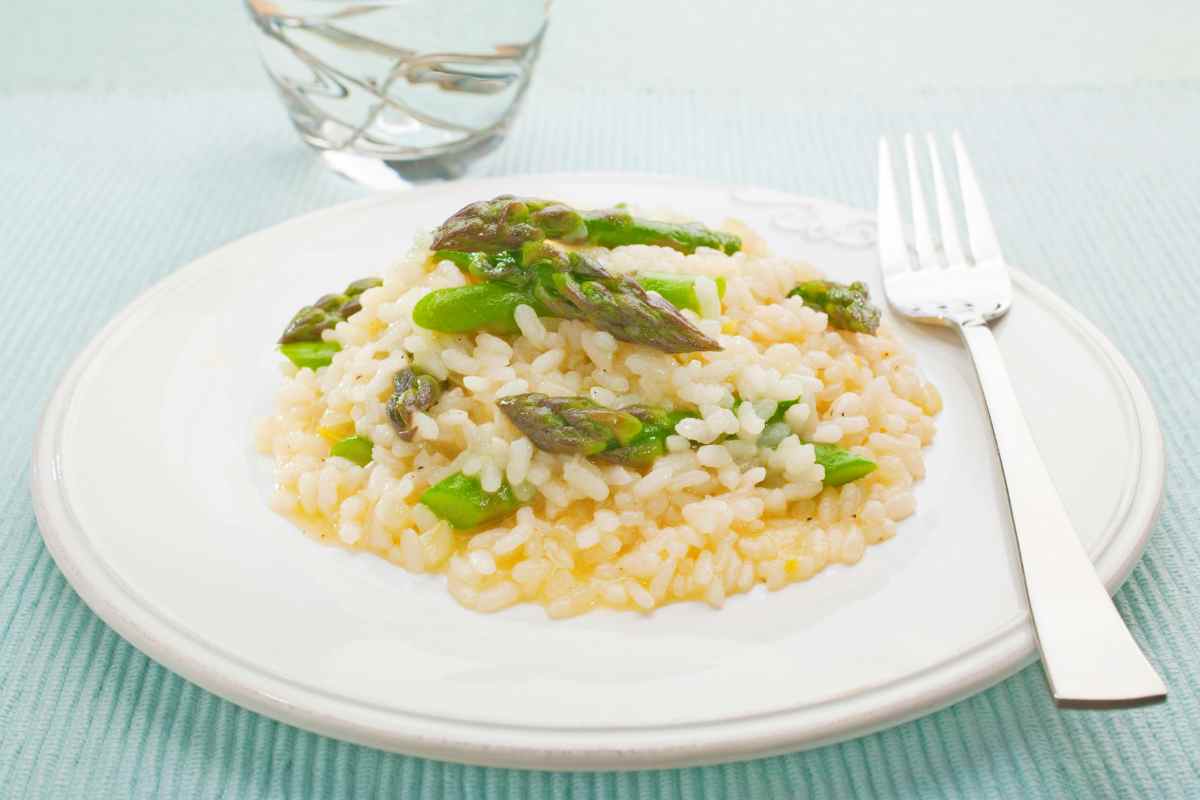
Wild asparagus is an extremely versatile food.
They can be enjoyed raw in salads, or to season pasta and risottos. Excellent in soups or smoothies to form a velvety cream. They also lend themselves very well to accompanying particularly tasty second courses based on meat or prepared with fish and shellfish.
A particularly happy combination for wild asparagus is with eggs, whether fried or cooked in the form of an omelette.
For vegans or for those who don’t like eggs, we remind you that it is possible to replace them with chickpea flour. The omelette prepared with this flour is really tasty and light.(
Furthermore, wild asparagus can also be consumed as a side dish, sautéed alone or accompanied with other vegetables.
Also excellent grilled or battered and fried, or baked, as an ingredient in delicious savory pies.
The advice, if you decide to sauté them in a pan, is not to cook them for long, because they would lose flavor, as well as being impoverished from a nutritional point of view, given that many of the vitamins they contain are thermolabile.
Ten minutes of cooking is generally sufficient. In the case of particularly thick asparagus, you can reach 15 minutes maximum, but no more.
Another preparation tip is to avoid garlic, which tends to cover the flavor of wild asparagus, rather than enhance it. Better to use onion or shallot. Asparagus: 10 recipes to enjoy them at their best
Happy harvesting and bon appetit!!!
You can also read about asparagus:
