
When we arrived in Sant’Angelo di Roccalvecce, in the heart of Tuscia near Viterbo, it was like crossing an invisible threshold: the one that separates everyday life from imagination. The typical silence of the small villages here mixes with the bright colors of the murals and, step by step, we realized that fairy tales here are not just painted: they really live in the streets. The town, about 25 kilometers from Viterbo, welcomed us with a promise kept: slow down, observe, let yourself be surprised and go back to being a little like children.
The Land of Fairy Tales: how magic is born
What is now known as the Land of Fairy Tales was born from an urban redevelopment project started in 2017 by the Cultural Association of Arts and Entertainment (ACAS). The idea was to revive a village at risk of depopulation through public art, without distorting its identity.
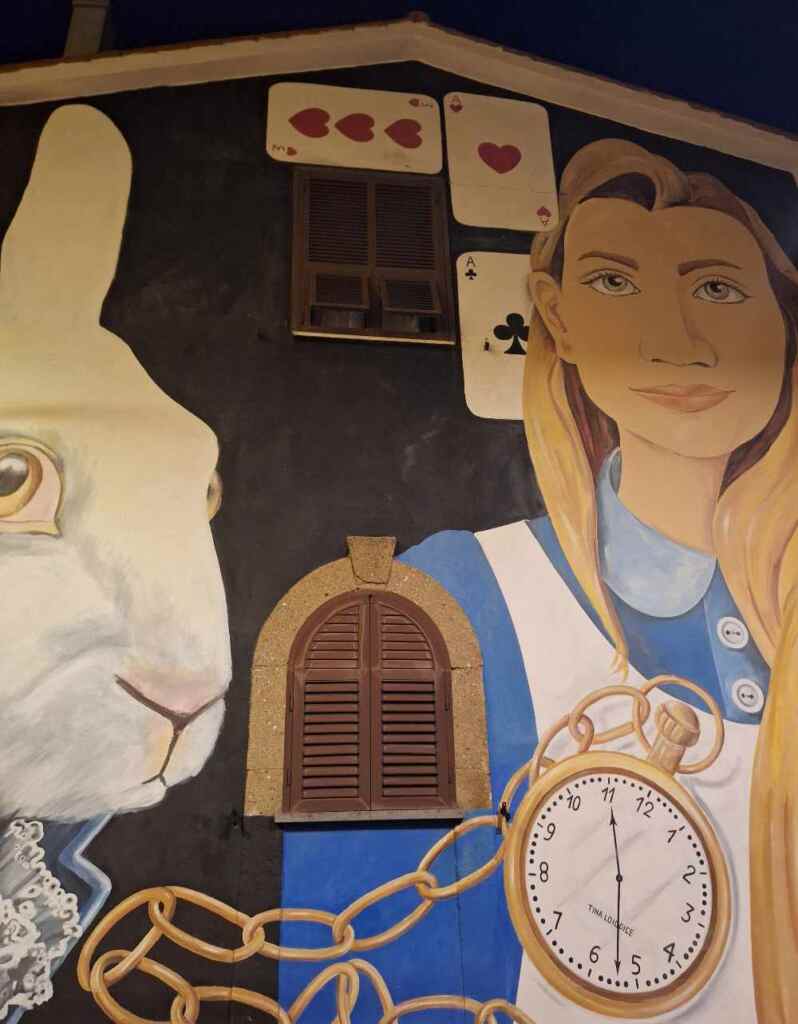
The first mural, dedicated to Alice in Wonderland, marks the beginning of a gradual but constant transformation. Created by the artist Tina Loiodice in the main square of the village, Lewis Carroll’s characters, from the White Rabbit with his clock showing 11.27, to Alice herself, welcome us and seem to invite those who arrive to “enter the story”. Today the works exceed fifty and continue to grow, making Sant’Angelo a true open-air museum where every wall tells a story.
Walking inside a fairy tale
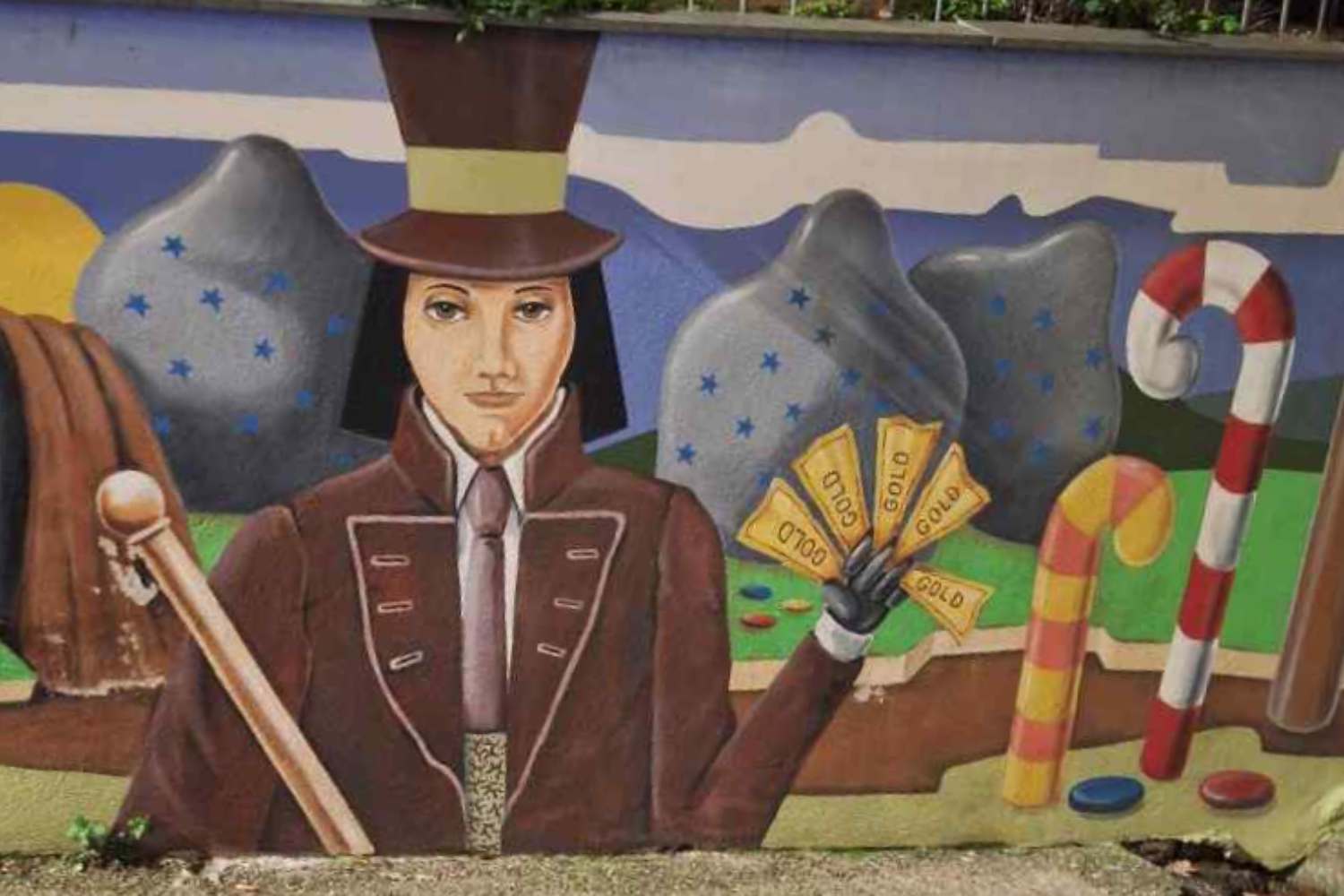
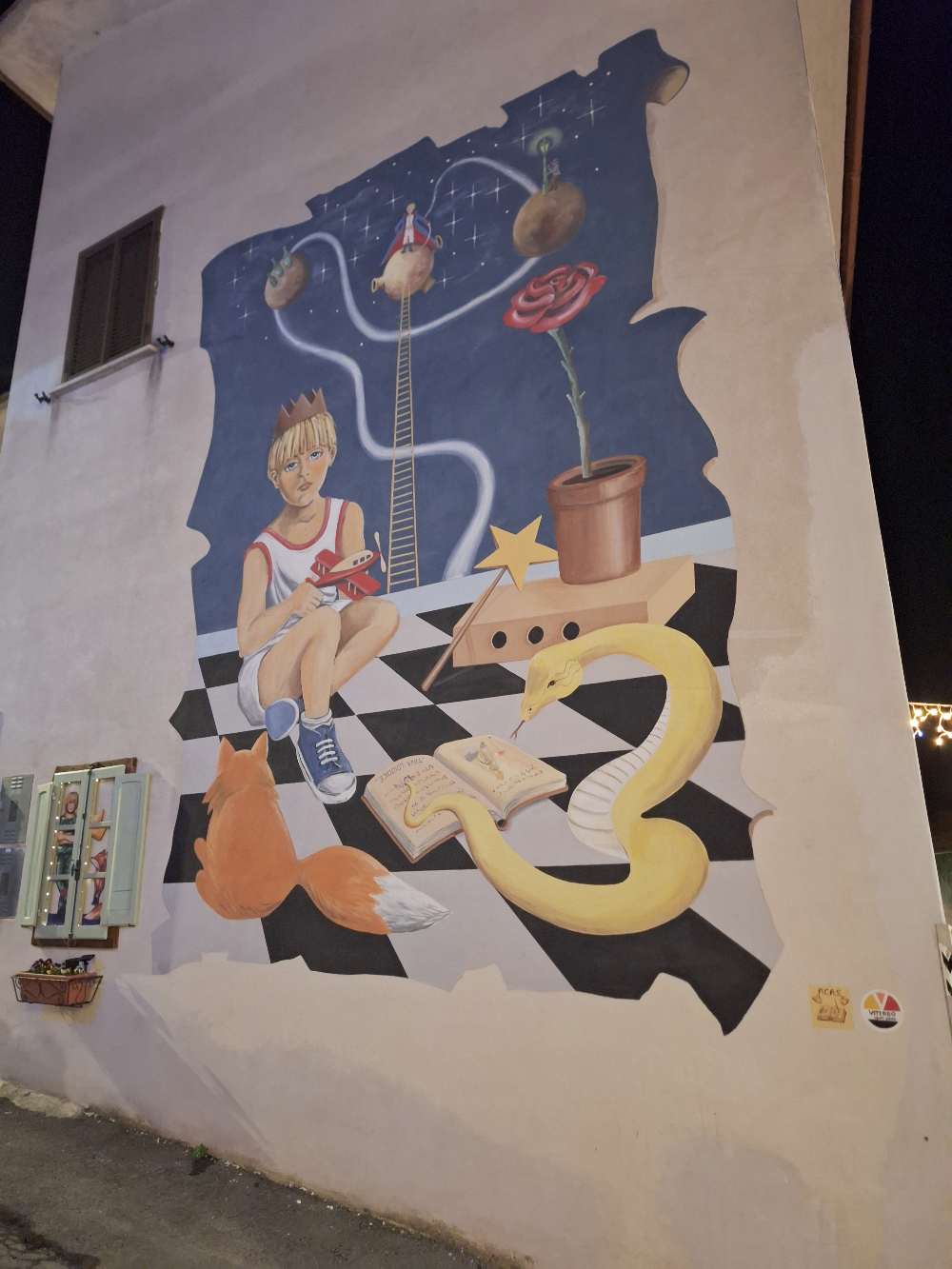
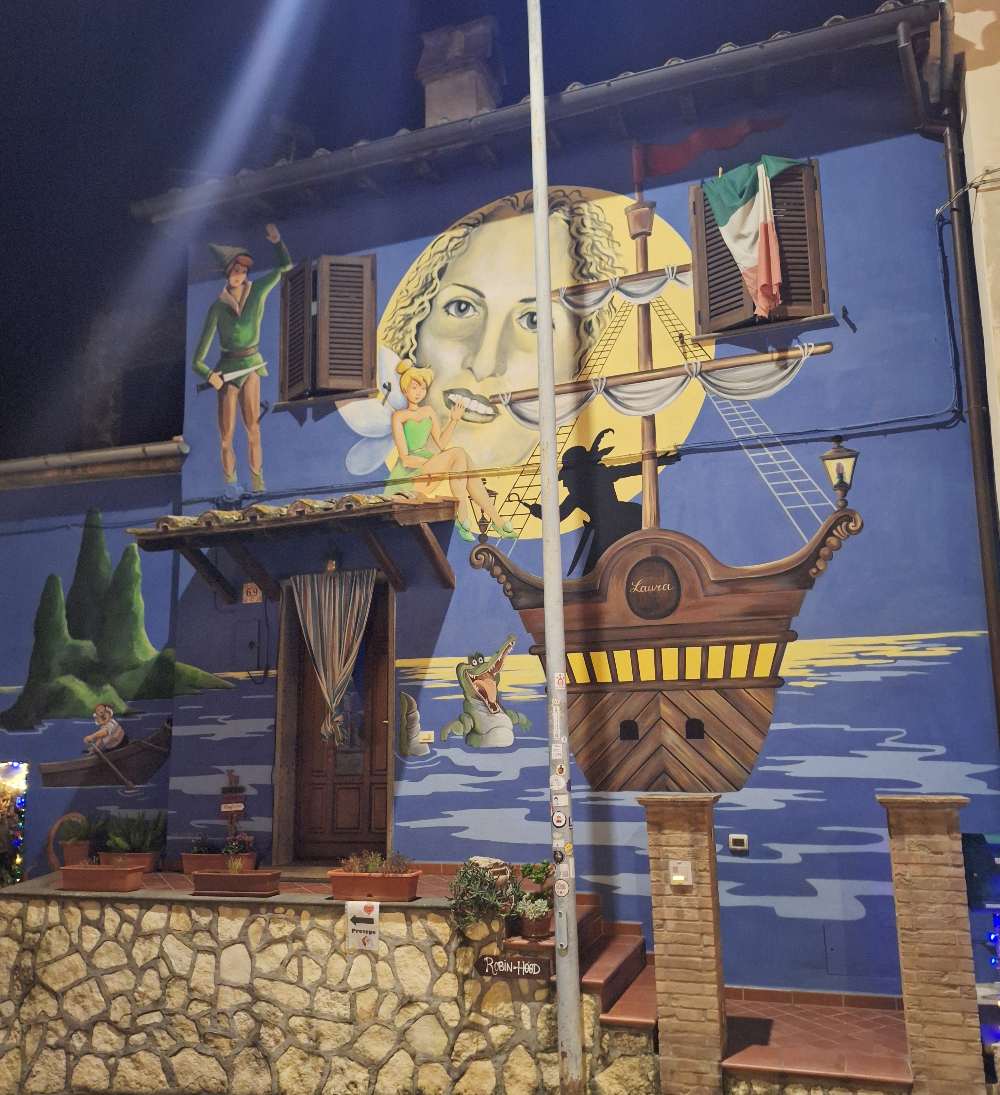
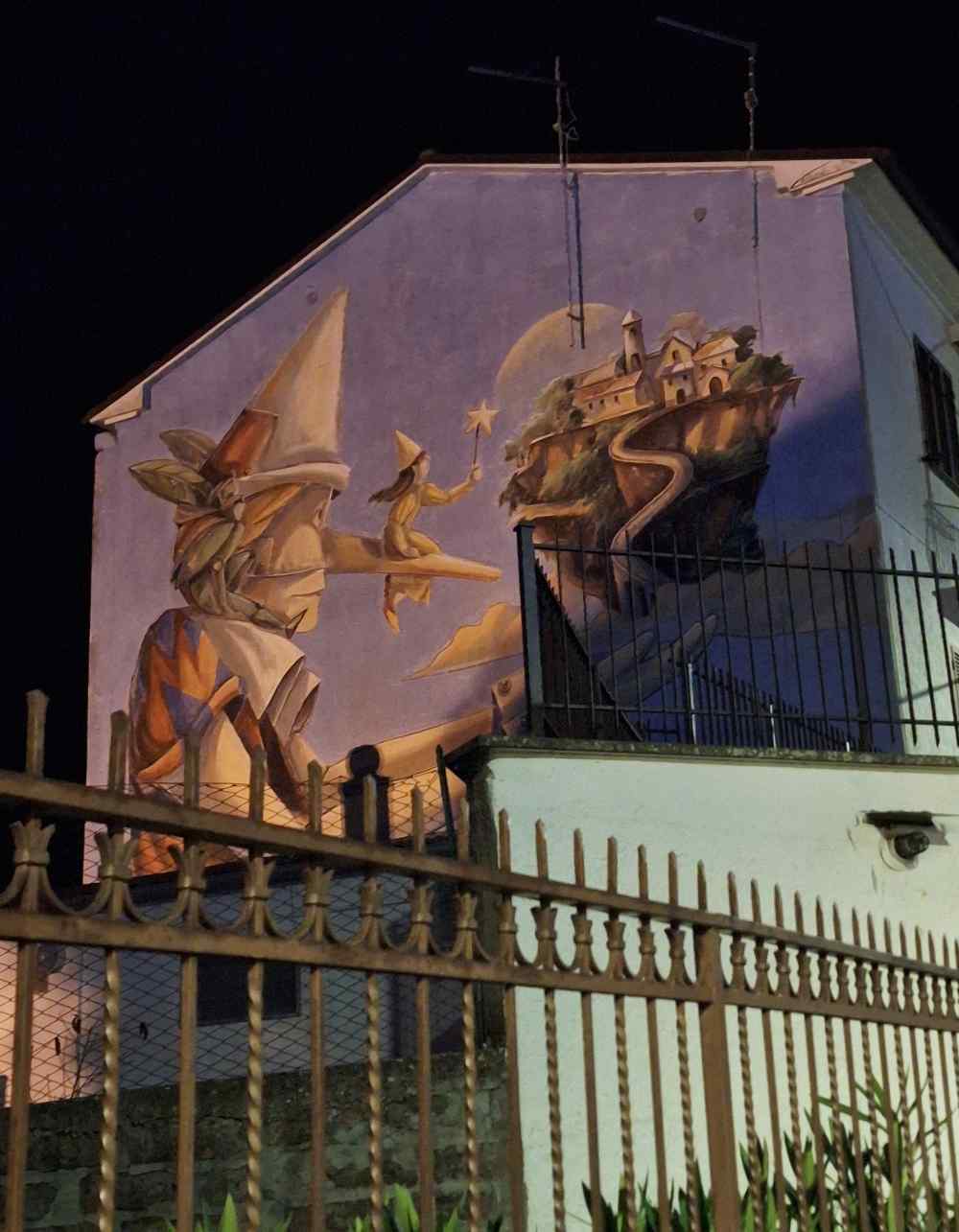
Visiting Sant’Angelo means walking inside a story, embarking on a journey among the icons of literature and fantasy. The murals appear to us one after the other, without an imposed order, like scattered pages of a book. Pinocchio, Hansel and Gretel, Little Red Riding Hood, The Little Prince, The Little Match Girl, Peter Pan, The Jungle Book: each work dialogues with the context, adapting to the walls, windows, alleys.
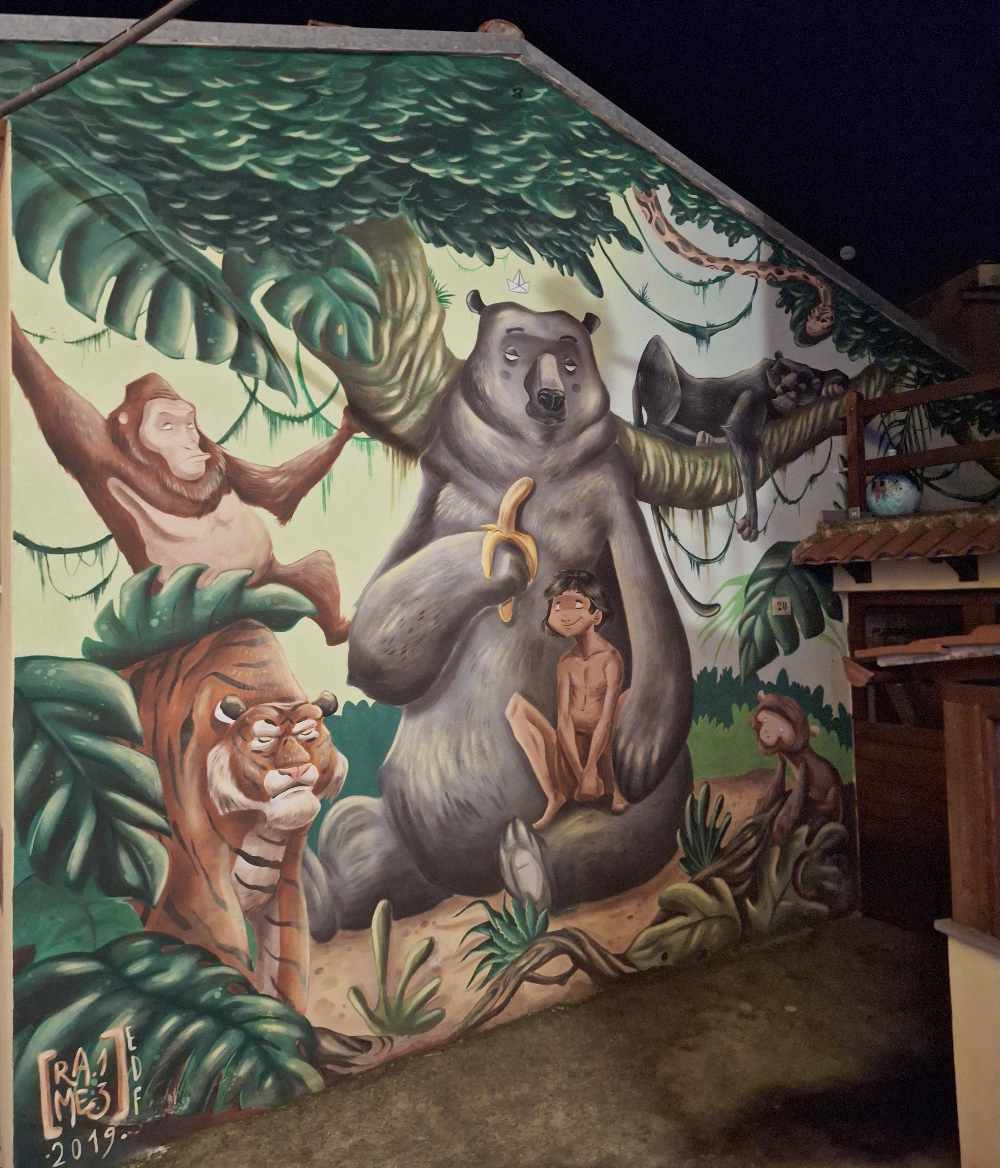
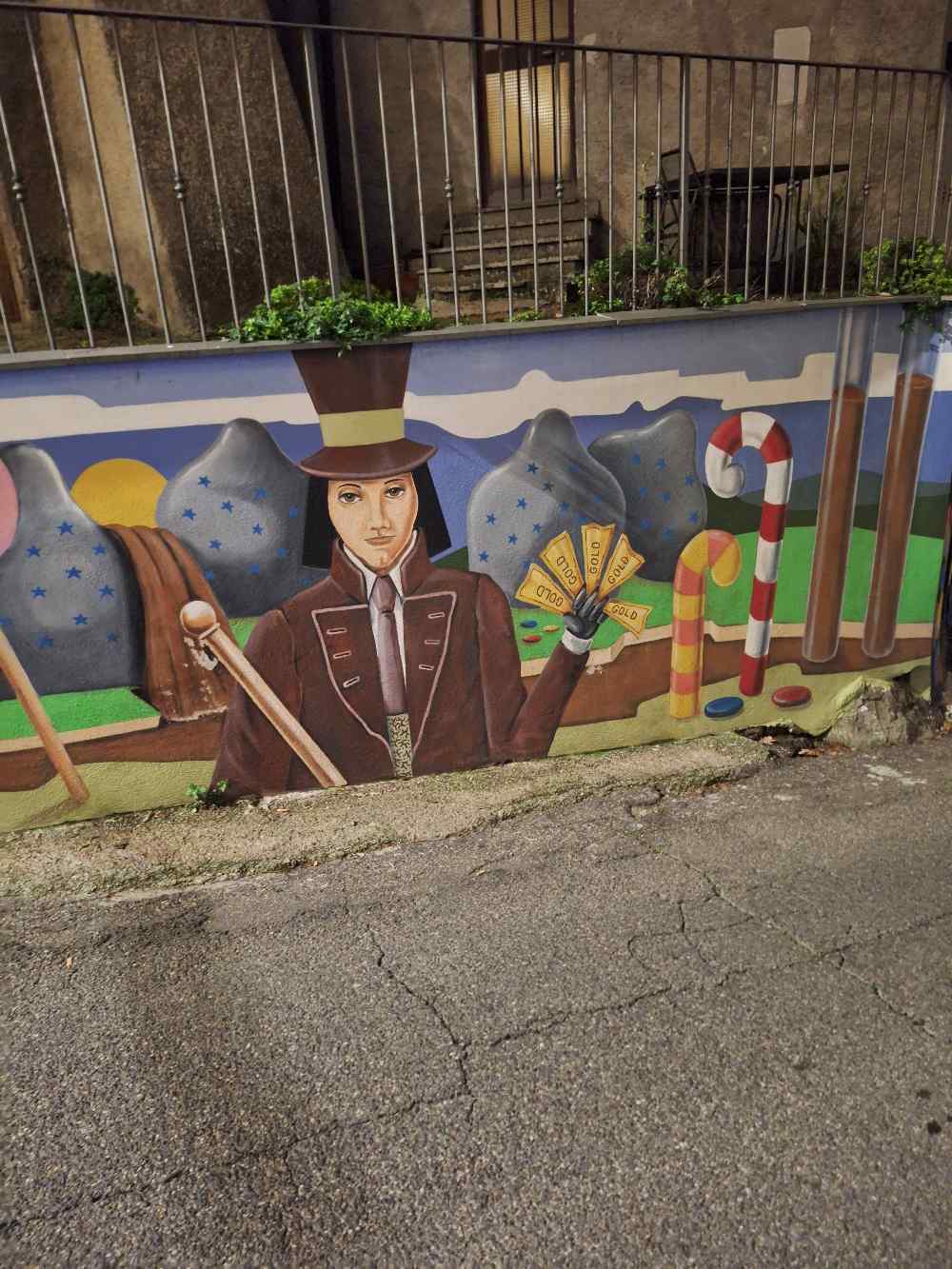
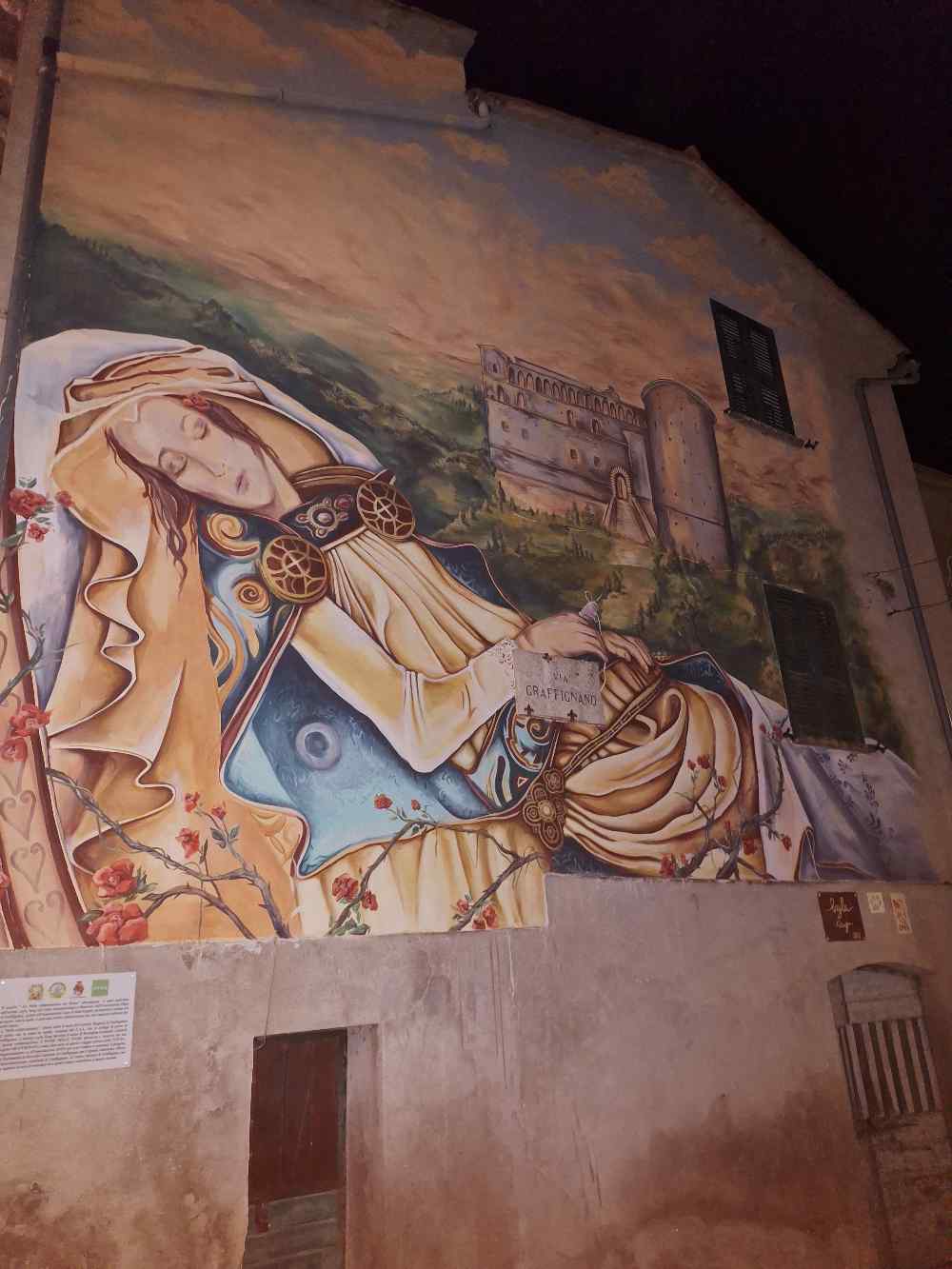
But there are also The Sword in the Stone, The Chocolate Factory, Beauty and the Beast, Cinderella, Puss in Boots and Sleeping Beauty, Mary Poppins, Pocahontas, The Ugly Duckling and many others. A paradise for the little ones and for those who are still a bit of a child.
An itinerary to experience calmly
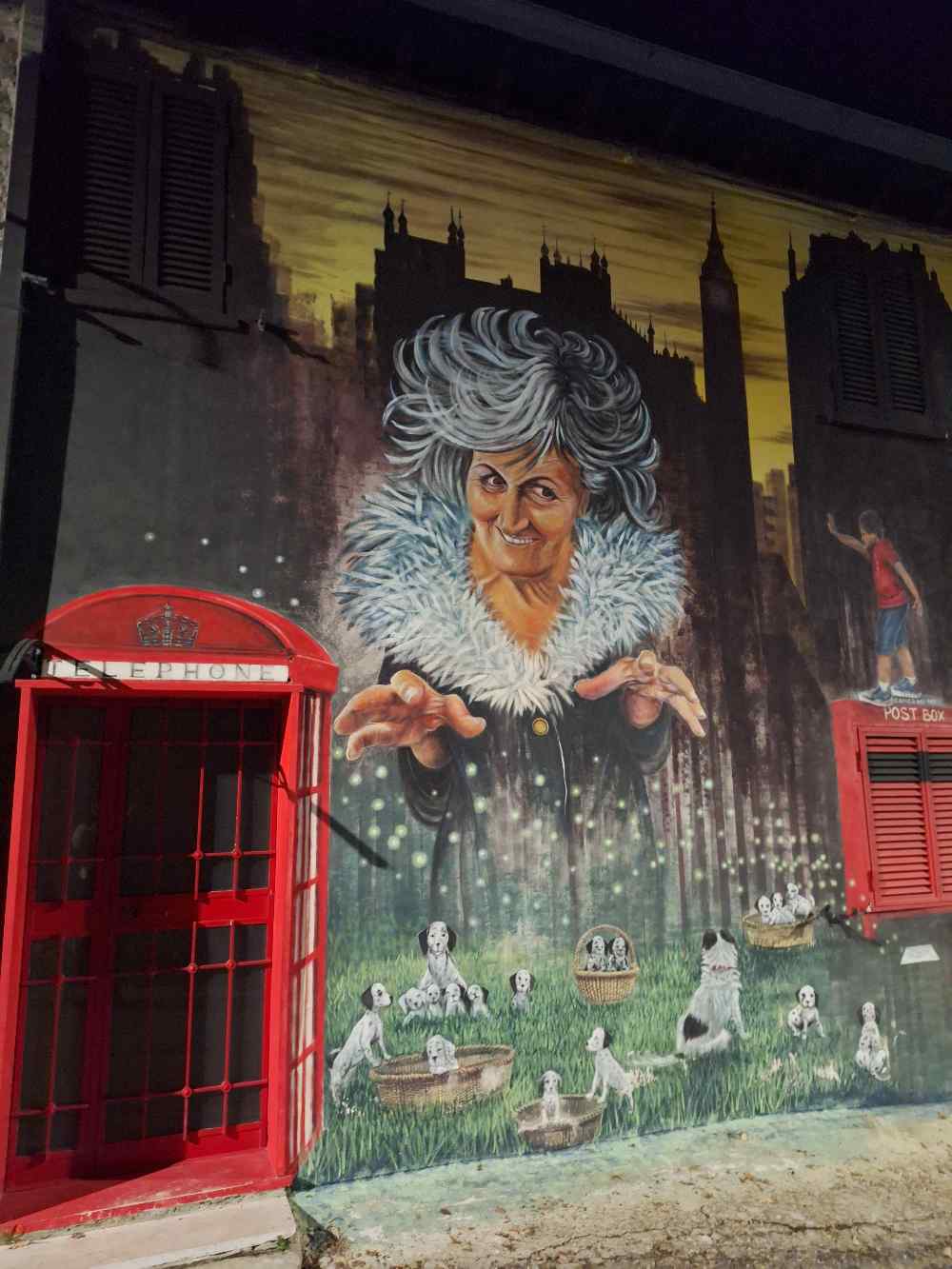
Most of the works were created by Italian street artists and local artists, many of them women, whose style is varied but always respectful of the urban context. The initiative involved the entire community: in several works the faces of the inhabitants appear alongside the fairy tale characters, thus making the village itself the protagonist of the story.
Following the path of the murals takes time. There is no pre-established order: letting yourself be guided by the alleys, the arrows or the map available in the shops in the village makes the visit a more authentic experience. Along the way we also encountered installations, mosaics and bas-reliefs that further enrich the visual experience.
The impact of the project was not just aesthetic. The return of visitors has reactivated slow tourism, encouraging the reopening of bars, shops, accommodation facilities and local restaurants. In a village of just over one hundred inhabitants, every new activity is a sign of resistance and rebirth. Sant’Angelo has transformed its vocation from an almost abandoned place to a destination for families, art enthusiasts and slow travellers, demonstrating that street art, when shared and respectful of the place, can become a concrete tool for development. The best time to visit this village? In June, when it comes alive with the traditional cherry festival which has taken place every year for more than 45 years to celebrate another of the symbols of Sant’Angelo.
You might also be interested in:
