
The Christian holiday of the Epiphany falls on January 6 and celebrates the revelation of God incarnate as Jesus Christ and the visit of the Three Wise Men. In the Orthodox Church the holiday is known as Theopony and commemorates the baptism of Christ: the priest blesses the water during a church ceremony and the faithful take it home to bless themselves and their homes.
But the Epiphany is also celebrated by popular tradition, just think of the lighting of bonfires, the eating of the Three Kings’ cake, the Epiphany songs. Let’s discover the most unique and significant traditions in the world.
Bonfire night in Spain
In some areas of rural Spain, Epiphany night is marked by large bonfires lit in squares or fields. The fire serves to “burn” the old year and to protect crops and livestock. Here the Epiphany retains a clearly pre-Christian soul, never completely erased.
King Cake in France
On the occasion of the Epiphany the French usually prepare a typical dessert, la Galette des Roisor the King’s Cake. The recipe varies depending on the area while the name of the dessert, usually decorated with a golden paper crown, refers to the Three Kings. A bean is hidden inside as a symbol of fertility, or the figure of a small king. Whoever finds them is lucky and becomes king for a day!
Sternsinger in Austria, Germany and Switzerland
In Austria, in the three German Länder and in the three cantons of Switzerland, on January 6, groups of young people called Sternsinger go from house to house dressed as the Three Wise Men with a star on their heads, singing traditional songs. The young people also bless the houses by writing the year above the door in chalk.
Befana in Italy
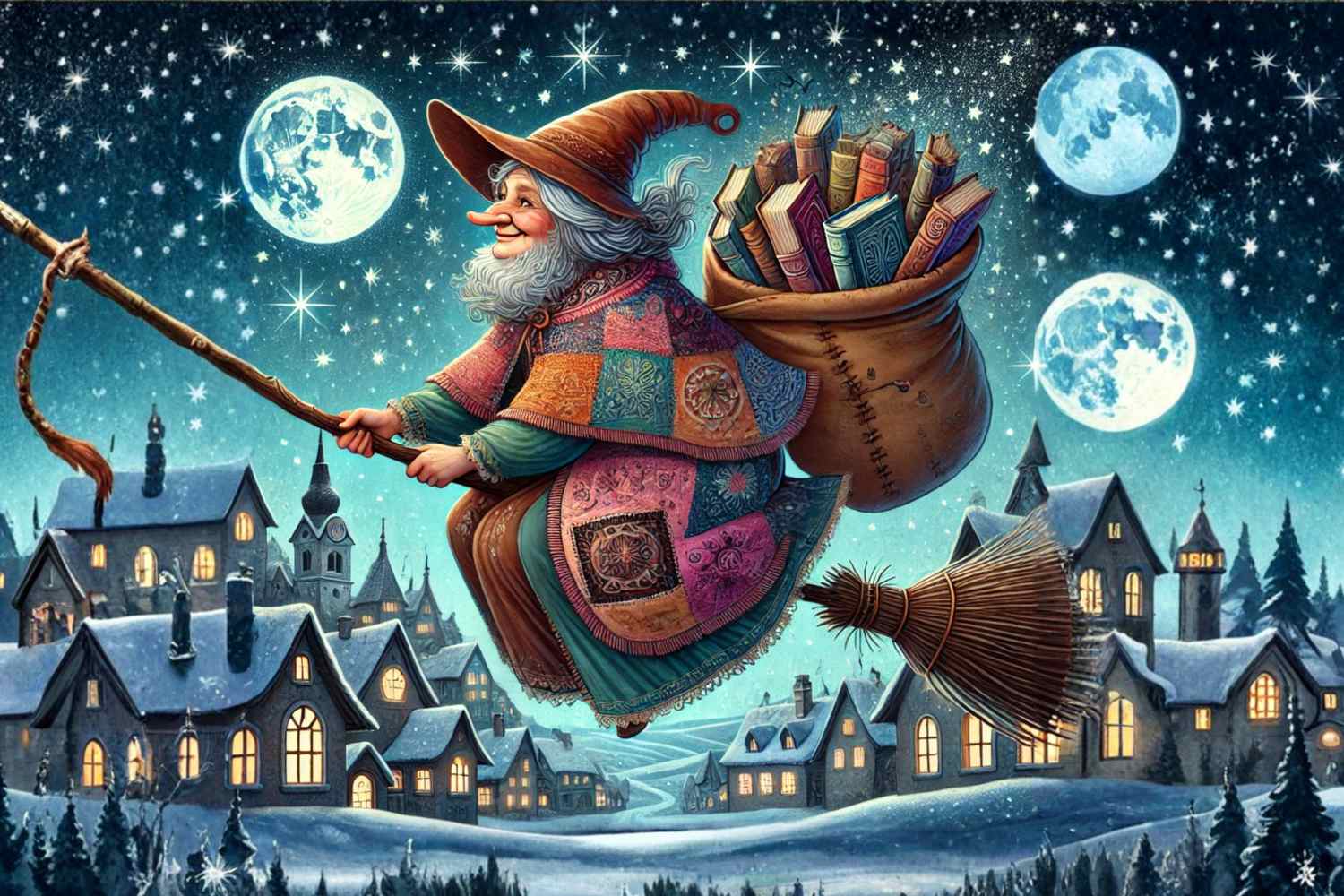
Just as the Three Kings came to pay homage to the newborn Jesus by giving him gifts of gold, incense and myrrh, so the Befana brings gifts to good children on the occasion of the Epiphany. But the figure of the Befana has pagan origins and her story is linked to the fantastic tale in which female figures ready to propitiate the harvest would fly over the newly sown fields during the night.
Chalking the door
In medieval Europe, on the occasion of the Epiphany, it was customary to bless one’s home by writing the initials of the Magi (CMB) on the door. The same initials also stand for the phrase “Christus mansionem benediciat”. Although it is an ancient custom, it has recently been making a comeback, especially in some parts of North America.
Women’s Christmas in Ireland
In Ireland, “Women’s Christmas” is celebrated on January 6th, Nollaig na mBan. If once women used this day to rest by meeting for a women’s lunch, today they usually go out for dinner or meet in a pub in the evening. In addition to this tradition, sprigs of Christmas holly are burned in the fireplace.
Gifts in Latin America
In several Latin American countries, gifts are not given at Christmas but at the Epiphany. The children write their letters to the Three Kings asking for what they want on the eve of the holiday, finding the gifts in the morning.
The plunge of the cross in the Balkan countries
In Greece, Bulgaria, Serbia and North Macedonia, during the Theophany the priest throws a cross into rivers, lakes or the sea. Dozens of men (often young) dive into the freezing water to retrieve it.
Whoever takes it is considered blessed for the whole year. It’s not postcard folklore: it’s a hard, physical, deeply religious ritual.
SOURCES: Coraevans
