
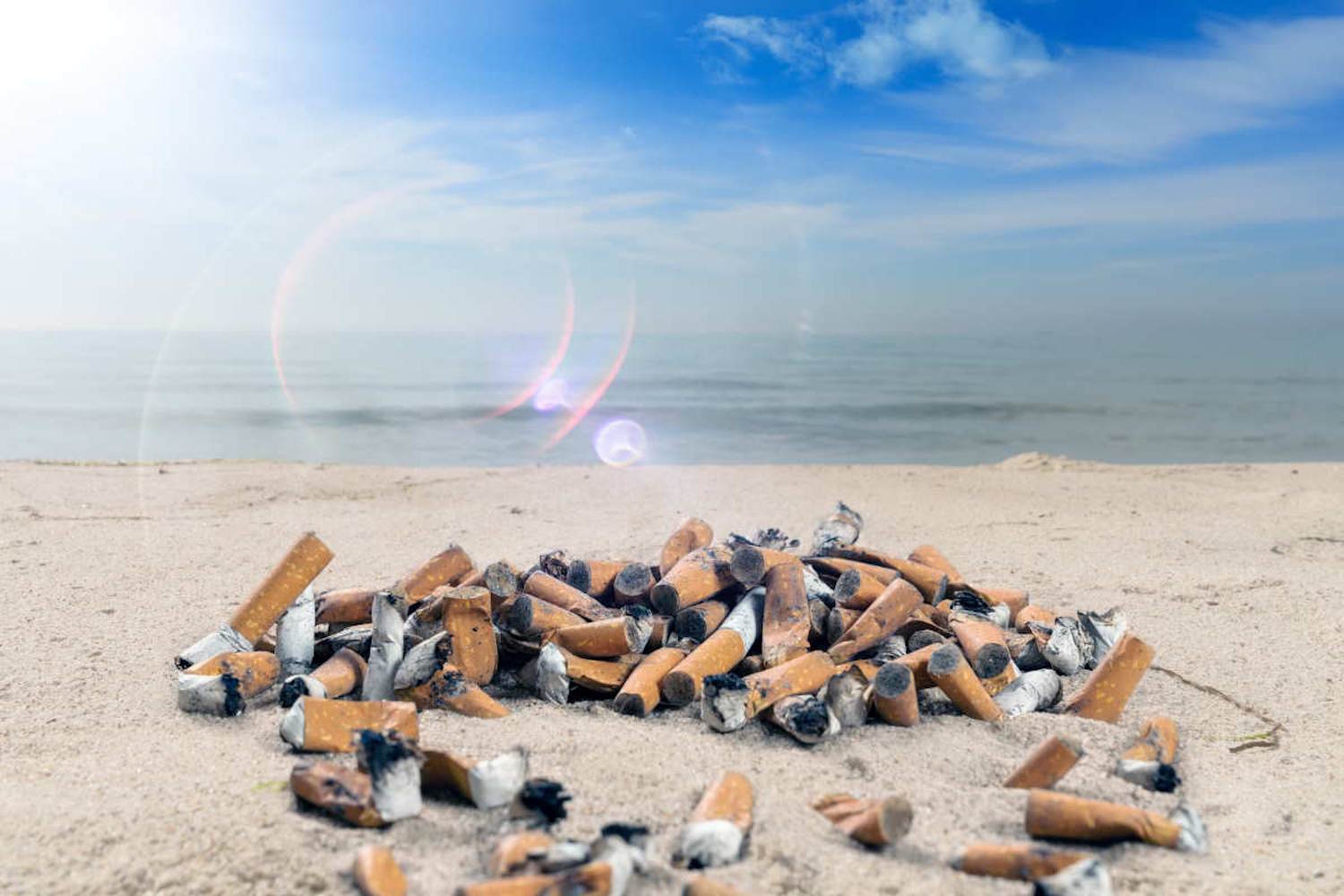
No more cigarettes on the beach. The municipality of Jesolo (Venice) takes a decisive step in protecting its coastline by extending the smoking ban to the entire beach, after the first intervention last year on the shoreline. There remain dedicated areas within the beach establishments, but the message is clear: the beach is a common good to be preserved.
Commenting on the decision is Plastic Free Onlus, which speaks of a concrete choice against plastic pollution. And the numbers explain why.
Every year millions of butts end up in the sand and in the sea. A filter weighs on average just 0.3 grams, but is made of cellulose acetate, a plastic that can take up to 10-12 years to degrade. In the meantime it releases toxic substances and microplastics, contaminating fragile and easily compromised ecosystems.
In the last year alone, in Veneto, Plastic Free volunteers have organized 14 collections dedicated exclusively to butts: over 200 people involved, almost 916 kilograms of waste removed, more than 3 million filters removed from the environment. A fact that makes it clear how widespread this pollution is, even if it is often invisible.
The butts are small, but the impact is huge. Intervening on a daily gesture such as smoking on the beach means acting at the root of a systemic problem. It means protecting marine biodiversity, but also the quality of the tourist offer and public health.
Jesolo, already recognized as a Plastic Free Municipality, will be awarded on March 14th at the Teatro Olimpico in Rome during the official ceremony.
The protection of the sea does not come from slogans, but from clear and coherent choices. Banning smoking on the beach is first of all a cultural signal: the coast is not an open-air ashtray. It is a collective heritage that deserves respect.
