
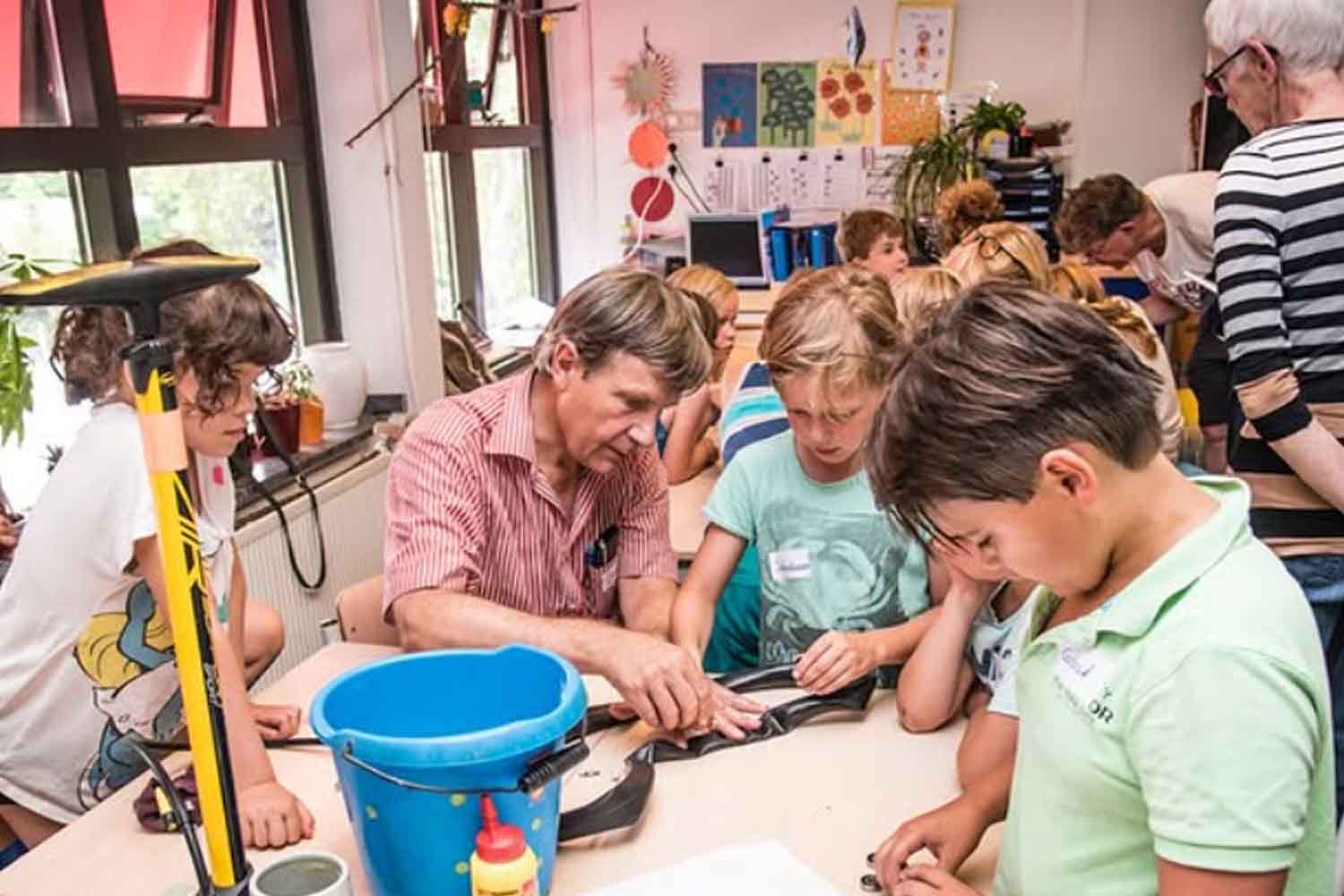
In the Netherlands there is a laboratory that works in a simple way: children arrive with a toy that no longer works, a small lamp that doesn’t light up, or a gadget that seemed destined for the bin. They come in, put it on the table and a volunteer, a mentor or an adult who wants to teach, tells them: “Let’s see what we can do together.”
Screwdrivers, wires, screws and lots of curiosity
THE Kids Repair Café were born with a very concrete idea: to show the little ones that objects are not “disposable”, that before giving in to breaking they can try to understand what happened, and that repairing something with your own hands gives a satisfaction that no new purchase can replace.
Inside these laboratories the atmosphere is that of homemade work, calmly. The children observe, ask questions, try to disassemble and reassemble. Sometimes the object turns on immediately, other times you need to try more than one solution, and sometimes it simply doesn’t work. It happens, and it’s not a failure: it’s part of learning.
Things last longer than we think
The parents who participate say that their children return home more aware of how the objects they use every day are made, and with less haste to ask for “a new one”. There is no obligation to be perfect, nor to do everything yourself: it is above all about understanding that repair is not something distant, but an activity that anyone can try.
In a period in which waste is growing and objects are being replaced more and more quickly, seeing children busy putting a toy back together is a reassuring image. Not because they will “save the planet”, but because they are learning a simple gesture: looking inside things, instead of immediately giving up.
And perhaps, among those tables full of tiny tools, we also learn something bigger: that the care of objects, of resources, of what we have, begins with small gestures, which can be done already as children.
View this post on Instagram
You might also be interested in:
