
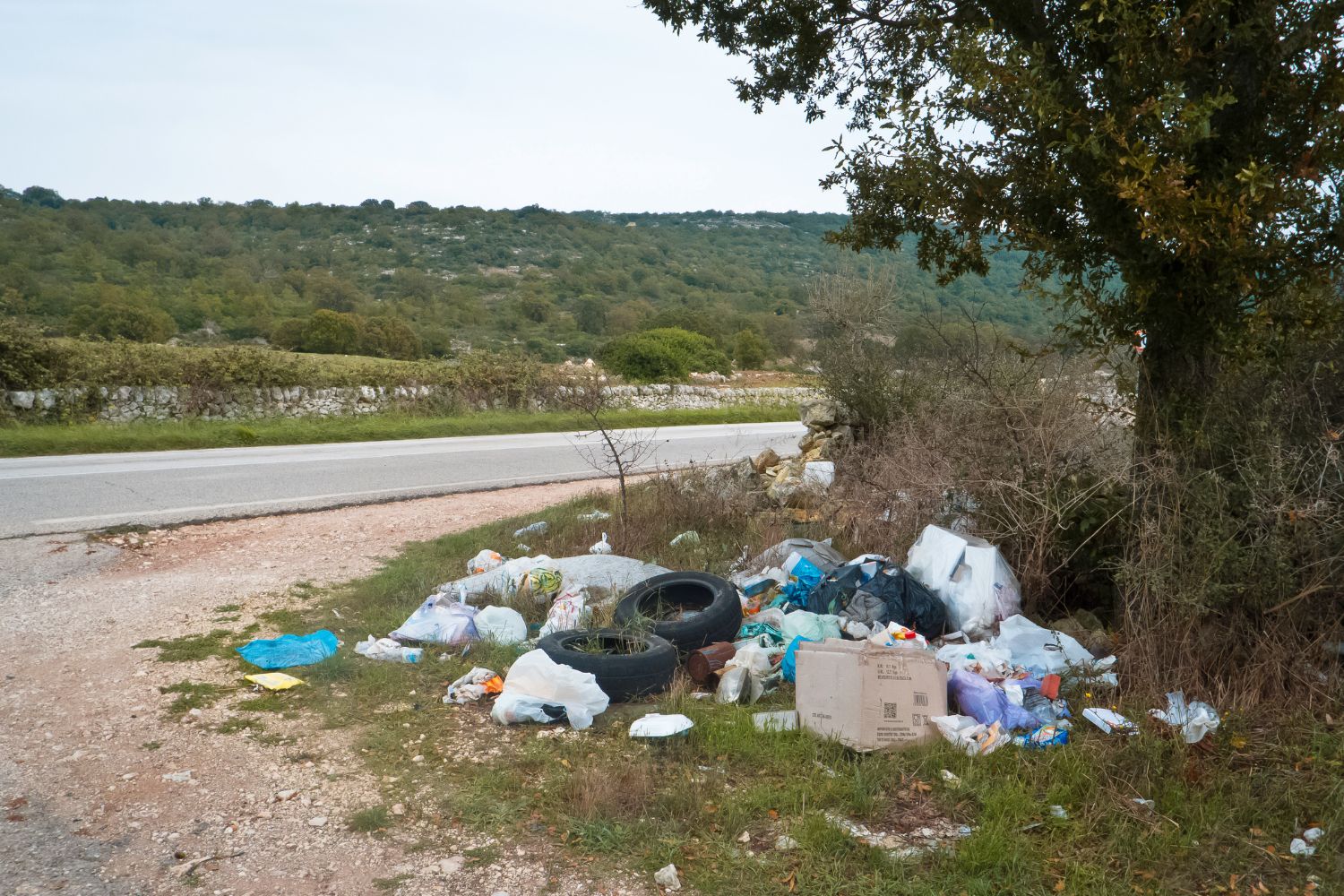
Waste of all kinds and degradation visible to anyone: for years the provincial roads of half of Campania have been in a state of total abandonment, in a pile of rubbish of any kind left at any time of the day or night and by anyone, thanks to a complete lack of control of the rules.
A glimmer of hope seems to be opening up thanks to a collaboration agreement which establishes the joint commitment of six institutional entities to tackle the problem especially along the provincial roads of Naples and Caserta, in the heart of the Land of Fires.
In recent hours, a collaboration agreement has been signed for the removal of waste abandoned along provincial roads which involves the Extraordinary Commissariat, the Metropolitan City of Naples, the Province of Caserta, Sapna (Society of the Metropolitan City), Gisec (which manages plants in the province of Caserta) and ARPAC.
What the Agreement consists of
The agreement precisely establishes the tasks of the various subjects involved. The Extraordinary Commissioner will have the role of directing the entire intervention: he will have to coordinate the operations, define the action priorities, guarantee economic coverage using the FSC resources available in the special commissioner accounts and approve the reports presented by the bodies responsible for implementing the interventions.
View this post on Instagram
The Metropolitan City of Naples will instead ensure administrative coordination with Sapna (Environment System of the Province of Naples), also making available the support of its technical structures for aspects related to provincial roads. A similar task will be up to the Province of Caserta, which will act as a point of connection with Gisec for activities in its territory.
Sapna and Gisec will have operational responsibility for the management of undifferentiated urban waste removed during the interventions: they will have to guarantee its delivery and treatment in authorized plants. The two companies will also have to ensure complete traceability of the waste, fill in the identification forms (FIR) and send the report on the activities carried out to the Commissioner every month.
Arpac also enters the field on the environmental controls front, introducing eight new technical-scientific figures. Their employment will be financially supported by the commissioner structure and may last up to 24 months – in any case no later than 31 December 2027, the deadline set for the conclusion of the Commissioner’s role. The specialists will have the task of intensifying waste sampling, analysis and characterization activities.
In an area marked by years of environmental emergencies, illegal landfills and fragile waste management, interventions of this type can represent an important step in reversing the trend. Coordinating removal and treatment operations more effectively means trying to restore environmental legality to an area that for too long has paid the price of abandonment, delays and wrong choices.
It goes without saying that, obviously, for the initiative to produce concrete results, a structural strategy must follow it: more prevention, more separate waste collection, more reclamation and constant surveillance of the territory. Only in this way will it be possible to transform an emergency intervention into a real opportunity for environmental restoration for a land that urgently needs it.
