
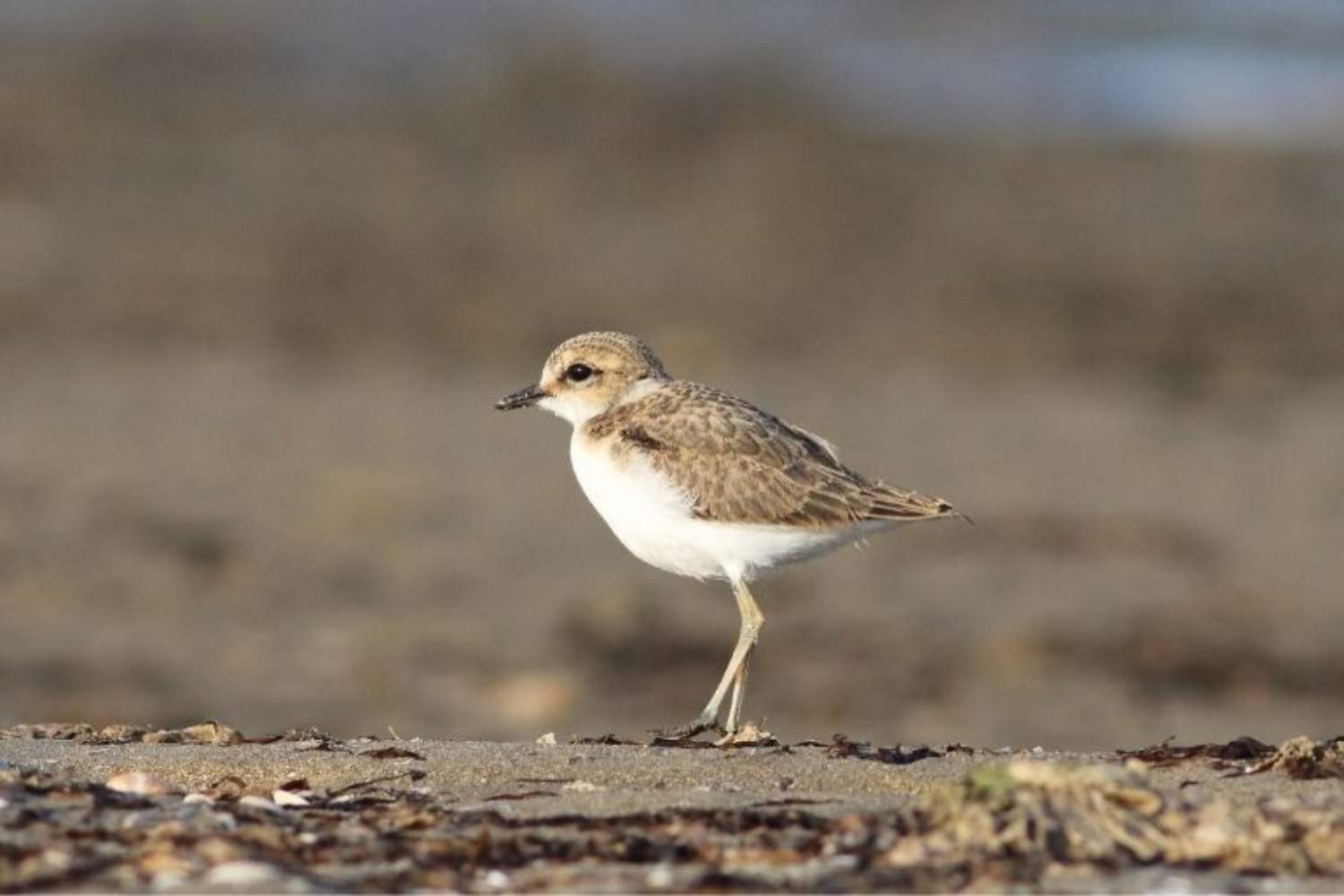
There is a simple way to understand if a beach is still alive: observe if a small wader with a quick and camouflage pace runs between the shoreline and the dunes. It is the Fratino (Charadrius alexandrinus), a symbolic species of Mediterranean sandy environments and today dramatically in decline. Its presence is not a detail for birdwatching enthusiasts: it is a precise indicator of the environmental quality of our coasts. Where the Kentish plover nests, the dunes are intact, the microfauna is rich, the ecological balance works. Where it disappears, something has broken.
Classified as “endangered” by the IUCN, the Kentish plover has gone from over a thousand nesting pairs to around 500 along the Italian coasts in less than twenty years. The most important areas remain the upper Adriatic and Sardinia, while elsewhere the populations are fragmented and vulnerable. A decline that follows a worrying European trend, with a constant reduction from the 1980s to today.
Seaside tourism and fragile habitat: a balance to be rebuilt
The root cause? Anthropic pressures on beaches. Intensive seaside tourism, mechanical cleaning of the sand, involuntary trampling of nests, dogs left free: daily actions which, added together, compromise the reproductive success of the species.
The Kentish plover lays its eggs directly on the sand, in almost invisible nests. All it takes is one careless pass to destroy an entire brood. But the problem is deeper: the loss of coastal dunes and the transformation of beaches into exclusively recreational spaces have progressively eroded its natural habitat. Protecting the Fratino does not mean banning the beach, but rethinking its management. It means accepting that the coast is not just a summer scenario, but a complex and fragile ecosystem.
LIFE ALEXANDRO: an international network to change course
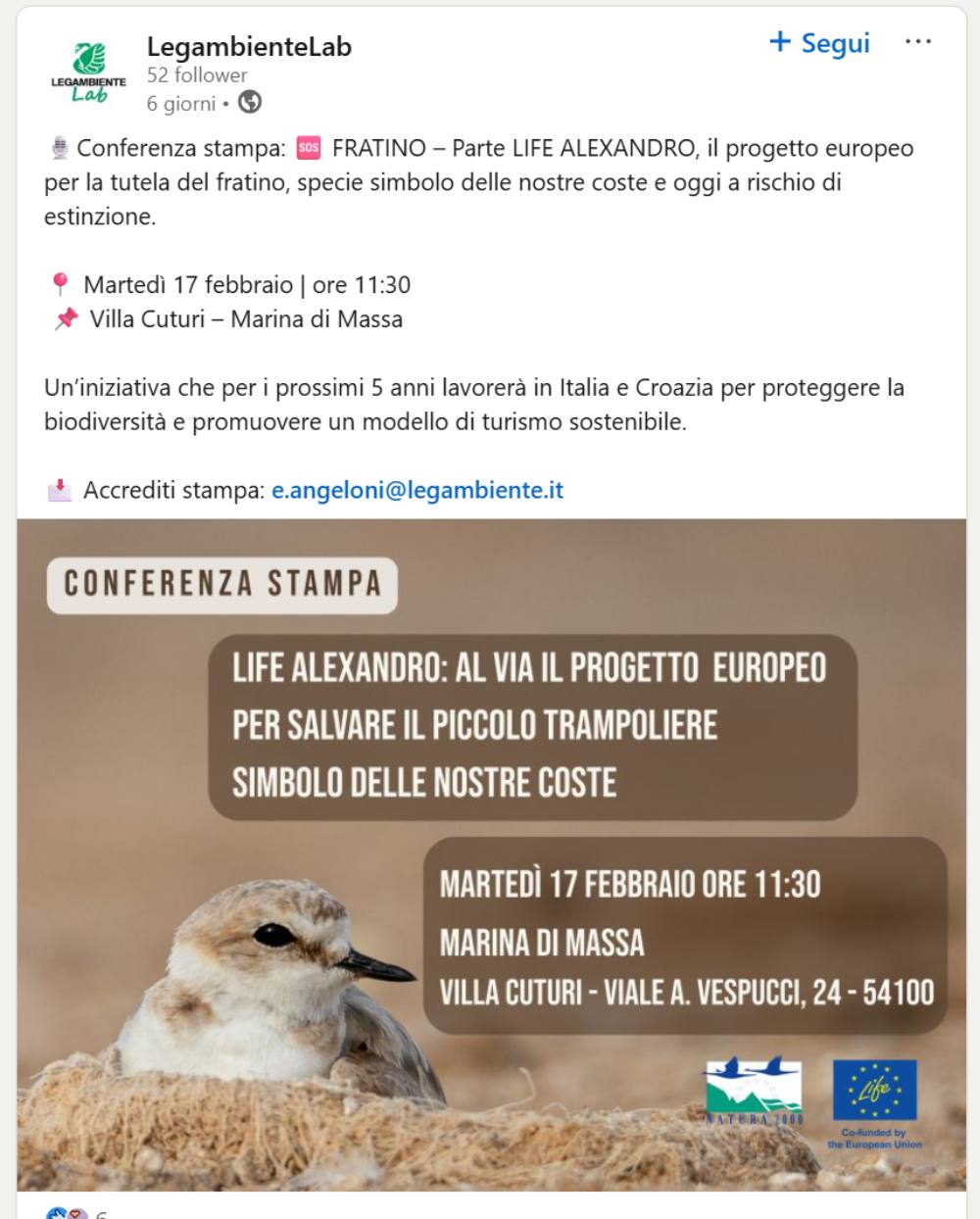
From here was born LIFE ALEXANDRO, a project co-financed by the LIFE Program of the European Union, which unites scientific bodies, parks, associations and institutions in Italy and Croatia. The objective is clear: to halt the decline of the species and promote a sustainable tourism model.
The project will affect approximately 400 kilometers of the Italian coast and 74 in Croatia, involving 51 Natura 2000 sites. Concrete actions are planned: securing nests, monitoring, restoration of dune habitats, collaboration with municipalities and beach operators to develop shared management tools. It is not just a wildlife protection plan, but a cultural proposal: returning to considering beaches as spaces of biodiversity, not just consumption.
Save the Fratino to save the beaches
The Kentish plover is the only bird species closely linked to sandy and dune environments. Defending it means protecting the entire coastal ecological network. A more natural beach is also a more resilient, more beautiful beach, more capable of offering well-being.
LIFE ALEXANDRO demonstrates that conservation and development are not irreconcilable opposites. They can proceed together, if guided by scientific knowledge and collective responsibility. And maybe next time, between umbrellas and the sea, we will notice that little bird running on the sand. It will be a sign that we are doing the right thing.
You might also be interested in:
