
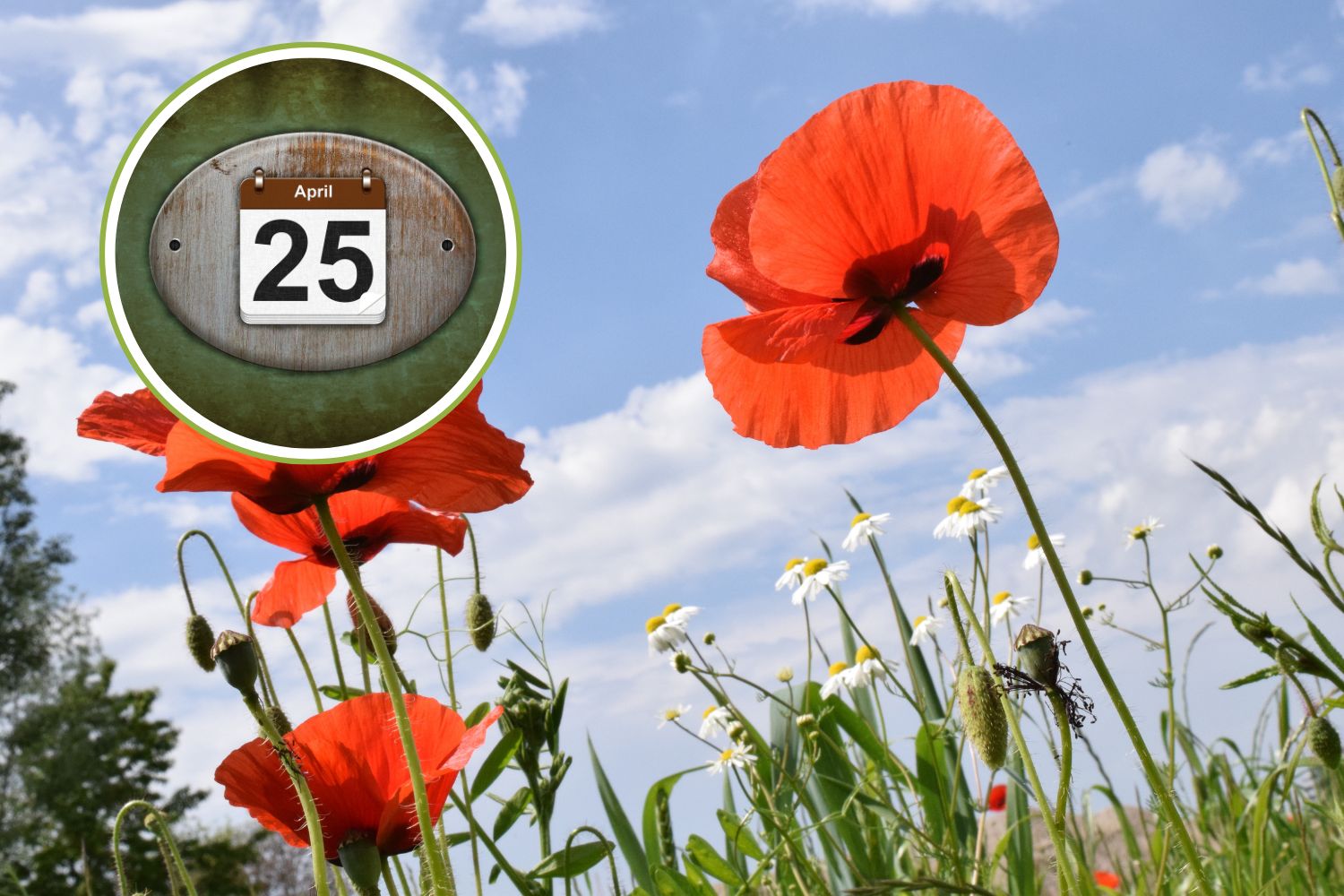
On April 25, the day on which the Liberation Dayit is a crucial moment in Italy’s historical memory. This date marks the end of the war, the Nazi -fascist occupation and the beginning of the democratic reconstruction of the country, the result of a courageous and sacrificed struggle. Throughout the boot, the courage of the partisans is celebrated, the strength of women and men who, among a thousand difficulties, fought for freedom and peace.
On this day, every year, the Italian people find themselves united not only to pay homage to the heroes of the Resistance, but also to remember the atrocities of a war that has marked the fate of entire generations. But, alongside the official celebrations, a small, but significant symbol accompanies the memory: the poppythe flower that becomes the emblem of that struggle for freedom.
The resistance and presence of the poppy between the battlefields
The Italian resistance was a complex, articulated and varied movement, which involved partisans, men and women from different social and political backgrounds. The partisan groups fought against the fascist regime, against the Nazi occupation, and for the restoration of democracy. Their deeds are still an integral part of our national identity, an identity that has its roots in the sacrifices made during the conflict, but also in the hope of a better future.
In those years, the war not only brought devastation, but also the hope of a free world, which slowly was being built thanks to the determination of those who opposed each means of the regime. And precisely in the middle of the rubble, among the lands devastated by the battles, the poppy flourished. This flower, which grows spontaneously in the land with war, has become symbol of that struggle for freedom, but also of life and rebirth, Just like resistance itself.
The poppy: between the symbol of death and a sign of hope
In 1964, the poet Fabrizio De André wrote “The war of Piero”, a song that, although not referring to a specific conflict, describes the universal pain of the war and the suffering of the soldiers. In the song, one of the most powerful images is that of Papaveri who bloom in the battlefieldsas if to symbolize that, despite death, life continues to flourish. The famous verse:
Sleep buried in a grain field,
It is not the rose, it is not the tulip,
Who fans you from the shade of the ditches,
But they are a thousand red poppies.
It is an image that refers to that reality in which, after destruction, nature, in its cycles, brings with it hope, the memory of the fallen and the promise that, even after suffering, life can rise again. In this context, the poppy becomes the resistance flowera flower that grows spontaneously where war has left its mark, but which also represents an act of revolt, resistance against injustice and death.
The language of flowers: poppy as a symbol of memory and respect
In addition to its poetic and symbolic meaning, the poppy also has a particular value in flower language. In the floral meaning, the red poppy symbolizes the I remember, the pain, but also hope and comfort. This flower is used on multiple opportunities to honor the fallen, to commemorate those who gave life in battle. Its meaning is not limited to Italy, but also extends to countries such as England, where poppy is a symbol of the Remembrance Day, one day when the victims of the world wars are remembered.
On April 25, therefore, the poppy represents not only the Italian resistance, but also a Universal symbol of commemoration of the fallen of war. In Italy, this flower is often worn by those who participate in the official ceremonies of April 25, as a tribute to all those who have fought for freedom, paying with their lives. Its red color is a direct recall to the blood shed on the battlefields, but also to passion and love for the homeland and for freedom.
The poppy today: symbol of unity and memory
Today, the poppy remains one of the most powerful symbols of historical memory, a flower that has gone through decades of history and that continues to flourish as a warning for future generations. His presence during the Liberation Festival is not only an act of commemoration, but also an opportunity to reflect on the value of freedom and democracy, and how important it is to preserve them every day.
The poppy, which grows even in the most difficult soils, is a metaphor for a resistance that does not bend, which is renewed and continues to thrive. Just as the partisans have never surrendered, even today, that flower that blossoms in the battlefields is a sign that freedom is a precious asset, which must be protected and defended at all times.
In this April 25, as in every year that celebrates resistance, poppy is our way of saying thanks, to honor those who have allowed us to live in a free and democratic Italy. Its flowering is a memory and a commitment to the future, so that the new generations never forget the sacrifice of those who have fought for our freedom.
On April 25, the poppy becomes an indelible sign of what has been and of what continues to live in our consciences. A flower that, in every red petal, brings with it the memory of those who fought for our freedom.
