
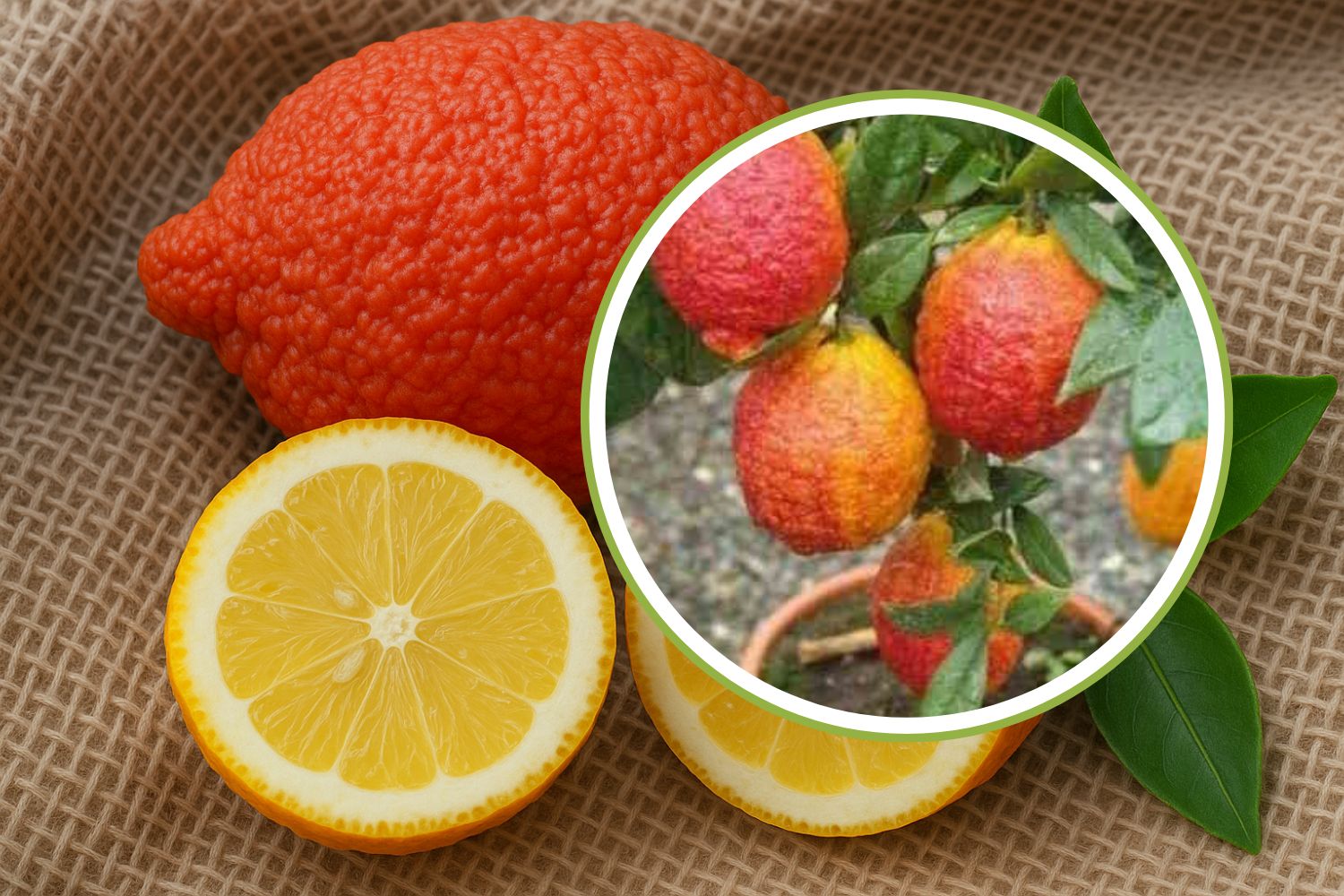
Imagine collecting lemons from the color of a sunset directly from your terrace. The red lemon red (Citrus Limon Var. red) It is not green science fiction, but an authentic variety that challenges everything we thought we knew about domestic citrus fruits.
The fruit you don’t find in the supermarket
The first question that arises is: why don’t we ever see it in stores? The answer is as simple as surprising. These fruits with a fire red or intense orange peel have an Achilles heel: once ripe, they deteriorate over 48-72 hours. A feature that makes them unsuitable for large retailers but perfect for those who want to experience the experience of zero kilometer collection.
The pulp maintains the same lively shades of the outside, while the flavor has more harsh and intense notes than the yellow cousin. The elongated shape, almost drop, and the particularly thick peel complete the portrait of a fruit that seems to have come out of a painting of a dead nature.
How to cultivate red lemon
Contrary to what one might think, the red lemon does not require skills as an expert agronomist. Indeed, its compact nature makes it ideal for vase cultivation, perfect for those with limited spaces but large green ambitions.
The secret lies in the choice of the substrate: land rich in nutrients, with particular attention to phosphorus and potassium. The specific fertilizers for citrus fruits available on the market represent the most practical solution to guarantee the plant everything it needs.
Winter requires some more care. The plant must be protected from frosts, both with specific fabrics and with temporary hospitalization (strictly far from radiators). Irrigation becomes minimalist: only nebulizations when the leaves show signs of water stress.
Choice of the pot and where to place it
The red lemon finds its ideal size in a pot of at least 50-60 cm in diameter for adult plants. The container must have drainage holes to avoid stagnation of water that could damage the roots. The optimal position is in full sun for at least 6-8 hours a day, sheltered by the strong winds that could break the branches full of fruits.
What land to use
The ideal substrate is a mix of quality universal land, mature compost and coarse sand in proportion 60-30-10. The pH must oscillate between 6.0 and 7.0, slightly acidic. Added expanded clay to the bottom of the vase guarantees optimal drainage, essential to prevent radical rot.
Whenever watering the red lemon
The irrigation of red lemon follows a precise seasonal calendar. During spring and summer, water every 2-3 days when the surface soil is dry to the touch. The quantity of water must be abundant until the water comes out of the drainage holes, but without ever leaving the saucer full.
In autumn and winter, drastically reduce watering to once a week or less, always checking the humidity of the soil. During the colder months, prefer foliage nebulizations in the hottest hours of the day.
How to fertilize red lemon
Fertilization is crucial to obtain quality fruits. From March to September, use a specific liquid fertilizer for citrus fruits every 15 days, diluted in irrigation water according to the doses indicated on the label. The essential nutrients are nitrogen for vegetative growth, phosphorus for flowering and potassium for fruiting.
During the winter, completely suspend the fertilization to allow the plant to enter into vegetative rest.
How to protect the plant in winter
When the temperature drops below 5 ° C, the red lemon needs protection. The options are different: move the pot to a cold greenhouse, cover the plant with breathable non -woven fabric, or hospitalize it at home in a bright and fresh room, far from radiators.
If kept outside, also protect the pot by wrapping it with insulating material to prevent the gelino roots.
How to prune red lemon and make maintenance
Pruning is carried out between February and March, before the vegetative recovery. Eliminate dry, damaged or growing branches in the inside of the hair. The bases at the base must be removed immediately. To maintain a compact shape, shorten the longest branches of one third of their length.
Always use shears disinfected with alcohol and seal the larger cuts with healing mastic to prevent fungal infections.
How and when to repot red lemon
The first repotting must be done two years after the plantation, then every 3-4 years for mature plants. The ideal period is May, when temperatures stabilize. Choose a vase only slightly larger than the previous one, completely change the soil and gently prune the longest roots to stimulate the formation of new roots.
Red lemon diseases and parasites
Yellow leaves can indicate excess water or nutritional deficiency. If many leaves fall in winter it is normal, but if it happens in other seasons, checking irrigation. The most common parasites are ladybugs and aphids, to be treated with soft soap or Neem oil.
The premature fall of the fruits is often due to water stress or thermal changes. Keep the soil humidity constant and protect the plant from air currents.
How to use it in the kitchen and beyond
Red lemon applications go far beyond simple decoration. In the kitchen, despite the most pronounced acidity, it can replace traditional lemon in drinks, marinations and condiments, adding a touch of chromatic originality that does not go unnoticed.
The cosmetic sector has discovered a precious ingredient in its antibacterial and astringent properties. It is not uncommon to find essential oils and red lemon creams in the most attentive herbalisties to green trends.
But perhaps the most appreciated use remains the ornamental one. During the Christmas holidays, the plant full of colored fruits offers a sustainable alternative to the classic Christmas star, with the advantage of lasting all year and is actually useful.
Don’t you want to lose our news?
