
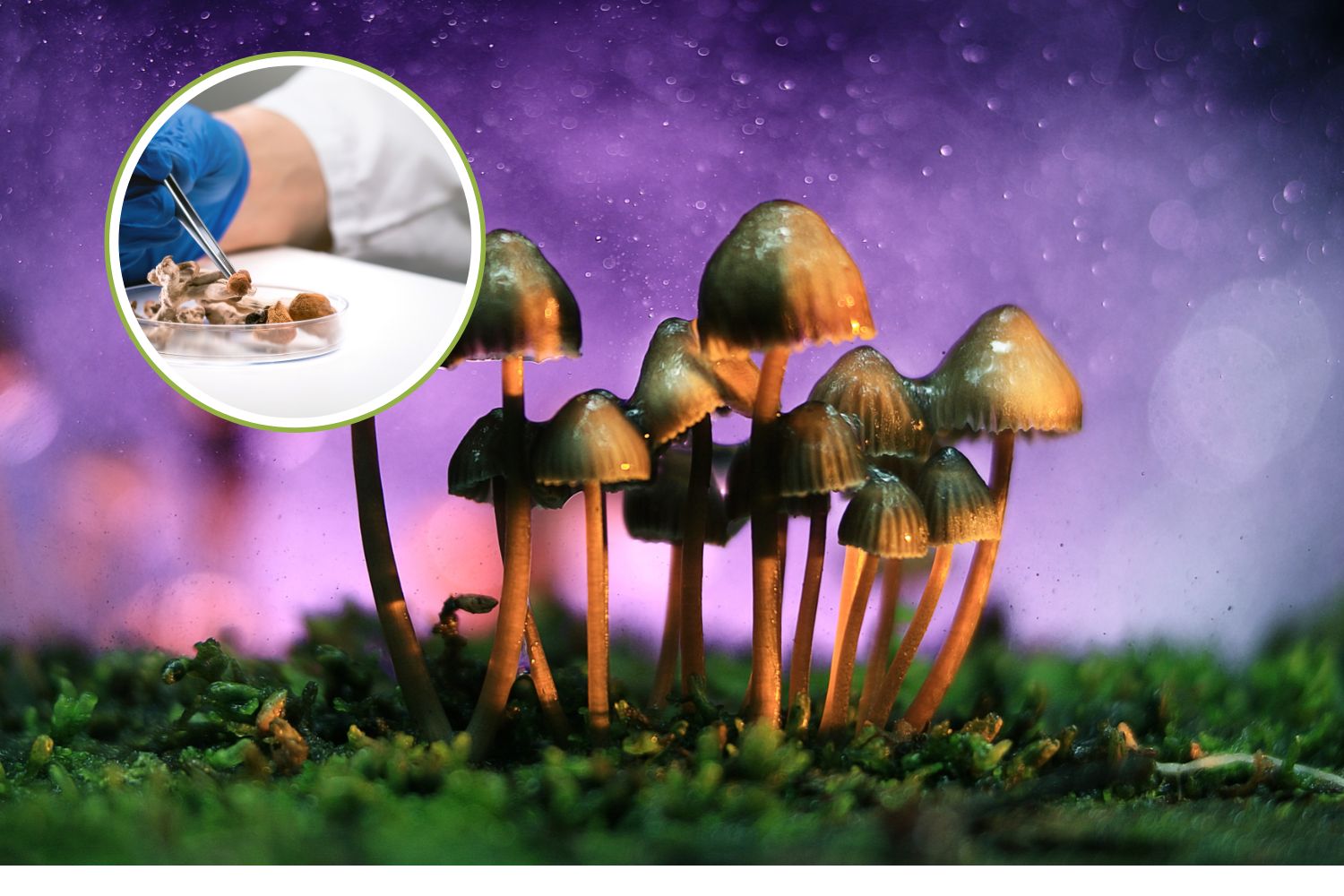
Psilocybin, the hallucinogenic substance contained in so-called “magic mushrooms”, has attracted human interest for thousands of years. Today it returns to the center of scientific attention: not only for its potential therapeutic benefits, but also for a discovery that surprised researchers.
A newly published study demonstrates that two completely different groups of mushrooms have independently developed the ability to produce psilocybin. The same molecule, born from two separate evolutionary paths. A phenomenon called convergent evolution, rare and difficult to explain.
Psilocybin: same substance, different enzymes, no evolutionary link
The Psilocybe genus, the one of the best known hallucinogenic mushrooms, has already been studied in detail. The chemical process that leads to the formation of psilocybin in these species is well defined and involves four enzymes: PsiD, PsiH, PsiM and PsiK. They all work sequentially starting from tryptophan, avoiding the formation of an unstable intermediate substance that could damage the fungal cells.
But the news is that mushrooms of the Inocybe genus, known as fiber caps, also produce psilocybin. Until now it was thought that they inherited this ability from a common ancestor with the Psilocybes. But the genetic data says otherwise.
Researchers at the Leibniz Institute in Germany recreated the enzymes of both species in the laboratory. Result? The chemical reactions involved in the production of psilocybin are completely different in the two mushrooms. They use different biochemical tools, but arrive at the exact same result, as explained by biologist Tim Schäfer, lead author of the study.
It’s like watching two separate workshops working with different tools, but ending up building the same object.
It is confirmation that nature “invented” psilocybin twice. An unusual behavior, even for the fungal world.
Why do mushrooms produce psilocybin?
The real enigma, however, is not so much how, but why. Why did two such different mushroom species develop the same psychedelic compound? Dirk Hoffmeister, professor and co-author of the study, admitted:
The truth is, we don’t know.
There are hypotheses. One of the most accepted is that psilocybin serves as a defense against insects or other predators. For example, when Psilocybe mushrooms are damaged, they turn blue. That color is the result of the decomposition of psilocybin and could function as an alarm signal for those trying to feed on them, as Hoffmeister comments:
In nature nothing happens by chance but we still don’t know what real advantage this molecule brings to fungi.
New biotechnological applications
If the evolutionary explanation remains uncertain, developments in the field of biotechnology are concrete. Psilocybin, in fact, is difficult to produce on a large scale with chemical methods. Pharmaceutical companies, which are testing it in clinical trials against depression and addictions, are looking for alternative production methods.
The German study has opened new avenues: enzymes of the Inocybe genus also work outside the fungus, in the laboratory. This means that we could produce psilocybin in bioreactors, without having to cultivate mushrooms or use complex chemical syntheses, as Schäfer explains:
We now have a new set of biochemical tools. This could simplify the pharmaceutical production of psilocybin in the future.
You might also be interested in:
