
Today, March 20, three hundred million people celebrate Nowruz — “new day” in Persian — while the Middle East continues to burn around them. It coincides with the spring equinox, the moment when day and night are equal: it is the Persian New Year, and this year it arrives while Iran is under attack, the economy is on its knees and people struggle to find the meaning of celebration. Yet the bonfires are lit, the bazaars smell of hyacinths, and some still hope.
A three thousand year old celebration
Celebrated continuously for approximately three thousand years, Nowruz marks the first day of the Persian calendar. Its roots lie in Zoroastrianism, but over time it has transcended religious boundaries to become the shared cultural heritage of Persians, Kurds, Turks and peoples of Central Asia. It is observed in Iran, the Caucasus, the Middle East and Central Asia, but also in diaspora communities spread across Australia, the United States, Canada and Europe. The United Nations officially recognizes it as a symbol of peace, unity and cultural diversity.
Rites and symbols of renewal
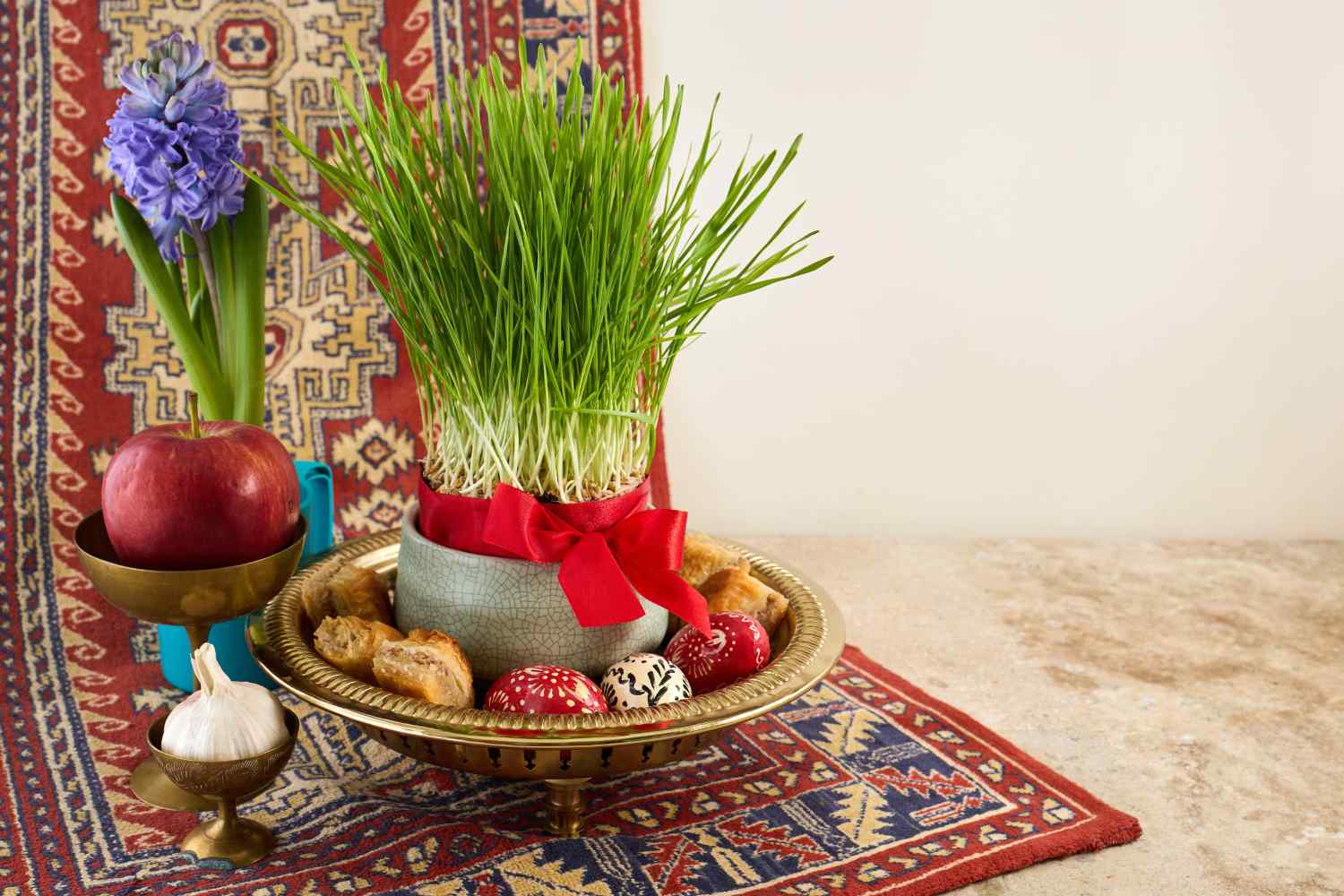
Nowruz traditions all revolve around the idea of rebirth. Families start the Khaneh-Tekani, the big house cleanings that purify the house in view of the new year. The Haft-Sin, the table of seven symbols, is set up in the center of the room: seven objects whose name in Persian begins with the letter “S”, each carrying a wish – health, abundance, love, patience, renewal.
In recent days the eve has been dominated by fire. During Chaharshanbe Suri, the holiday that falls on the eve of the last Wednesday of the Iranian calendar, large bonfires are lit and people jump over the flames to leave the evils of the past year behind. An ancient ritual, this year loaded with extra weight.
New Year vibe in Tajrish (northern Tehran) during the final hours before #Nowruz
#Tehran #Iran pic.twitter.com/UwPAehdw5G
— Living in Tehran (LiT) (@LivinginTehran) March 19, 2026

“I don’t have the energy to set the table”
In Tehran, the bazaars still smell of hyacinths and the stalls are full of goods. The form of the celebration is there, but the spirit falters. Caught between a regime under pressure and relentless US and Israeli attacks — thousands dead, infrastructure destroyed — many Iranians are experiencing a Nowruz very different from others.
“I don’t have the energy to set up my haft sin and prepare the house for spring,” Nazanin, 36, a Tehran resident, told CNN. «How can I celebrate if I can’t see my family? We can’t all gather together.” The last few weeks have been marked by “a sense of desperation and fear”, he explained: time seems suspended, and even traditional anniversaries “mean so little”.
It’s not just the war that weighs heavily. Even before the conflict broke out, the country was already on its knees: skyrocketing inflation, rampant unemployment, end-of-year protests bloodily repressed. For many Iranians even the simplest goods related to the holiday, fresh aromatic herbs, fish, flowers, have become a luxury.
Markets are well supplied, but scarcity is not the problem,
a resident of the capital told CNN.
Buying these things is a luxury, especially when we have no idea what the future holds.
There are also those who hope
Not everyone, however, looks at this Nowruz with resignation. For some, the coincidence between the holiday and this moment of crisis takes on almost a symbolic meaning, almost an omen.
Since this war started, the city seems lighter, Mehrdad, a Tehran resident, told CNN.
The sky is blue, the smog cleared. It’s perfect spring weather, as if the city knows we’ll be free
Ahmad, 45, chose to celebrate Nowruz as he always has:
We’ve seen so much death in the last few months that I feel the need to honor life, to not let it take it away from us.
Bonfires and slogans in the squares
In recent days, in the squares of Tehran, Karaj, Shiraz and Mashhad, people took to the streets for Chaharshanbe Suri despite the security forces’ attempts at repression: lit bonfires, dancing, songs. The Islamic Republic views this pre-Islamic holiday with suspicion, yet patriotic hymns such as “Hey Iran” and the cry “Javid Shah”in response to the appeal of the exiled prince Reza Pahlavi to celebrate the anniversary despite the prohibitions.
Today’s Nowruz also coincides with the end of Ramadan and Eid al-Fitr. The government organized a state prayer, which represents a further opportunity for the regime to demonstrate public cohesion. But for the vast majority of Iranians, regardless of religion and political affiliation, Nowruz occupies the central place — with new, deeper and more painful meanings than ever.
