
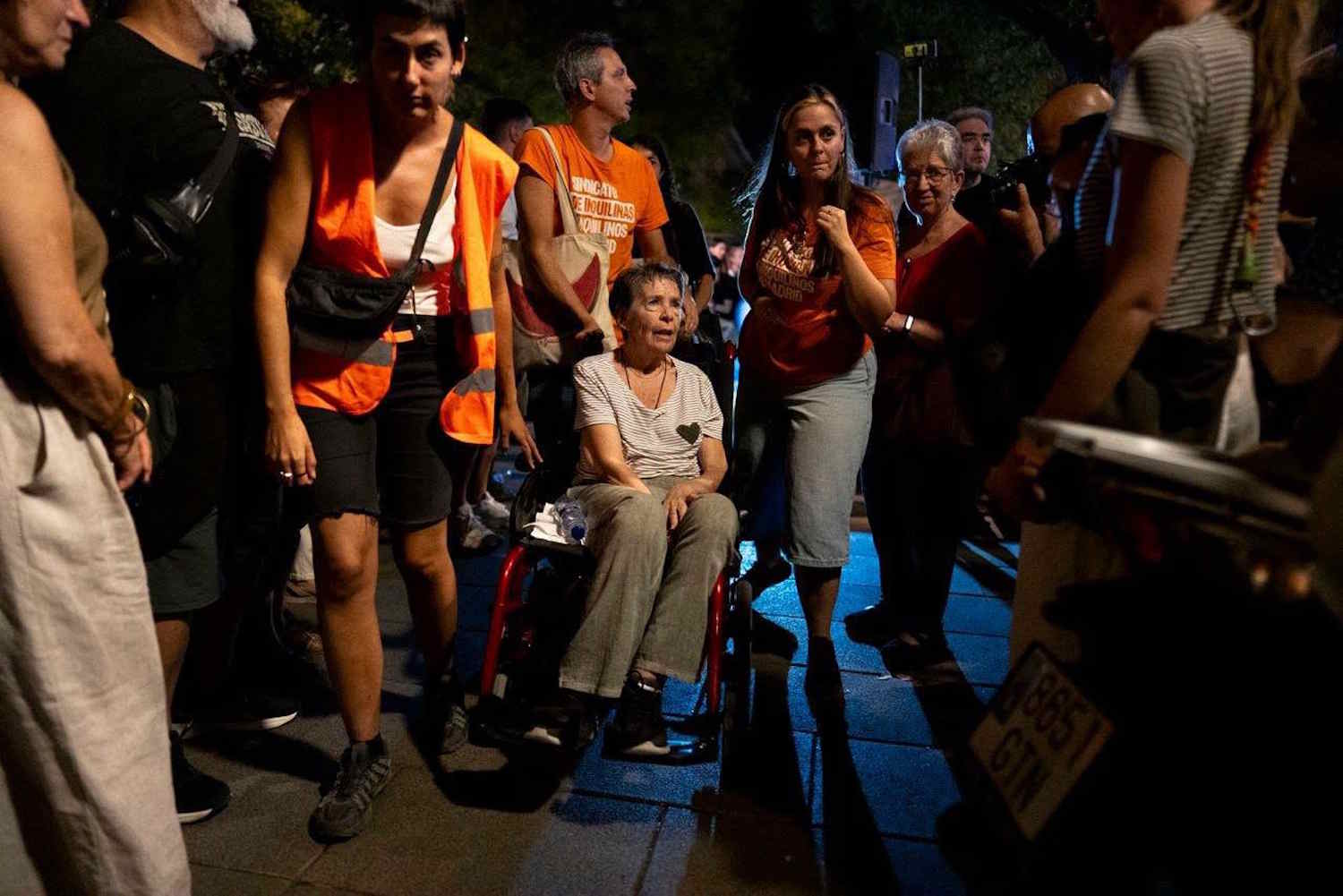
At number 46 of Calle Alcalde Sáinz de Barandain the Retiro neighborhood of Madrid, there is a door like many others. Six floors, narrow windows, granite worn by time. But today that door also bears the sign of a story that is difficult to forget: the marks left by the break-in necessary to carry out an eviction.
Behind that door he lived Maricarmen Abascal87 years old, who had spent almost his entire life in that house: 71 years of memories, habits, objects and everyday life. A house that – as it is for everyone – was not just a physical place, but the thread that held together a part of its history. And then came the eviction.
On the morning of the forced exit, Maricarmen did not leave the apartment on her own two feet, but was taken away on a stretcher by Samur Social and transferred to the Gregorio Marañón hospital, without yet knowing where she would live. His image went around Spain and the world and sparked a debate that goes beyond this single case: that of a country and a continent where more and more people are struggling to find a balance between the cost of a house and their income.
A battle that lasted years
The Maricarmen story began many years ago. The rental contract dated back decades: after her mother’s death in 2005, ownership passed to her. The owners of the building, purchased in 2018 by Urbagestión Desarrollo and Inversión, claimed that the contract had been terminated since 2007.
Today a buitre bottom has disappeared to Maricarnen with 87 years.
We didn’t want to allow it. Let’s go home with the rental and change this model forever.
The change fills today.
HOY A LA 19:00H
CALLE GENERAL MARTÍNEZ CAMPOS, 35 (ÁTICO DE AYUSO) pic.twitter.com/BqZqK1lEVr
— Sindicato de Inquilinas e Inquilinos de Madrid (@InquilinatoMad) September 23, 2026
After several judicial steps, the case reached the Spanish Supreme Court, which last March confirmed the termination of the contract, making the eviction permanent.
In the meantime, the Madrid Tenants Union, some social organizations and several people had mobilized and asked for an alternative solution. A United Nations commission had also asked to stop the eviction, while the Spanish government had declared that it had proposed that the property sell the apartment to a public company.
Nothing, however, managed to change the final outcome.
The story of Maricarmen is not just the story of an elderly woman who loses her home, but probably the symbol of a broader transformation: in many European cities, living in your own home has paradoxically become increasingly difficult. The problem does not only concern those who do not have a home, but also those who work, pay rent and suddenly discover that the cost of living exceeds their means.
Italy is also experiencing a phase of strong housing pressure. According to the European Commission report dedicated to our country, 24.1% of Italian families live in rent and for the most economically fragile groups the cost of living can exceed 40% of disposable income.
In large cities the gap is even more evident: according to estimates reported, in Milan the rent can absorb 76% of the average salary, in Rome 65% and in Bologna 48%.
Numbers that tell of a reality in which even having a job does not always mean being able to secure a home.
The Italian case
In Italy the housing crisis is also intertwined with the reduction of housing available for those who have more difficulties. Public housing represents approximately 2.4% of the total housing stock, while there are approximately 650 thousand families on the waiting list for public housing. At the same time, thousands of unused public housing units would require recovery and maintenance interventions.
The phenomenon of short-term rentals has added further pressure in some tourist cities: in 2024 the market reached record levels with 127 million nights, contributing to the transformation of some urban areas where finding a stable home for residents has become increasingly complex. In Florence, for example, the public debate has focused on the growing weight of homes intended for tourism in the historic center.
Meanwhile, however, behind every eviction and administrative procedure there is a person, a network of relationships, a life built in a place.
“I have lived here 71 years. I don’t want to leave”, Maricarmen said before the eviction, thanking those who had supported her and inviting other people with housing problems to organize themselves.
His story leaves a question we should start asking: What happens to a society when more and more people have to choose between paying for a house and being able to live? It happens in Madrid today, but it can happen anywhere.
