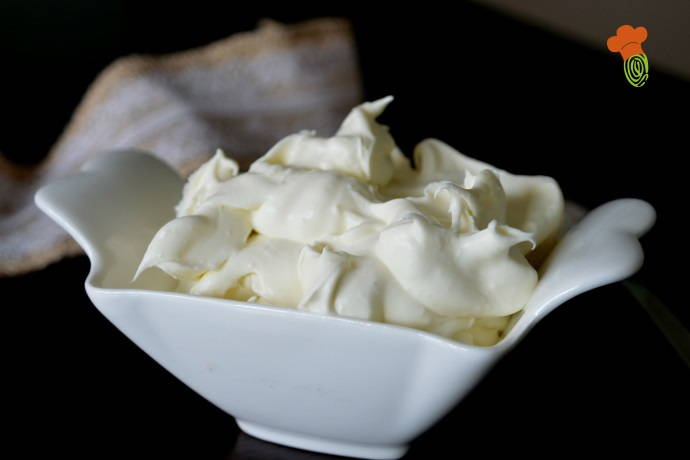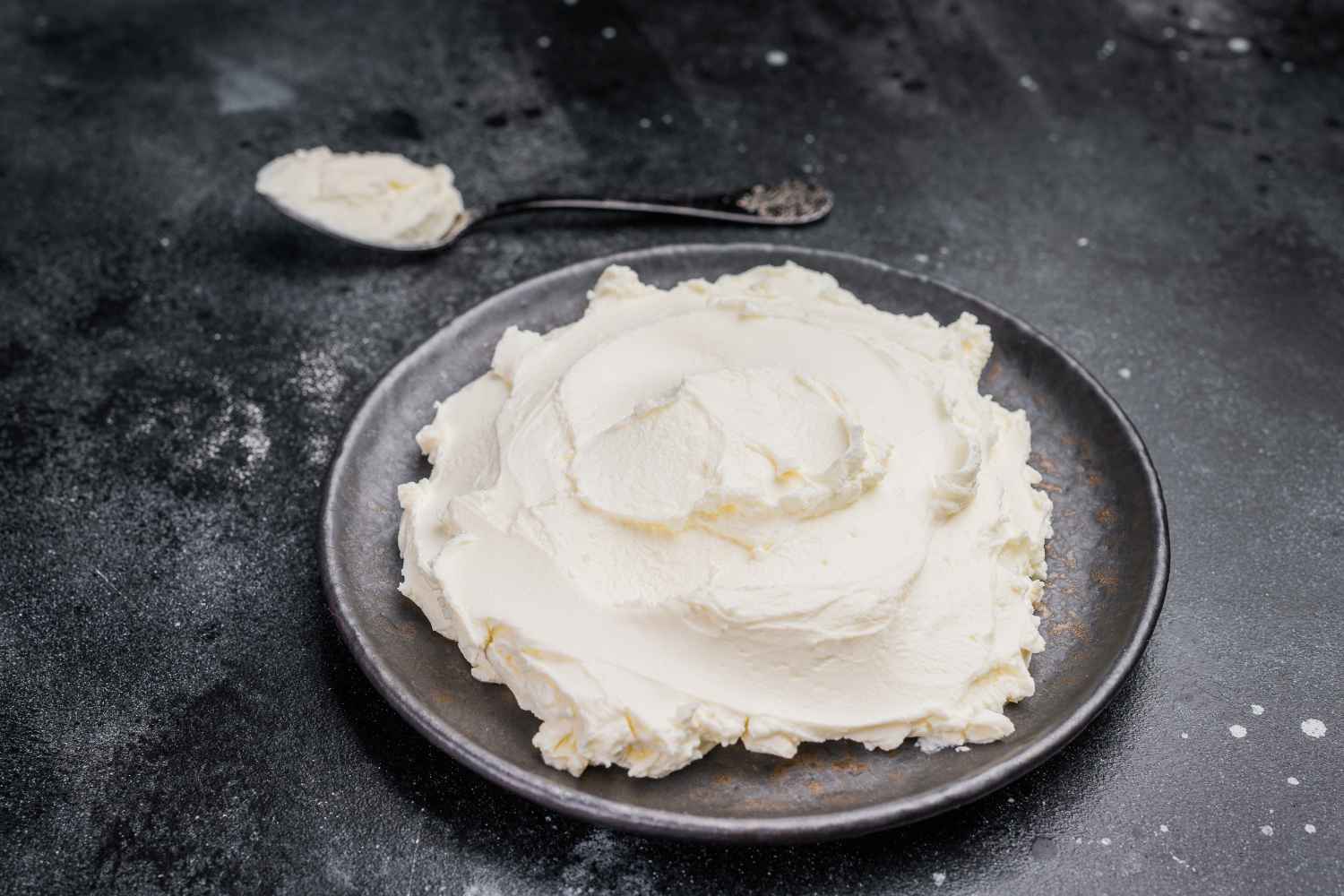
Mascarpone. A cheese that all tiramisu lovers will certainly appreciate. However, few know the origins of this ingredient and the characteristics that make it so dear to vegetarians too.
History, origins and anecdotes
Mascarpone (a term that derives from the Lodi area “mask“or milk cream) is a cheese typical of some areas of Northern Italy, in particular Lodi and Abbiategrasso. It is a traditional Italian agri-food product and as such recognized by the Ministry of Agricultural, Food and Forestry Policies.
An excellent product that seems to boast ancient origins, it is in fact thought to have been processed for the first time in the 12th century with the aim of conserving and using a little excess milk. It even appears in an ancient treatise dedicated to milk and its derivatives, the “Summa Lacticinorum” of 1477. In this publication the author, Pantaleone da Confienza, within an overview of the most famous Italian cheeses, also described different types of mascarpone, telling how they were produced as well as the flavor and the most common way of consuming them.
Today it is obviously a product that we can find in the supermarket every day but originally it was only produced in the coldest periods of the year to prevent it from going rancid too quickly. One of the characteristics of this cheese is in fact its easy perishability. For this reason it was stored in glass and porcelain containers in cool areas such as cellars and in any case had to be consumed within a short time.
There are also several anecdotes about mascarpone. There are those who believe that the name of this cheese actually came from an expression used by a Spanish nobleman who, after tasting it, declared “but how good!”.
It seems that even Napoleon, after tasting it in Lodi at the end of the 18th century, was particularly struck by the taste and creamy consistency of mascarpone to the point of requesting it for his banquets in France.
Finally, it is said that the famous French chef and pastry chef François Vatel committed suicide precisely because of mascarpone. It is said that he took his own life because he was unable to obtain the quantity of this cheese needed to make a dessert for the Sun King.
Calories and nutritional values
As already mentioned, mascarpone is a very caloric cheese. As regards nutritional values, you can refer to the following data referring to 100 grams of cheese:
Characteristics of mascarpone
Mascarpone is a very particular cheese and, despite the name classifying it as such, there are those who consider it to be something different. It is obviously a milk derivative that has a dense and creamy consistency and a taste that is quite reminiscent of cream.
It is a cheese with a sweet flavor and one of the most caloric, in fact there are around 400 calories per 100 grams of mascarpone.
It is generally produced using cow’s milk milked in the morning, pasteurized and centrifuged in such a way as to obtain cream with a fat percentage of approximately 35%. It is not then subjected to the classic curdling by rennet coagulation, i.e. that which is carried out using rennet and milk. Its typical consistency is instead achieved using the acid-thermal coagulation of the cream, i.e. by adding citric acid and working the cheese for 5-10 minutes at high temperatures (they can even reach 90-95 °C).
In this way it is possible to coagulate the casein present in milk without using further animal derivatives and this very particular characteristic makes it a product appreciated in vegetarian cuisine.
Immediately after coagulation, to produce mascarpone the whey is drained and filtered. After resting for about a day, this sweet cream cheese is ready to be used.
It is important to note that mascarpone should be consumed fresh and that, after opening, it has a very limited shelf life before going rancid and seeing its color and flavor altered. It should therefore always be placed in the refrigerator and consumed within a couple of days.
Mascarpone is suitable for vegetarians
Mascarpone is a cheese suitable for vegetarians as it is made without using animal rennet. We remind you that this type of rennet, which is generally used to condense cheese (most varieties contain it), is composed of an enzyme extracted from the stomachs of calves or lambs.
In reality, mascarpone does not actually use a classic curdling process but, as already mentioned above, a combination of acid and high temperatures capable of making it have that creamy consistency that we all know.
How to choose mascarpone at the supermarket
When you find yourself in front of the supermarket shelf, choosing a good mascarpone requires attention to some fundamental details.
Read the label carefully
The first tip is to always check the list of ingredients. A quality mascarpone should contain only cream (or milk cream) and citric acid (or lemon juice). Be wary of products that contain stabilizers, thickeners, preservatives or other additives. These ingredients are often added to extend shelf life or reduce production costs, but they compromise the quality and authenticity of the product.
The percentage of fat is another important indicator: traditional mascarpone should contain at least 40-47% fat. Products with much lower percentages may have been “lightened” with the addition of milk or other ingredients that alter their consistency and flavor.
Check the freshness
Always check the expiry date and choose the product with the earliest possible date. Mascarpone is a highly perishable fresh cheese that should be consumed within a few days of opening.
Also observe the appearance through the packaging, when possible: the color should be uniform ivory white, without yellowish spots that could indicate rancidity. The consistency should appear thick and creamy, not too runny or separated.
Geographical origin
Giving preference to mascarpone produced in the traditional areas of origin (Lombardy, in particular the provinces of Lodi and Milan) can be a guarantee of quality, even if it is not an absolute rule. The important thing is that it is produced in Italy following the traditional method.
The home test
Once opened, a good mascarpone must have a delicate scent of fresh cream, without acidic or rancid hints. On the palate it must be sweet, creamy and velvety, with a balanced flavor reminiscent of whipped cream. If it has an acidic, bitter or metallic taste, it means it is not fresh or is of poor quality.
Vegan and lactose-free alternatives
In recent years, the growing attention towards plant-based diets and food intolerances has pushed the market to develop alternatives to traditional mascarpone, offering options suitable for those following a vegan diet or suffering from lactose intolerance.
Lactose-free mascarpone
For those who are lactose intolerant but don’t want to give up mascarpone, there are lactose-free versions available in many supermarkets. These products maintain the cow’s milk base but are treated with the lactase enzyme which breaks down lactose into simpler sugars (glucose and galactose), making them digestible even for those with this intolerance.
The lactosation process does not significantly alter the taste and consistency of the final product, which remains very similar to traditional mascarpone. Most people who are lactose intolerant can consume these products without problems, although it is always advisable to check your individual tolerance.
Vegan alternatives to mascarpone
The market for plant-based alternatives has evolved significantly, offering several options for those following a vegan diet or wanting to reduce their consumption of animal products.
The most common base for these alternatives is cashews, which thanks to their natural creaminess are perfectly suited to replicating the consistency of mascarpone. The cashews are left to soak, blended with water and added with citric acid or lemon juice to obtain that characteristic light acidity. The result is surprisingly similar to the original, both in consistency and versatility in the kitchen.
Other alternatives use coconut cream, silken tofu (silken tofu) or a combination of vegetable milk (soy, oat, almond) with vegetable oils and natural thickeners such as agar agar or potato starch as a base.
Where to find them
These vegan alternatives can be found in organic shops, in the most well-stocked supermarket chains (especially in the lines dedicated to plant-based products) and online. Many are also easily made at home with just a few ingredients and a powerful blender.
Differences in the kitchen
Vegan versions work very well in desserts such as vegan tiramisu, in no-bake cheesecakes and as a base for creams and mousses. However, it is important to note that the cooking behavior may be different compared to traditional mascarpone: some vegetable alternatives tend to separate when heated at high temperatures or not to bind perfectly with other ingredients in cooked preparations.
For savory recipes, such as risottos or sauces, it is advisable to test the heat response of the specific alternative chosen, as each product can behave differently depending on the vegetable base used.
How to use mascarpone in cooking
Mascarpone is a versatile ingredient in the kitchen which, given its delicate flavor and very creamy consistency, lends itself very well to the creation of desserts, among the best known is obviously tiramisu.
It is often combined with liqueurs and coffee not only to enhance the taste but also to give it that extra creaminess.
In savory recipes, however, mascarpone is used above all to bind sauces and gravies, to be spread mixed with other ingredients on bread or canapés, or in place of butter as a fatty substance for seasoning.
Recipes with mascarpone
If you want you can also try your hand at preparing homemade mascarpone.