
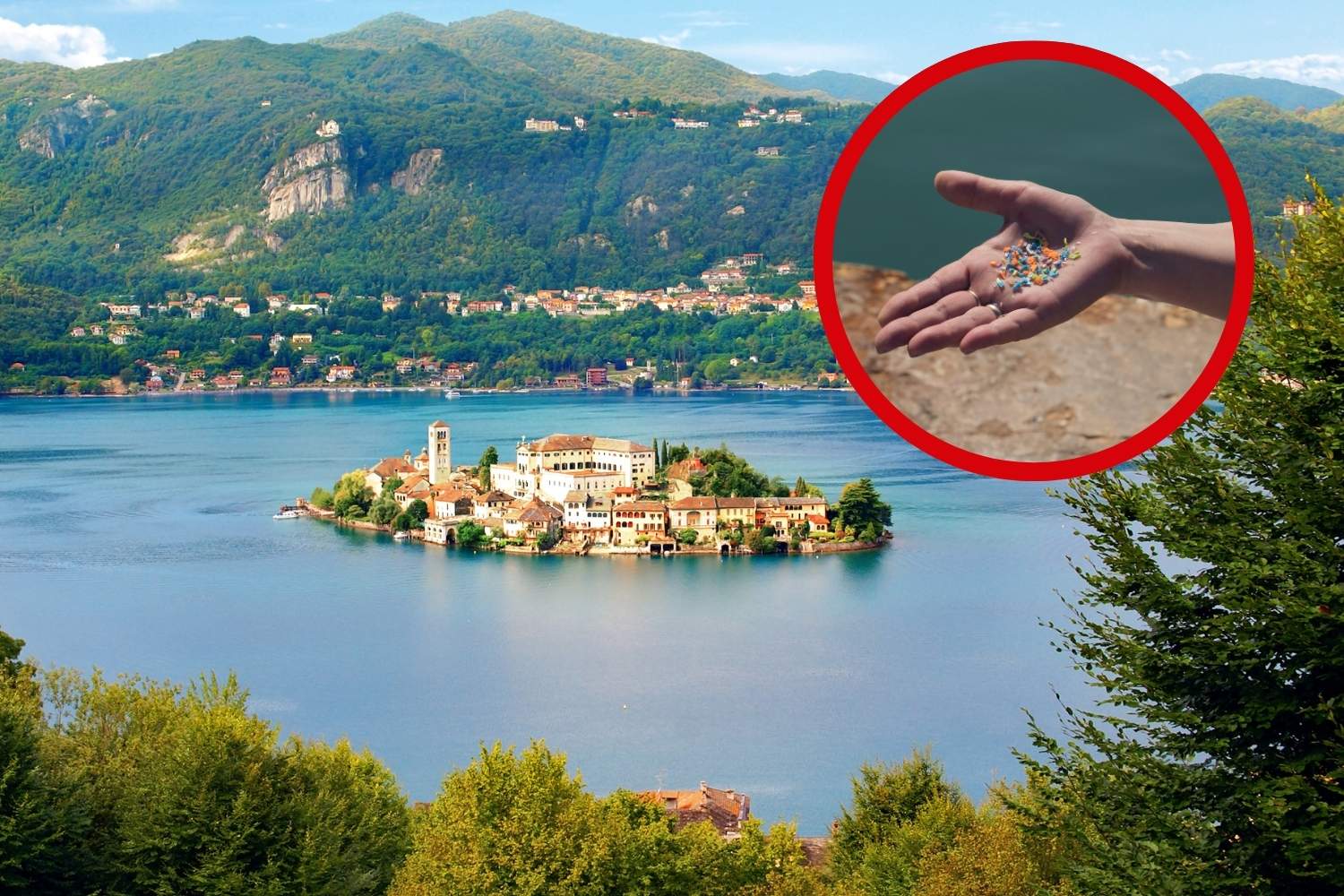
The Orta lakeamong the most loved tourist destinations in Piedmont, he ended up under the Legambiente magnifying glass. According to data collected as part of the “Goletta dei Laghi” campaign, the westernmost of the pre -Alpine lakes It hosts an alarming presence of microplastics.
The study, carried out together with Arpa Piemonte and Enea, documented the presence of Ben 17 different polymers in its waters, with an average concentration between 0.04 and 1.58 particles per cubic meterin line with what has already been detected in other Italian mirrors of water.
The surveys took place in two phases between 2022 and 2023 along three transepts of the Piedmontese bank of the lake. The polyethyleneknown for its diffusion in packaging, dominated the scene, arriving at 91% of the fragments collected in one of the countryside. Follow the polypropylene And, in minor percentages, the PoliaMide. In essence, plastic is now a structural component of Cusio’s aquatic ecosystem.
An invisible but omnipresent problem
It is not just aesthetic or impact on fauna: the presence of microplastics is now ubiquitor And it involves seas, rivers, land, air and even the arctic snow. Giorgio Gampetti, general manager of Legambiente, underlined the need for a structured and homogeneous monitoringas well as the urgency to fill the regulatory delays that prevent effective actions.
Among the most striking delays stand out the Decree save and the European Directive SUP against disposable plastic, again far from being fully operational. Intant, microparticles continue to travel undisturbed in the waterways and, who knows, perhaps also on the dishes.
Microplastics in the lakes: chronicle of an announced pollution
The first national study on microplastics in Italian lakes dates back to 2016 and it was Legambiente who made it. Today, after almost a decade of surveys, the picture is clear: Microplastics are everywhere. And if so far the data collected have served to take alarming photographs, the time has come to move on to the action. The alpine environment, fragile and closed, like that of Lake Orta, requires quick responses. Otherwise, he risks becoming a plastic biodiversity museum.
