
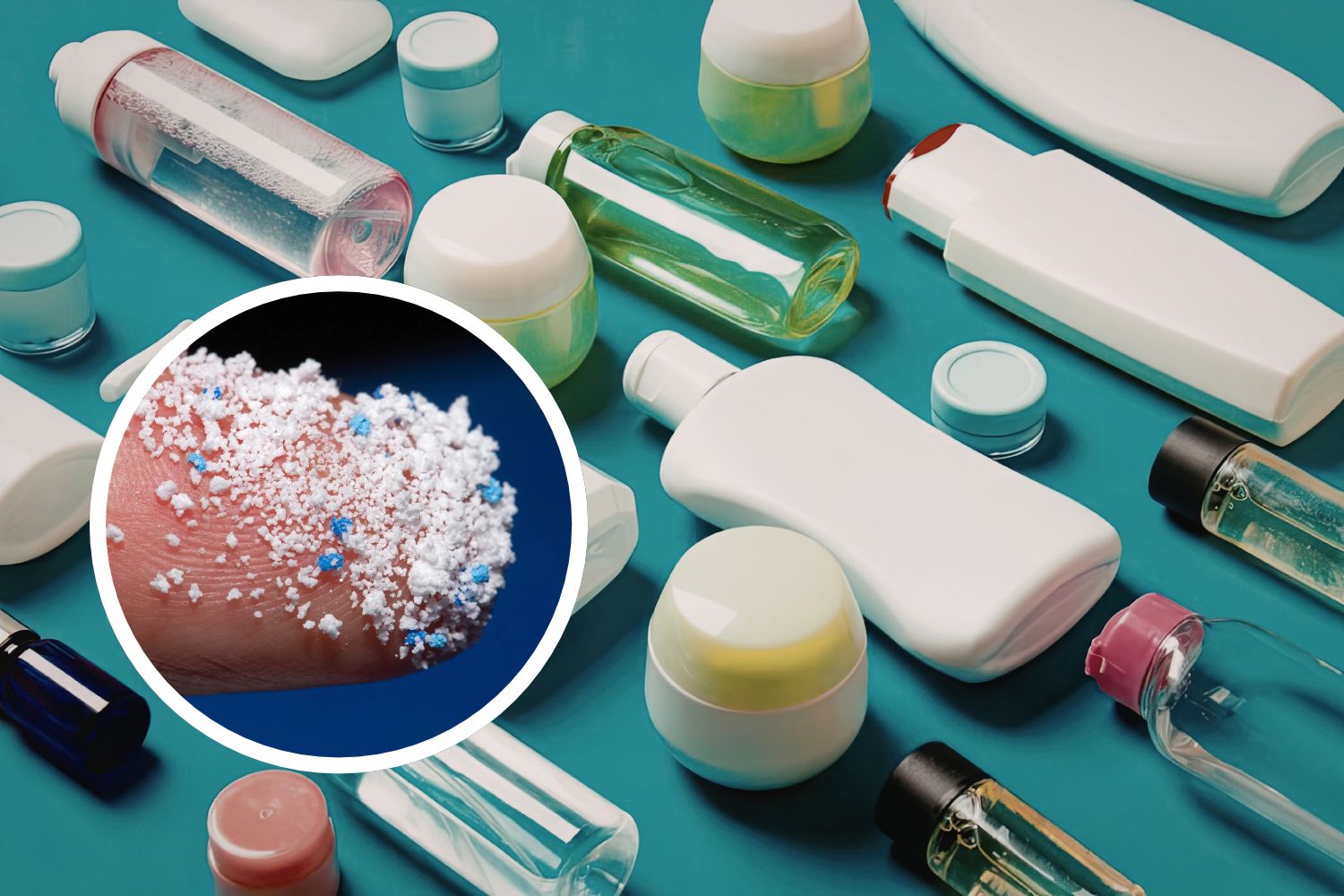
Microplastics do not come into contact with our bodies only through the water we drink or the food we eat. The skin is also exposed daily to these tiny particles, present in the environment, in synthetic fabrics and in some personal care products. But what happens when they come into contact with the skin? Can they overcome its protective barrier and reach the deeper tissues?
A new scientific review published in theAmerican Journal of Clinical Dermatology. The work, carried out by researchers from various US universities, examined the available knowledge on exposure to microplastics and nanoplastics, focusing on the possible consequences for skin health.
The conclusions require caution, as some experiments show that very small particles can reach certain skin structures and cause alterations in cells grown in the laboratory.
Among the sources of exposure taken into consideration by the new review are also cosmetics and personal hygiene products. This is not a secondary aspect, given that scrubs, cleansers and other products are applied directly to the skin.
Already in 2024 a review published on the Journal of Hazardous Materials had turned the spotlight on their presence. The authors had analyzed 38 studies, identifying microplastics in 390 of the 2,379 personal care products examined: 16.4% of the sample, that is, approximately one product in six.
The greatest presence was found in facial scrubs, with 296 positive products out of 1,115 analyzed (26.5%). This was followed by foot scrubs (13.6%), body scrubs (10.2%), toothpastes (7.1%) and soaps (3.5%).
Research has focused mainly on rinse-off products, while there is still little information available on cosmetics that remain on the skin for a long time, such as creams and lotions.
But now we come to the most important question.
Can microplastics overcome the skin barrier?
The skin is a fundamental barrier that protects our body from external agents. This does not mean, however, that it is completely impervious to all particles.
The new review took into consideration experiments conducted on skin cells, human and porcine skin samples and computer models, to understand which paths microplastics and nanoplastics can follow once they come into contact with the skin.
A first element that emerged from the studies is that the particles can settle on the surface of the skin and accumulate in the hair follicles, the structures from which hair grows. The latter represent a possible route of penetration, different from that which directly passes through the outermost layer of the skin.
In some experiments conducted on samples of human skin, very small particles, around 40 nanometres, managed to reach Langerhans cells, immune cells present in the epidermis. However, these were samples subjected to pre-treatment to facilitate penetration through the follicles.
Other experiments have shown that the particles can reach deeper areas when the protective outer layer of the skin is removed or artificially damaged.
However, it is important not to confuse these results with what normally happens when we apply a cream or use a scrub. Laboratory conditions do not necessarily replicate daily exposure, and the presence of particles on the skin surface or in follicles does not demonstrate that they have entered living tissue or the blood.
Oxidative stress and inflammation: what happens to cells
The review also looked at experiments on the effects of nanoplastics on skin cells. In cell cultures, exposure to these particles has been associated with oxidative stress, inflammatory responses, reduction in cell viability and early signs of senescence, a condition in which cells lose the ability to divide normally.
These are results that deserve attention, but should not be interpreted as evidence that using cosmetics containing plastic polymers causes inflammation or skin damage. The concentrations used in some experiments could in fact be higher than those to which we are exposed in daily life.
The researchers also examined possible relationships with some inflammatory pathologies, such as atopic dermatitis and psoriasis. At the moment, however, there is insufficient evidence to establish that microplastics can promote these diseases.
A possible interaction with an already compromised skin barrier has also been hypothesized, through mechanical irritation or a further weakening of its protective functions. Even in this case, the actual role of the particles in the onset or worsening of pathologies has yet to be clarified.
How to recognize plastic polymers in the INCI
In the meantime, while waiting to better clarify the possible risks linked to these substances, we can pay more attention to the ingredients of the cosmetics we purchase. The INCI, the nomenclature of the ingredients shown on the packages, can offer some indication on the presence of synthetic polymers.
Among the names we can come across are:
Be careful, however: finding these names in the INCI does not automatically mean that the product contains microplastics subject to the European restriction. The legislation, in fact, does not concern all polymers without distinction, but specific microparticles of synthetic polymers which must comply with certain requirements.
A polymeric ingredient may, for example, be present in liquid, dissolved or non-particulate form, and therefore not fall within the regulatory definition. The list of ingredients alone does not always allow us to understand what its physical form is, the size of any particles or whether it actually falls within the scope of the restriction.
The INCI can therefore be a first starting point for orientation, but it is not sufficient, on its own, to establish with certainty whether a cosmetic contains microplastics subject to European legislation.
Microplastics in cosmetics: what European legislation requires
The European Union has already intervened on the problem with Regulation (EU) 2023/2055, which amends the REACH regulation by introducing restrictions on synthetic polymer microparticles intentionally added to products. The goal is to reduce the release of microplastics into the environment, including through the daily use of cosmetics and personal care products.
However, the measure does not introduce an immediate and indistinct ban on all products. There are various transitional periods, depending on the category:
More studies are needed
The new scientific review brings attention to a still little-known aspect of exposure to microplastics. We know that these particles can come into contact with the skin through different sources and that, under particular experimental conditions, some can reach deeper skin structures.
However, we still do not know how much this happens in daily life, what quantities can actually penetrate and whether repeated exposure has consequences for skin health. For this reason, the authors underline the need for further research and clearer information on the ingredients and physical characteristics of the particles present in the products.
In the meantime, we can make a more conscious choice: when possible, prefer products without non-biodegradable plastic particles. It’s a simple way to help reduce the release of microplastics into the environment by avoiding ingredients whose effects we don’t yet fully know. When in doubt, choosing plastic-free alternatives is a good habit, especially for the Planet.
