
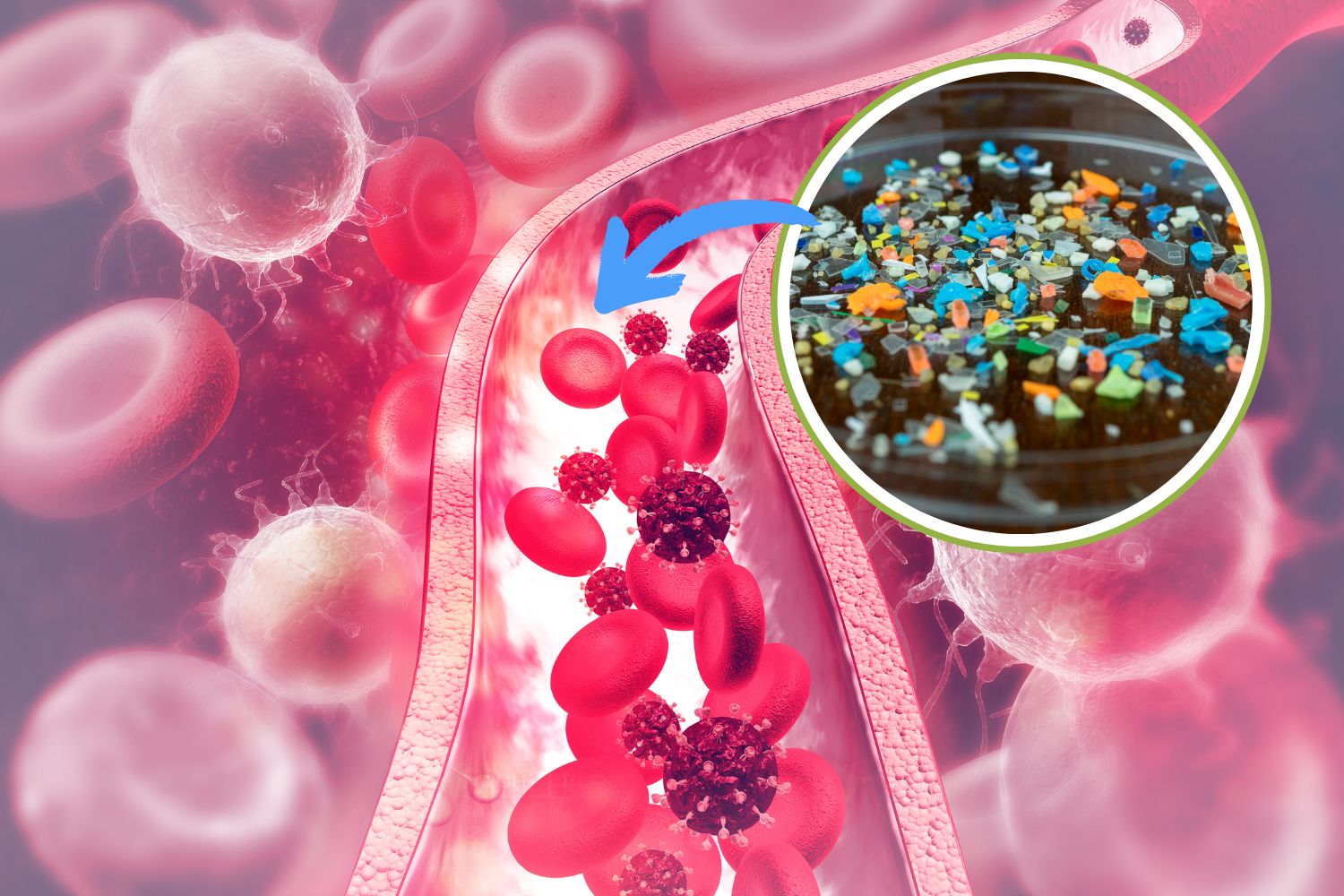
Microplastics are found everywhere. However, there is still little known about the effects of the body’s health particles. A new study shows that microplastics can interrupt blood circulation, causing neurological anomalies.
The microplastics We eat them, drink them and breathe them. The generic term microplastical term intend to be small plastic particles of equal or lower size to five millimeters. The microplastics are everywhere, and in recent years the researchers have found these tiny particles: from Mount Everest to the Fossa delle Marianne, from the cobwebs to the contents of the children’s diapers.
The reason is obvious: for over 100 years humanity has been producing plastic in ever greater quantities. Plastic that hardly degrades in natural conditions, but is dismantled only in smaller pieces. Smaller parts that, through air and water, end up in food chains and, finally, in the organs. The long -term effects of microplastics on humans are not yet clear.
A team of Chinese researchers discovered in one study like microplastics can cause brain dysfunctions and neurological damage .
Smaller microplasty particles have been shown for some time they can Cross the blood barrier and then enter the brain tissue. However, it has not yet been scientifically clarified how exactly particles can cause brain damage.
The study
In an experiment, the microplastic particles have been injected directly into the blood. Imaging technology was then used to capture three -dimensional images of brain cells in real time.
About two hours after treatment, scientists are You can see the microplastics in the bloodstream for the first time. After about three hours, microplastic in the blood cells present in the brain vessels were detected. This suggests that immune cells, the so -called phagocytes, they can ingest particles .
Fagocytes containing microplastic blocks the blood vessels in the brain. Vascular blocks can worsen the blood circulation, especially in small vessels with poor blood flow.
The reduced flow of blood to the brain has consequences, such as behavioral changes, reduced mobility, memory loss and reduced motor coordination.
It has also been shown that higher concentrations of microplastics cause more serious vascular obstructions and more serious neurological compromises.
You may be interested in:
