
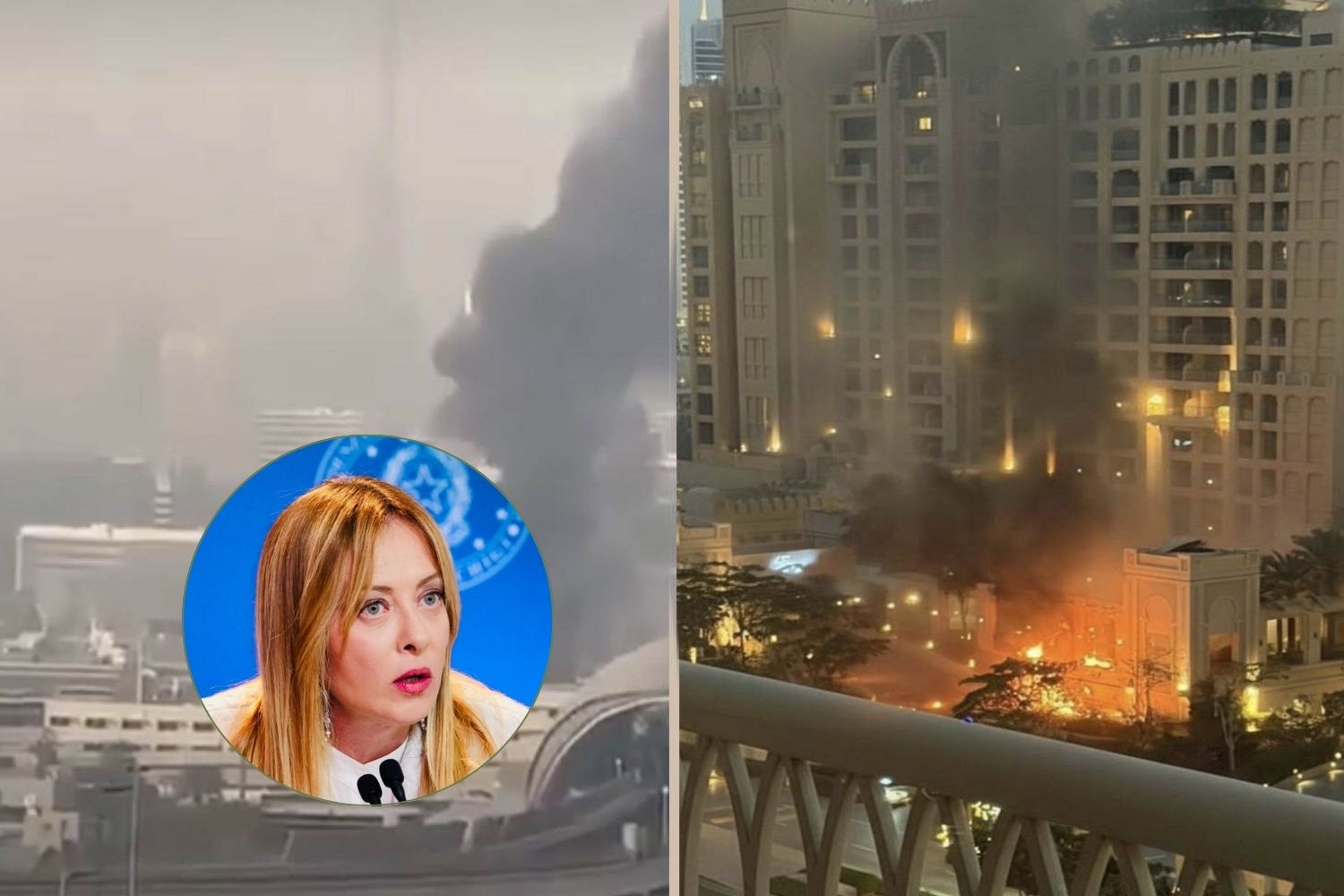
Tension in the Middle East continues to rise and Italy is moving on a double track: avoiding direct involvement in the conflict, they say, but at the same time strengthening national security and that of its military abroad.
Prime Minister Giorgia Meloni clarified the Government’s position, speaking on RTL 102.5:
We are not at war and we do not want to go to war.
Words that come as the international situation becomes increasingly unstable, with the risk of regional escalation after the attacks and military reactions that are involving several countries in the area.
The fear of escalation
The Prime Minister spoke openly of concern for the crisis of international law and multilateral bodies, aggravated by the conflicts that have involved various geopolitical scenarios in recent years. According to Meloni, Iran’s military response to the recent attacks risks further widening the conflict, with bombings also involving neighboring countries and which could have unpredictable consequences.
A scenario that also worries for the Western presence in the area and for global energy balances.
Italian air defense at the highest level
Faced with growing instability, Defense Minister Guido Crosetto announced an immediate decision to the Chamber: to raise the level of protection of the national air and anti-ballistic defense to the maximum. The mandate was entrusted to the Chief of Defense Staff, in coordination with NATO and allied countries.
According to the minister, Iran’s strategy would be to create economic and geopolitical instability, including through strategic moves such as the closure of the Strait of Hormuz, a crucial passage for global energy trade.
Aid to the Gulf countries and missions in the area
While reiterating that it does not want to enter the conflict, the Italian Government is apparently evaluating support measures for the Gulf countries, which have become targets of Iranian attacks. These are mainly air defense systems, intended to protect allied territories and strategic infrastructures.
The choice does not only concern diplomatic relations: tens of thousands of Italian citizens live in the area and there are around 2 thousand Italian soldiers engaged in various international missions. Precisely for this reason, Rome is also evaluating a strengthening of security devices in the eastern Mediterranean, with the sending of naval assets towards Cyprus together with other European countries.
The issue of US military bases in Italy
Among the most delicate issues there is also that of the US military bases present in Italy. Meloni recalled that the use of these structures is regulated by bilateral agreements in force since 1954, updated over time.
Currently the bases can be used for logistical or non-offensive operations. In case of requests for direct military operations, the prime minister explained, the decision would be up to the government and should be shared with Parliament.
At the moment, however, no request has been received and the Government’s line remains that of avoiding direct involvement, but preparing for an increasingly unstable international scenario.
“Italy is not at war“, Crosetto also reiterated in Parliament. But as the crisis widens and regional tensions grow, the country strengthens its defenses and reorganizes the military presence in the area.
We are not at war. But how close are we?
Italy, they say, is not part of the conflict, but at the same time it increases military protection, redeploys troops, evaluates armed aid to the Gulf countries and strengthens its naval presence in the Mediterranean.
A line that allows an evident contradiction to emerge: while the desire to stay out of the war is reiterated, the measures that prepare the country for the consequences of a possible widening of the conflict are multiplying. In other words, we continue to talk about non-involvement while the military posture adapts to an ever closer war scenario.
And it is precisely here that the real political game is being played: establishing to what extent Italy intends to remain a spectator of an international crisis that risks overwhelming Europe too.
