
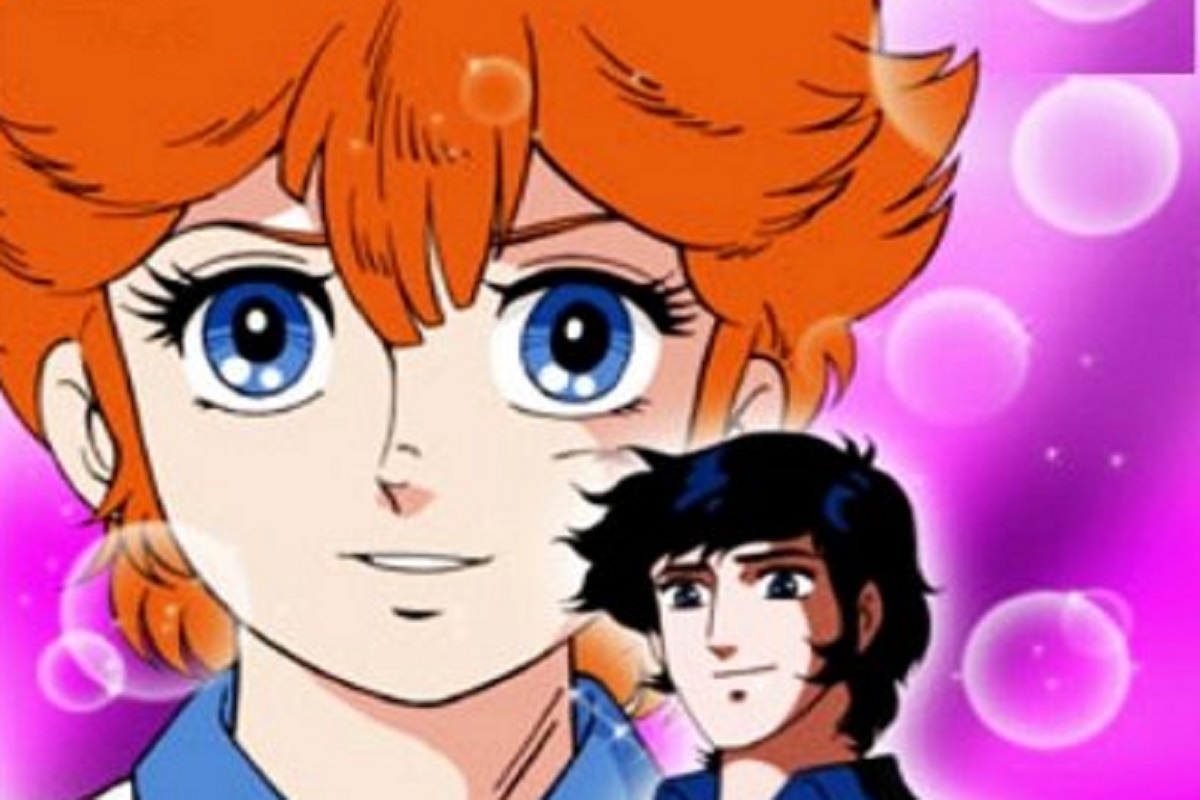
It was February 25th 40 years ago when Italy broadcast “Mila and Shiro, two hearts in volleyball” for the first time, an anime that has become iconic in our country despite not having had great success in Japan. The adventures of the protagonists have fascinated entire generations, inspiring many young people to practice volleyball. Here are 8 curiosities that you probably didn’t know about this famous cartoon.
Matsugoro Daimon is inspired by a real volleyball coach
The feared trainer Matsugoro Daimon is not the result of pure imagination. His character is inspired by Hirofumi Daimatsu, coach of the Japanese women’s national team who won gold at the Tokyo Olympics in 1964 with the “Witches of the East”.
Like Daimon, Daimatsu was also a former military man (platoon commander) and was nicknamed “Demon” for his extremely severe training methods. His athletes trained from 4.30 pm until late at night, after working all day in the “Ichibo Corp” textile industry.
Mila and Shiro are “Giovanna and Sergio” in other languages
While in Italy we know the protagonists as Mila and Shiro, in other languages the characters have completely different names. In almost all international translations they have been renamed “Giovanna and Sergio”: in French “Jeanne et Serge”, in Portuguese “Joana and Sergio”, in Spanish “Juana y Sergio”, and so on.
The original title: Attacker YOU!
Although the protagonists were Yu and Sho, the manga from which the series is based is not titled with their first names, but “Attacker YOU!“. Nothing “two hearts in volleyball“? No and rightly so because – another shock – the two in the manga were not in love, but only friends. In fact, Mila has always limited herself only to admiring Shiro from a sporting point of view. It is not just Mila and Shiro who have different names compared to the Italian version. In fact, everyone, with the exception of Nami, originally had different names compared to those we are used to.
Mila in the Japanese version was not Mimi Ayuara’s cousin
In the Italian dub Mila claims to be the cousin of Mimì Ayuara, the protagonist of another famous anime about volleyball. In reality in the original version in Japan there is no trace of a relationship between the two.
Sunny does not exist in the manga
In the cartoon, Sunny is a fixed presence: Mila’s adoptive brother often appears in domestic scenes, is emotionally very attached to his sister and contributes to making her family context more alive. Yet, if you open the original Japanese manga, there is no trace of Sunny, Mila is an only child.
The character was created specifically for the animated adaptation, almost certainly to give more scope to the scenes of the protagonist’s daily life and build those moments of domestic warmth that in the anime balance the hardness of the training. An overall successful addition: for those who grew up with the cartoon, imagining Mila without her little brother is almost impossible today.
Mila’s mother’s fate is different in the manga
In the animated version broadcast in Italy, it is discovered that Mila’s mother, believed dead, is actually alive and works as a commentator and former volleyball player (Kyushi Tajima). She walked away when her husband forced her to choose between family and career. In the original manga, however, the story is more tragic: Mila’s mother actually died when she was little.
The Italian edition was censored
As often happened with anime broadcast in Italy in the 1980s, “Mila and Shiro” also arrived on the screens of Italia 1 in a slightly cleaned up version. Mediaset intervened on some contents considered too strong for the television audience of the time, without however distorting the plot.
The changes mainly concerned three areas: moments of family tension — such as the most heated arguments between Mila, her father and her little brother — were softened in the dialogues; the scenes of explicit violence by coach Daimon towards the players were toned down; and some shots considered risqué, such as female nudity during locker room showers, were cut.
However, these were surgical interventions, not a rewriting: the main events of the story remained intact and Daimon’s harsh and authoritarian character – central element of the series – remained well recognizable even in the Italian version.
She inspired a true champion
Among the many children who became passionate about volleyball in the 1980s by watching Mila’s adventures, there was also a future world champion. Francesca Piccinini, pillar of the Italian national team and gold at the 2002 World Cup, publicly declared that she was inspired by the character of Mila as a child.
This is no small detail: very few sports anime can boast a direct link between animated fiction and the path of a high-level professional athlete. “Mila and Shiro” is one of those.
You might also be interested in:
