
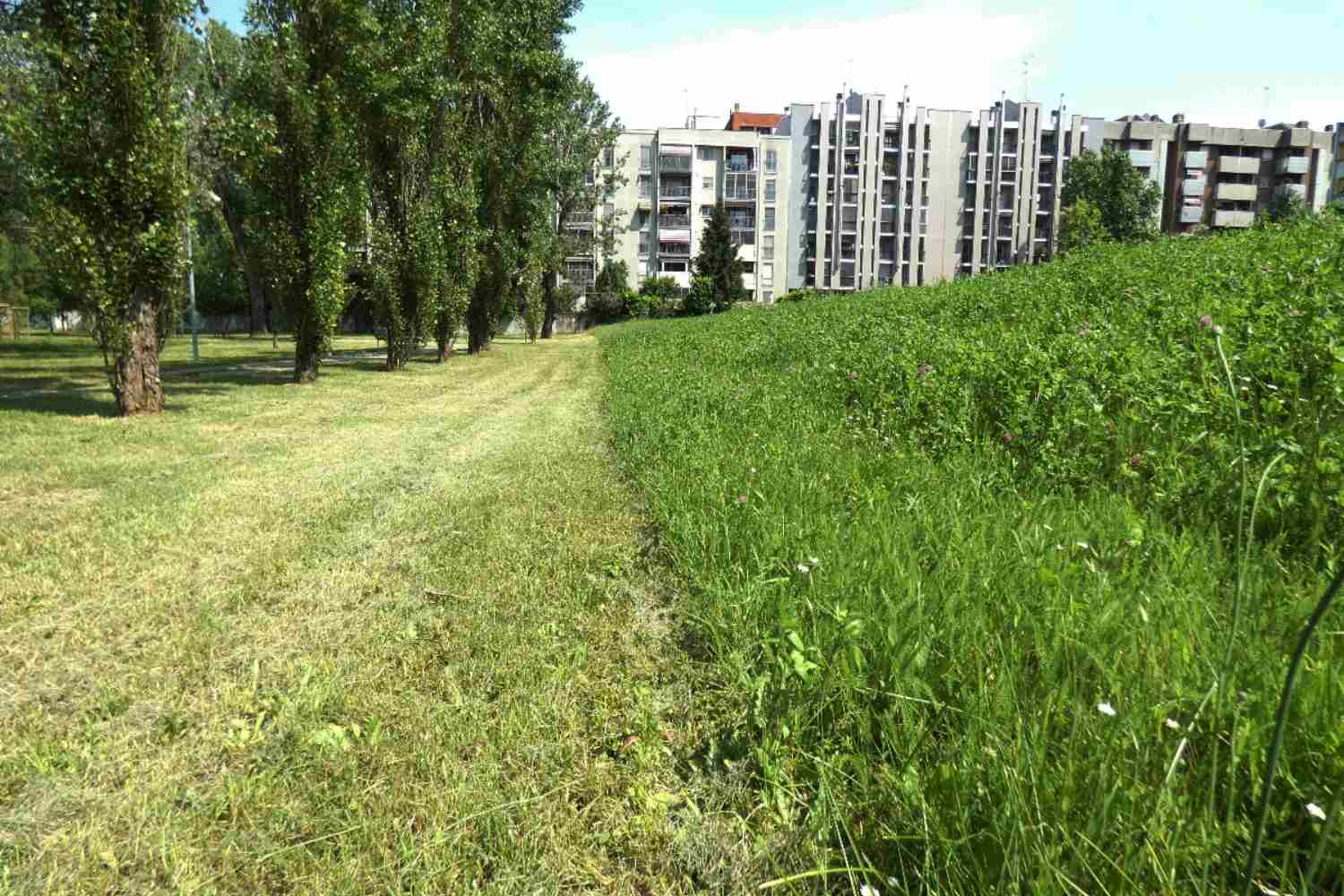
Milan focuses more and more on sustainable urban green and in 2025 doubles the areas dedicated to the practice of reduced mowing: from 54 we move on to 111 zonesfor a total of 1.8 million square meters distributed on all municipalities of the city. This innovative approach to green management involves one less frequency of the grass cuttingletting it grow naturally e thus favoring the vegetative cycle of plants, flowering and production of seeds.
The choice, already successfully tested last year, was confirmed in the light of positive results obtained on the front of the urban biodiversity. Monitoring conducted by the 3BEE Tech-Company Nature and the University of Milan-Bicocca showed a significant increase in pollinating insects and other species, with increases of 30% Compared to the frequently mowed areas and peaks of the 60% in areas with greater floral variety.
THE benefits However, the reduced mowing do not stop for biodiversity alone. The highest grass contributes to protect the soil from erosionincreases the drainage capacity and helps mitigate the effects of the heat islands in the city. Furthermore, the reduction of the mowing involves minor emissions of co₂thanks to a more content of machinery, and a better absorption of pollutants atmospheric, thus improving the air quality.
The number of flowery meadows is also growing
The new selected areas, such as the Lambro ParkThe Park of the Cave or the Monte Stella Parkhave been identified taking into account the needs of citizens and the balance between public use and respect for the environment. The goal is also to create ecological connections between several green spaces, transforming Milan into one Urban network of small ecosystems.
Next to the reduced mowing, The number of flowery meadows is also growingwhich in 2025 exceed 60 unitsenriched by species such as poppies, cornflower, calendula And belluleall fundamental to attract pollinating insects.
The enhancement of the Nature in the city will also be at the center of the event Orticola 2025with a conference dedicated to urban biodiversity. Milan, therefore, chooses to grow in green, promoting a model of coexistence between man and more conscious and far -sighted nature.
