
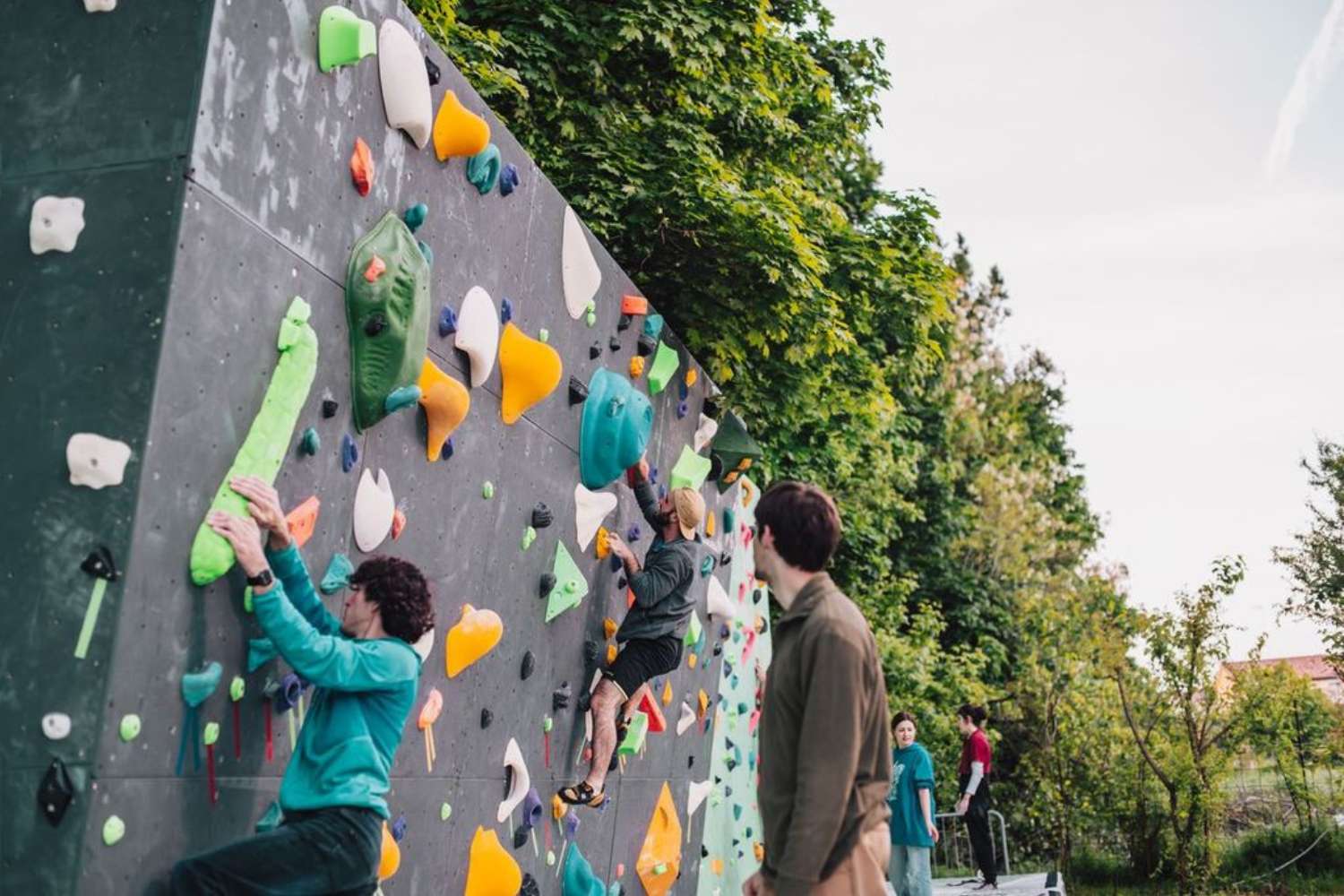
There is a place north of Padua where urban greenery is no longer synonymous with abandonment and decay. Today it has become synonymous with community, culture and concrete climate commitment. Milcovich park, in the Arcella district, is the protagonist of one of the most interesting urban regeneration projects in Italy. Over the last five years, thanks to the collaboration between the public and private sectors, associations and citizens, a neglected space has been transformed into a lively, safe and increasingly sustainable hub.
But the strength of this park (dedicated to Dr. Federico Milcovich for his research on neuromuscular diseases and commitment to the inclusion of people with disabilities) lies above all in being a generator of positive environmental impacts through the virtuous management of space and the adoption of trees in distant areas, from Val di Fiemme to Panarotta, from Lio Piccolo in the Venetian area to the province of Ha Tinh in Vietnam. The goal? The aim is to capture a total of over 650 tonnes of CO2 within four years.
Culture and environment: the two souls of the project
The project — which will continue for at least the next five years — moves along two trajectories. The first is social and cultural: over 150 events a year curated by Big Maff, including music, cinema, workshops and the Arcella Bella festival, for an estimated total of 100 thousand admissions. Instead, the second is environmental and consists of a 2030 climate strategy aligned with the Net Zero standard (according to the Science Based Targets); the latter takes shape through a climate plan for measuring and reducing emissions and managing green areas developed by Etifor | Valuing Nature, environmental consultancy company, spin-off of the University of Padua and certified B Corp.
The environmental results of this project are already tangible. Thanks to the responsible management of the Milcovich park, emissions dropped by 14% in 2024 compared to the previous year. As? With a mix of virtuous choices: 100% electricity from renewable sources, low consumption LED lighting, monitored separate waste collection, incentives for sustainable mobility, reduction of plastic and waste. Accessible signage was installed in the park (according to the principles of wayfinding) and, through the Accessibility Workshop – a workshop co-participated with citizens – it was possible to map critical issues and design solutions to make the place more inclusive.
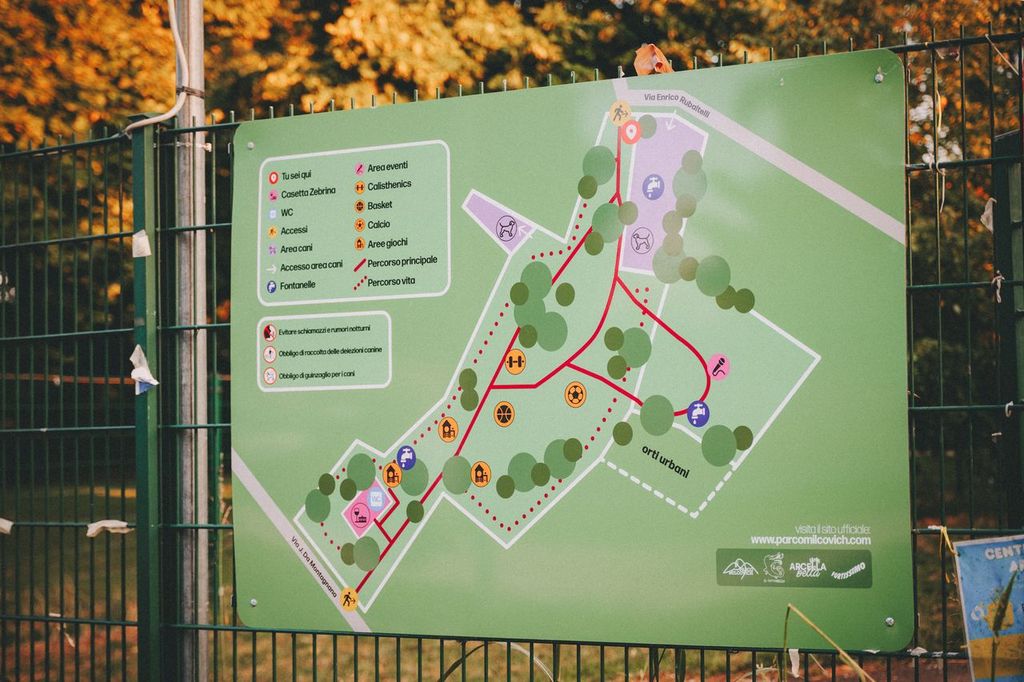
Furthermore, the organizers contribute to and take care of the urban greenery between ordinary maintenance and restoration of the walkable area after the events, while the strengthening of lighting and the continuous programming of structures open to the public such as Casetta Zerbina have helped to make the park safer to use. In the near future, the Municipality of Padua is planning a project to expand the park, with a new green area of over one hectare with tall trees and a buffer strip.
The most original aspect of the project, however, concerns what happens outside the park. In fact, the mitigation of the environmental impact of the park, managed by the Il Coccodrillo association, also involves the adoption of trees in other parts of Italy and the world through the specialized platform WOWnature (an Etifor initiative that helps citizens and companies create new forests in Italy or abroad), thus generating other parks and related positive impacts. In this way, enjoying the Milcovich park also means planting a larch or fir in Val di Fiemme, beeches, poplars and Scots pines in the Bosco della Panarotta, also in Trentino, or junipers, buckthorns, blackthorns and tamarisks in Lio Piccolo, near the Venetian airport, according to the principle of “generating parks through the use of a park”. The range of action reaches as far as the Huong Son Health Forest, in Vietnam, where an absorption of 590 tonnes of CO₂ is estimated by 2029 thanks to the project.
A unique park unprecedented in Italy (but replicable)
“We are faced with a virtuous example of particular, perhaps unique, urban regeneration which transcends borders in terms of positive environmental impacts but which is closely linked to the territory in terms of social impacts through care, collaboration, safety and generation of related activities for a vast network of businesses, artisans and local workers. The peculiarity of this management model has its roots in its replicability in any urban center that has green areas characterized by hardship and neglect, transforming a cost item for local administrations into a generator of benefits, including economic ones, for citizens and, at the same time, for the environment as a whole” underlines Francesco Aneloni, founder and CEO of Big Maff.
The Milcovich park project does not only have positive effects on the environment and territory. On a social and value level, regeneration focuses on synergies: it offers accessible and quality cultural initiatives, aimed at different age groups and designed to encourage sociability, discussion and active citizenship. It involves the direct involvement of the community and collaboration with associations, collectives, production entities and informal groups. It also dedicates specific attention to the intercultural and intergenerational dimensions, while promoting a network of local businesses, artisans and workers capable of generating training and professional opportunities. A replicable model emerges that shows how even a long-neglected urban park can transform itself into a driver of inclusion, environmental activism and local economic development.
