
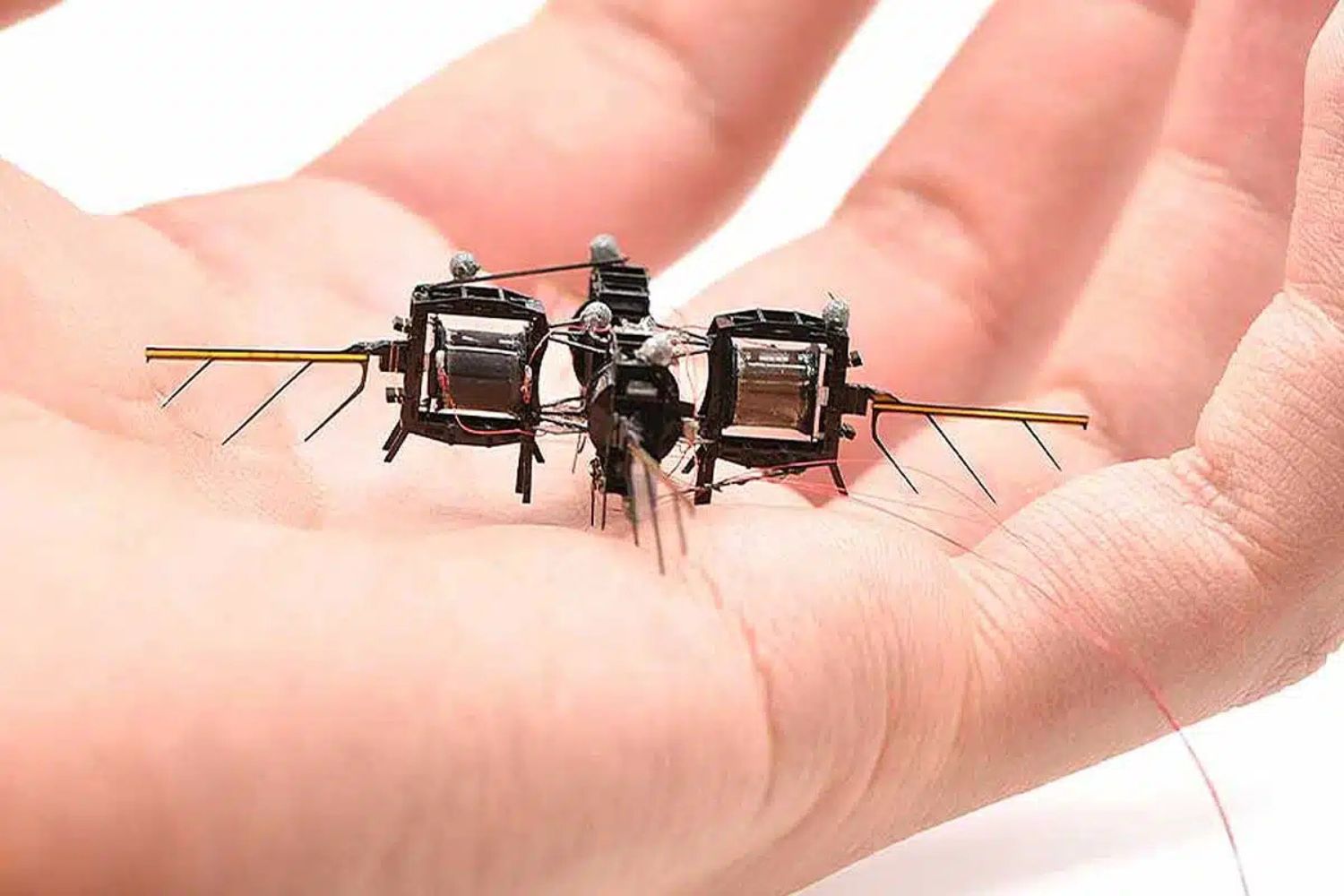
The robotic bees from MIT are redefining pollination. These camouflage robots, with artificial wings and technological musclesare designed to mimic natural bees. With the increase in bee mortality, also due to Asian hornets, pollination is in crisis. However, it is crucial for biodiversity. To counter this loss, MIT researchers have developed flying robots that resemble natural pollinatorscapable of performing impressive technological feats.
Aerial acrobatics
The flight of bees is unique, with over 230 wing beats per minute. MIT’s robotic bees don’t just glide, they set records with hovering flights of more than 1,000 seconds (about 17 minutes) and stunts like flips and spins. They reach top speeds of 35cm/s. These robots can also be piloted to “write” in the sky, like the National Aerobatic Team. These feats are possible thanks to an innovative design that optimizes lightness and efficiency. Of course, they are equipped with sensors for outdoor use.
The biomimicry is the basis of future technologies: imitating nature to satisfy human needs. The researchers took inspiration from the anatomy of natural bees. Contrary to the old models with four units and two wings each, the new design is more essential: each unit has a flapping wing, improving stability and reducing interference. This configuration frees up space for electronic components. The wings, moved by artificial muscles, are made of elastomers and carbon nanotubes, perfectly reproducing the movements of real bees.
Beyond technology, these artificial bees could revolutionize agriculture, pollinating areas often overlooked by bees. MIT bees fear neither pollution nor Asian hornets, thus reducing the use of pesticides. Furthermore, agricultural yields would become more stable, no longer depending on climatic conditions or the presence of bees.
Currently, biomimetic bees are less efficient than real bees. However, with an increase in their production and technological improvements, they could become a key pillar of agriculture of the future.
