
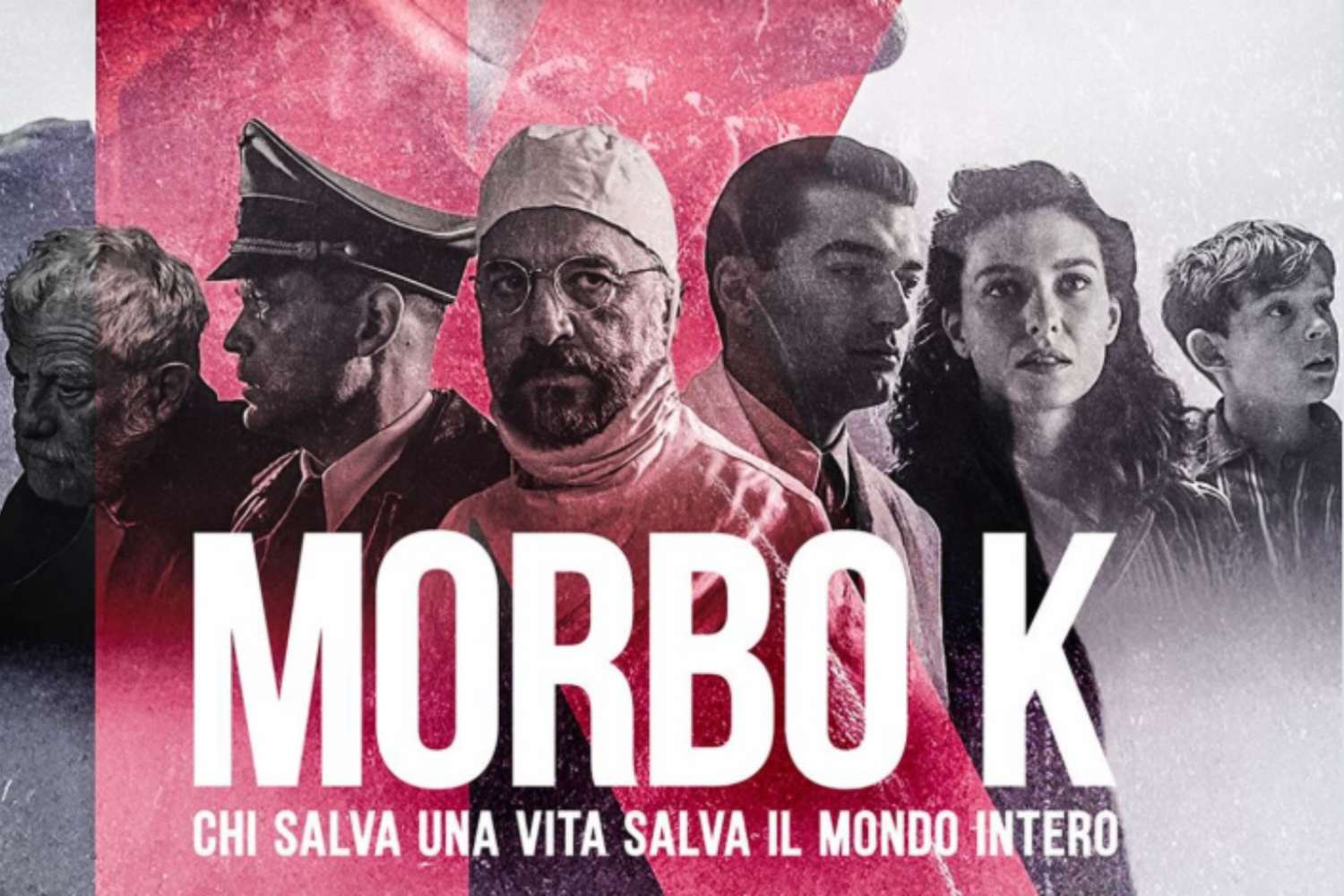
On the evening of 27 and 28 January, on the occasion of Remembrance Day, Rai 1 broadcasts the miniseries from 9.30pm K disease – Whoever saves a life saves the whole world. A production by Rai Fiction and Fabula Pictures that is inspired by a real story that took place in Rome in 1943, when a group of doctors managed to save dozens of Jews by inventing a fictitious illness to keep them away from the SS.
The story is set in the days preceding the roundup of the Rome Ghetto on 16 October 1943. SS Colonel Herbert Kappler imposes ferocious blackmail on the Jewish community: fifty kilos of gold in exchange for the promise to avoid deportation. A promise that, as history will demonstrate, will be betrayed. In that climate of terror, the idea of Disease K was born, an imaginary virus described as highly contagious and lethal, used as a shield to protect Jewish families inside the Fatebenefratelli hospital on the Tiber Island.
View this post on Instagram
A medical invention against Nazi violence
Behind the ruse there is a real figure: Giovanni Borromeo, head physician of the Fatebenefratelli, flanked by Adriano Ossicini and the Jewish doctor Vittorio Emanuele Sacerdoti. In the fiction, the character inspired by Borromeo takes the name of Matteo Prati and is played by Vincenzo Ferrera. The choice to fake an epidemic makes it possible to isolate the patients and discourage checks by the German soldiers, who fear contagion.
The series, directed by Francesco Patierno and written by Peter Exacoustos, mixes historical reconstruction and narrative invention. Alongside the main story, personal stories develop, including that of a young doctor and a Jewish girl, inserted to bring the story closer to a wider and younger audience. The cast also includes Giacomo Giorgio, Dharma Mangia Woods, Marco Fiore, Flavio Furno, Christoph Hulsen, with the participation of Antonello Fassari and Luigi Diberti.
View this post on Instagram
The controversy over the absence of fascists
It is precisely this narrative choice that has sparked the debate. According to various critical voices, in the television reconstruction the role of Italian fascism appears greatly reduced. Those responsible for the violence emerge almost exclusively as Nazis, while the collaboration of the fascist police and the context of the racial laws, in force since 1938, remain in the background.
The screenwriter Exacoustos explained that he moved in a “gray area“, citing the lack of unambiguous documentation on some operational responsibilities. A position that did not convince the Anpi. Vincenzo Calò, of the national secretariat, recalled that the responsibilities of fascism towards Italian Jews are historically established and that a partial narrative risks weakening the educational value of the public service.
Criticism also came from the trade union world. Riccardo Saccone, general secretary of Slc Cgil, spoke openly of a possible drift towards a “fantasy fiction”, accusing Rai of contributing to a sweetened rereading of the story.
On the other hand, the producers claim their intent to bring to light a little-known story of civil courage, without turning the series into a historical trial. Director Patierno underlined how many, at the time, were not fully aware of what was happening in the concentration camps, and how the story follows a gradual path of awareness.
You might also be interested in:
