
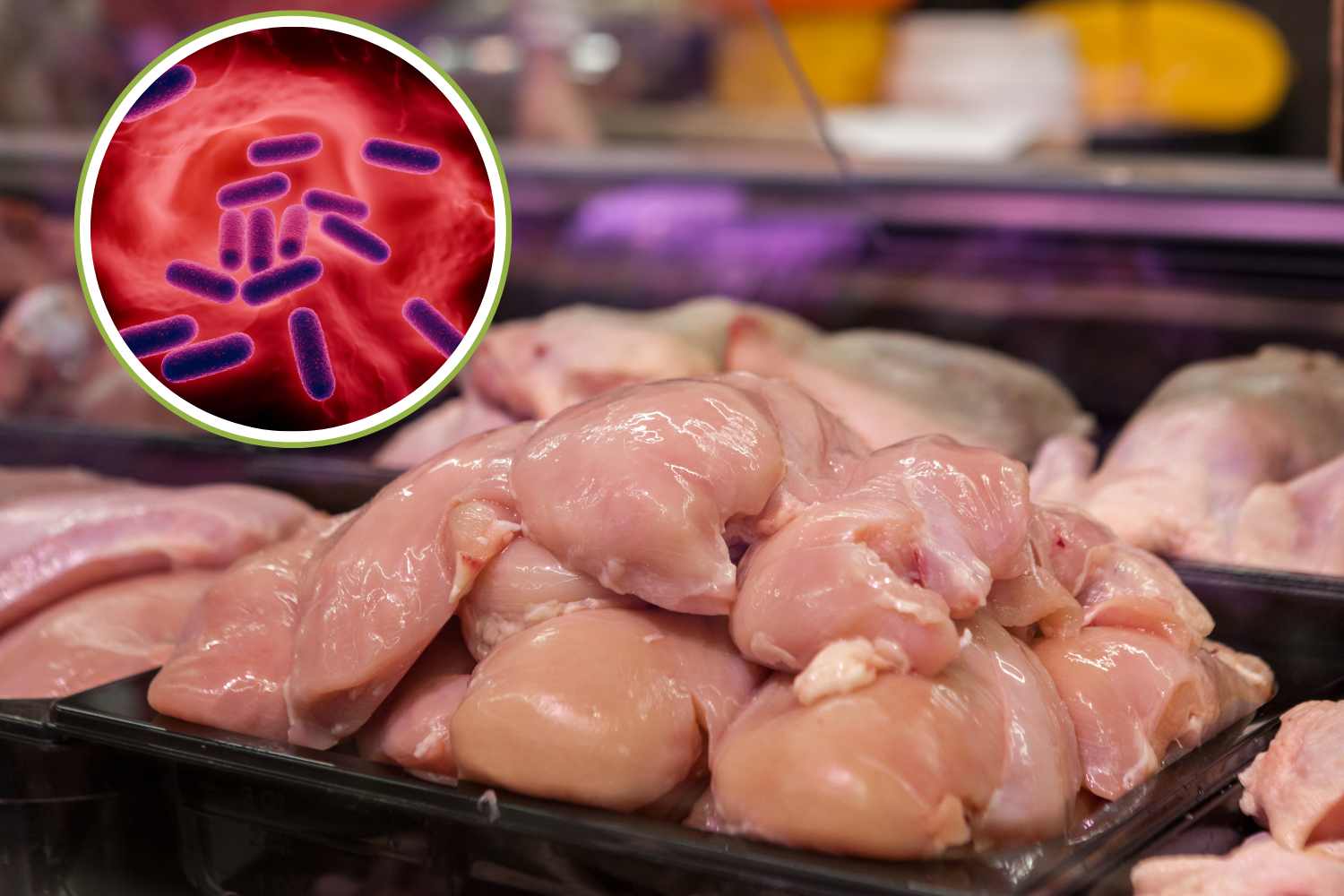
Every year millions of Europeans fall ill due to bacteria present in food. In most cases, recovery takes place within a few days, with rest and hydration. But for the most serious cases, those that require the use of an antibiotic, things are becoming more complicated. And a lot.
A new joint report from EFSA (the European Food Safety Authority) and ECDC (the European Center for Disease Prevention and Control) certifies what many researchers have feared for years: the bacteria that cause the most widespread food poisoning are becoming increasingly resistant to antibiotics.
But let’s start from the beginning. When we talk about antimicrobial resistance (AMR) we mean the ability of a bacterium to survive the action of an antibiotic that would normally have eliminated it. It is a natural phenomenon, but one that the excessive and often inappropriate use of antibiotics – both in human medicine and in animal husbandry – has accelerated enormously in recent decades.
The result? Infections that were once easily treated become difficult to cure, require more powerful drugs, longer hospitalizations, and in some cases leave no treatment options. According to the WHO, antimicrobial resistance is one of the greatest global health threats of our time. And food is one of the main vectors through which resistant bacteria reach our body.
Salmonella and Campylobacter
The two bacteria most under observation in the report are Salmonella And Campylobacterthe main causes of food poisoning in Europe. They are often found in chicken meat, eggs, unpasteurized milk, but also in contaminated fruit and vegetables. Together, they cause hundreds of thousands of cases every year in the European Union alone.
The most worrying data from the report concerns ciprofloxacin, one of the reference antibiotics for the treatment of the most serious forms of these infections. A high percentage of Salmonella and Campylobacter, detected in both humans and farm animals, show resistance to this drug. For Campylobacter the situation is so critical that ciprofloxacin is no longer recommended as a first-line treatment in human infections. Despite this, it remains usable in selected cases based on the antibiogram and, precisely to preserve this residual efficacy in human medicine, the EU has imposed severe restrictions on its use in farm animals.
For the SalmonellaHowever, resistance in animals has been stably high for years, but what is most worrying is the recent increase in resistance in human infections. Is Salmonella That Campylobacter they also show extensive resistance to other common antibiotics such as ampicillin, tetracyclines and sulfonamides. A dwindling therapeutic arsenal.
Also the E. coli is resistant
Then there is another fact in the report that deserves particular attention, almost an alarm bell within the alarm. An increasing number of bacteria has been detected in several European countries E. coli resistant to carbapenems in meat and farm animals. Carbapenems are considered the antibiotics of “last resort” for humans: they are used when all else has failed. In the European Union they are not authorized in animals, yet bacteria resistant to these drugs are emerging on farms.
The origins of the phenomenon are still under investigation, but the trend is increasing and health authorities are monitoring it very carefully.
The good news
However, it would be a mistake to stop at the negative part of the report which, fortunately, also brings encouraging signs, demonstrating that policies for the responsible use of antibiotics, when applied consistently, produce concrete results.
For the Salmonella human, resistance to Ampicillin has decreased significantly over ten years in 19 European countries; that to tetracyclines in 14. In livestock farming, there is a reduction in resistance to tetracyclines in broiler chickens and to ampicillin and tetracyclines in turkeys. Numbers that tell of a possible trend, if we act in a coordinated way.
Also for the Campylobacter Here’s some good news: Resistance to erythromycin, the first-line treatment for human infections, has declined in several countries over the past decade, both in humans and some animals. A turnaround that gives hope.
In addition, so-called combined resistance, i.e. simultaneous resistance to multiple critically important antibiotics, generally remains low Salmonella, Campylobacter and E. coli. This is important data because it means that “multi-resistant” bacteria, the most dangerous, are not yet the norm.
The only discordant note in this positive chapter concerns theE. coli in poultry, where levels of resistance to some substances have stabilized rather than continuing to decline. A stagnation that requires new efforts.
The commitment must be collective
Piotr Kramarz, Chief Scientist at ECDC, said:
Antimicrobial resistance in common food bacteria such as Salmonella and Campylobacter highlights the close links between humans, animals and food systems. Protecting the effectiveness of antimicrobials requires coordinated action through a strong One Health approach — because antimicrobial resistance affects everyone.
One Health is the conceptual key to the entire report. It is the approach that recognizes how human health, animal health and ecosystem health are inextricably linked. The problem of antibiotics cannot be solved only in hospitals, ignoring what happens on farms. And we cannot address what happens on farms without considering agricultural practices, veterinary checks and community policies on the use of drugs.
The EFSA/ECDC report makes it clear that the challenge can only be overcome by acting simultaneously on multiple fronts: the responsible use of medicines in every sector, the strengthening of animal health and the adoption of rigorous infection prevention and food safety measures.
But what can we do as consumers? As often happens with major environmental and health problems, antimicrobial resistance also has an individual dimension that should not be overlooked. Some good practices concern us directly.
Do not use antibiotics without a medical prescription, do not stop a therapy before the indicated term, do not take antibiotics for viruses (colds, flu) against which they are not effective: these are gestures that seem small but which, multiplied by millions of people, make the difference.
Choosing meat from farms that apply rigorous antimicrobial standards is another step worth considering. And cooking food well – especially poultry meat and eggs – remains one of the most effective ways to reduce the risk of bacterial infections.
