
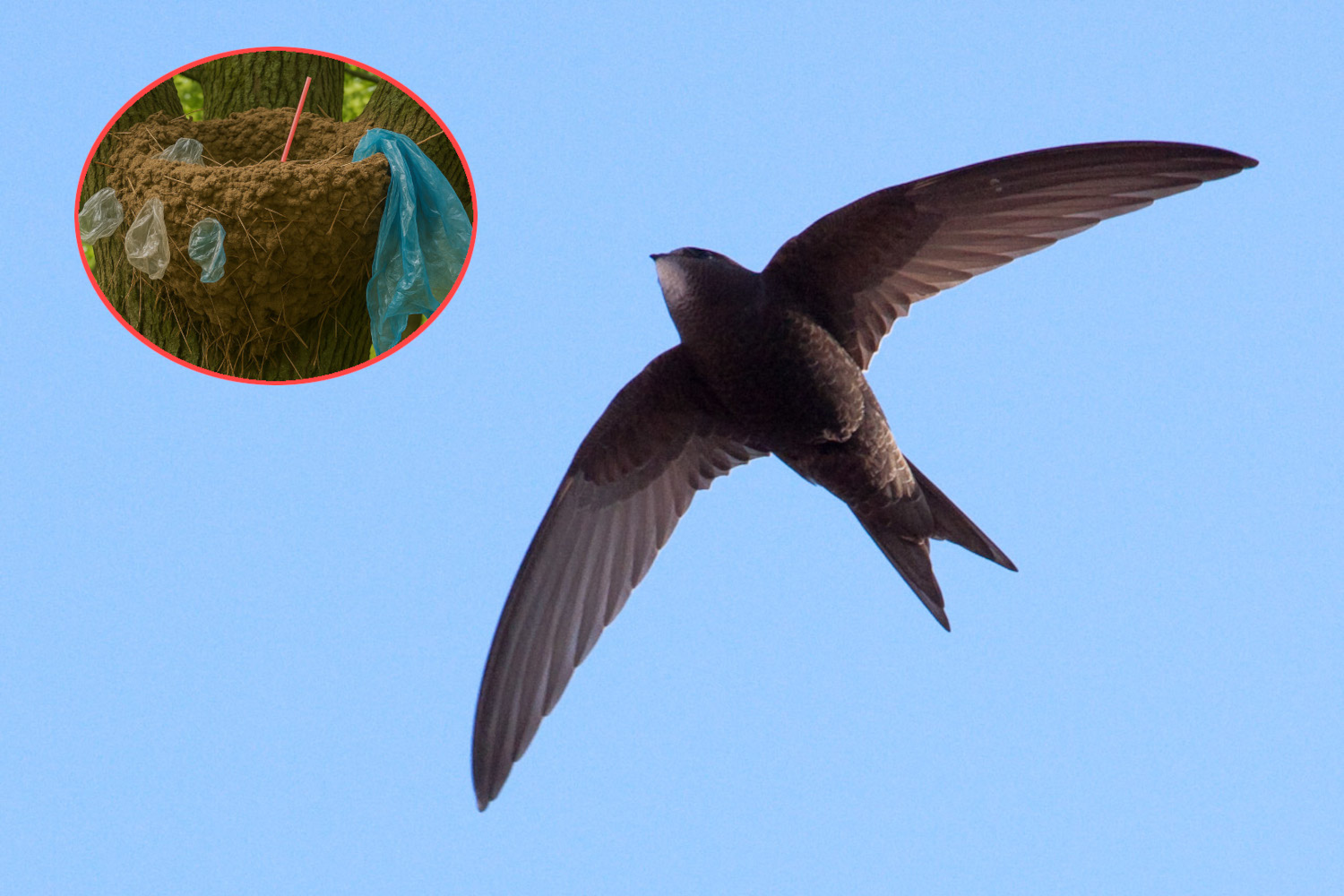
The air, once a symbol of purity and freedom, is no longer immune to theplastic pollution. A recent study conducted by a team of European researchers, with the participation of the Swiss ornithological station of Sempach, has revealed an alarming figure: Over 36% of the Nests of the Rondoni examined they contained Plastic fragments. And this despite the swabs are among the birds that spend more time in flight, collecting the materials for the nest directly in the air.
The phenomenon was observed by analyzing 487 Nurses in seven European countriesincluding Switzerland. The species involved are three, all belonging to the Rondoni family. The most striking case is that of pale swallowwhich showed a contamination even in the85% of the nestsa fact that experts attribute to its prevalent presence in urban environmentswhere plastic waste is more widespread.
Plastic in suspension in the airtherefore, has also reached the animals that rarely touch the soil. Alpine swallows, for example, can remain in uninterrupted flight for eight months, while black swallows reach ten. Yet, in their incessant flight, they still manage to collect light plastic materialswhich end up in the nests together with natural elements, united thanks to their saliva.
Plastic pollution and risks for swallows
The study, published in the magazine Science of the Total Environmentdid not focus on direct consequences for the health of birds, but has documented Four cases of swallows that are entangled in plastic wastewith possible risks of injury or death.
Furthermore, it is not excluded that the chemicals contained in synthetic materials can be harmfulespecially in environments such as nests, where children remain in contact with the collected material for a long time. In a provocative way, some researchers hypothesize that plastic could also offer thermal advantages, improving the isolation of nests.
However, it is an aspect to be verified, which does not however justify the growing presence of plastic in the skies. If even the swallows, flight masters and symbol of lightness, must deal with pollution, it is clear that No natural environment can be said to be safe. And the fault is only ours.
