
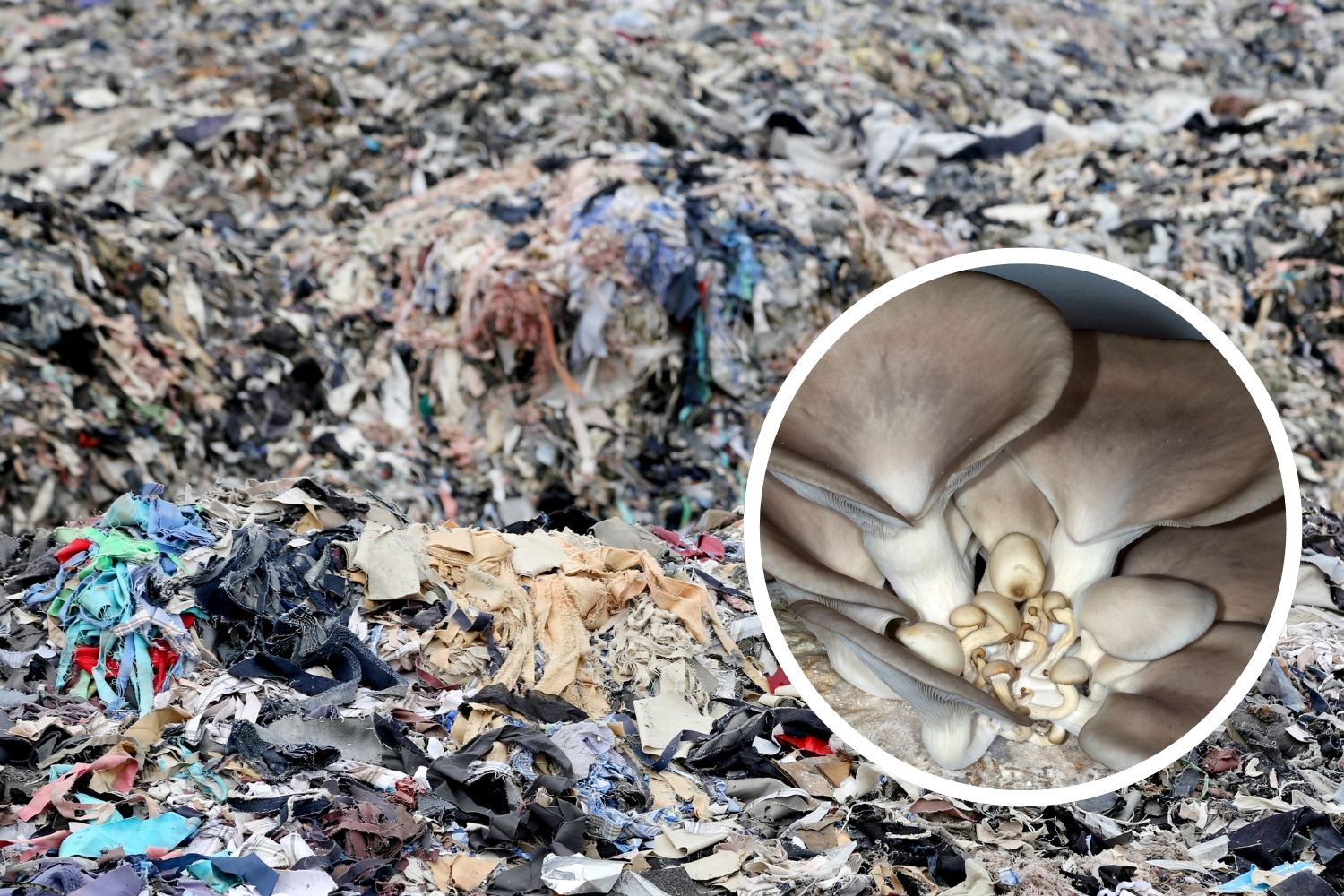
Fast fashion has become one of the most obvious symbols of the unsustainability of our consumption model: clothes purchased for a few euros, worn very few times and then thrown away. The result is a growing mountain of textile waste which, even in Europe, represents an enormous environmental problem.
85% of this waste is made up of mixed fabrics, such as cotton and polyester, which are difficult – if not impossible – to recycle with the most widespread technologies today. New research focuses precisely on this crucial issue, analyzing the circular economy opportunities for the recycling of post-consumer textile waste, made even more urgent by recent European Union directives.
A group of Latvian researchers analyzed 27 scientific studies examining different technological solutions capable of transforming this complex waste into new products, evaluating them through a multi-criteria decision analysis that takes into account economic, environmental, social and technical factors.
The strength of mushrooms
The results showed that mixed textile fibers can produce bio-oil, reusable chemical monomers, building composites and mycelium-based materials. Among all these options, one stands out clearly above the others: the mycelium, or the vegetative system of mushrooms, is the most promising solution for the future, thanks to a particularly favorable balance between sustainability, production simplicity and development potential.
According to scholars, the strength of mushrooms is their ability to do what traditional technologies cannot do: directly use mixed tissues as a resource. Some fungal species, such as Pleurotus pulmonariuscan be grown on ground post-consumer textile waste, transforming a material currently destined for landfill into a natural biocomposite.
In practice, the mycelium grows on the waste substrate and “binds” it into a solid structure which can be used, for example, as an insulating material for construction.
From an environmental point of view, the advantages are evident. The textile sector is among the most impactful in Europe in terms of consumption of water, raw materials and greenhouse gas emissions. Mycelium-based materials, however, would show a lower global warming potential than conventional insulating materials and require less energy-intensive production processes. Furthermore, they perfectly embody the principle of industrial symbiosis: in addition to textile waste, they can integrate up to 70% of other agro-industrial waste, such as grass clippings, dry leaves or agricultural residues, further reducing the overall impact.
Furthermore, unlike chemical recycling, which uses toxic substances and high-pressure processes with risks to the health of workers, the production of mycelium-based materials is considered low risk. The process is relatively simple: substrate preparation, pasteurization, mushroom inoculation, growth and final dehydration. Even from an economic point of view, the numbers are interesting: production costs are very competitive and the demand for sustainable building materials is growing strongly, making these biocomposites potentially very attractive for the market.
According to the study, another key aspect is duration: transforming textile waste into materials for the construction sector means enormously extending the life cycle of the resources: from a few months, typical of a fast fashion garment, to over ten years. It is a concrete way to “freeze” raw materials within long use cycles, reducing pressure on the environment and on production chains.
However, the study does not hide its current limitations. Mycelial technology is still at an early stage and requires further technical optimization to become fully competitive on a large scale. At the same time, the authors underline how little research is still dedicated to the recycling of mixed textiles, despite the fact that they represent the majority of European textile waste. More investments, more research and targeted support policies are needed, especially in light of the obligation for separate collection of textiles which will come into force from 2025.
Ultimately, mushrooms are a candidate to be a true “modern alchemist”: where today we see worthless waste, they see a resource. If adequately supported, these technologies could transform one of the most serious environmental problems linked to fast fashion into a concrete opportunity to build a truly circular economy.
HERE is the complete study.
