
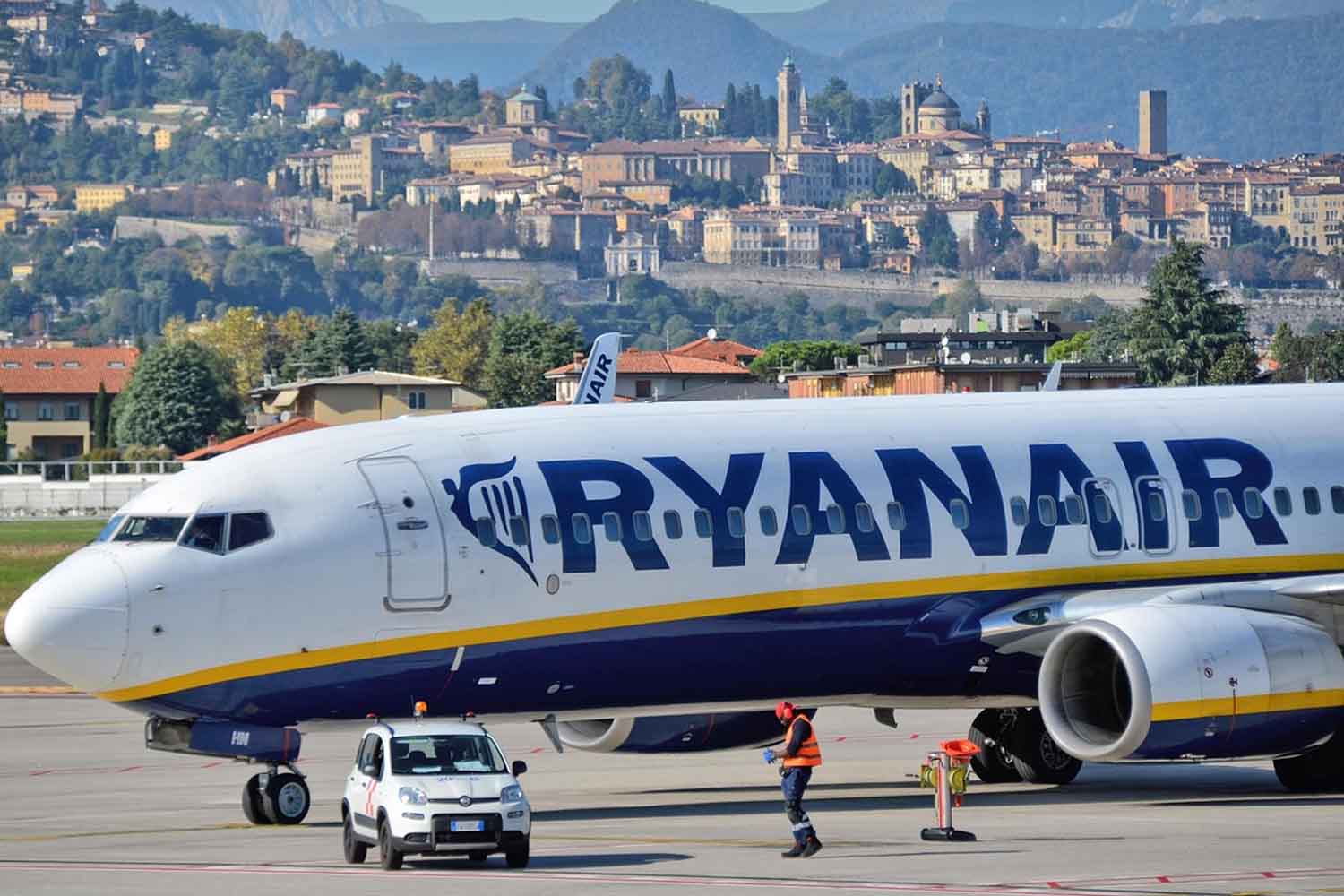
There is a very widespread, almost automatic idea: if a ticket costs little, then it is good news for everyone. The Ryanair case shows that reality can be more complicated. The Competition and Market Authority has in fact imposed a fine of over 255 million euros on the Irish company, together with its parent company Ryanair Holdings plc, for abuse of a dominant position in the market for flights to and from Italy. A figure that does not arrive by chance and which tells a lot about how low-cost tourism works today.
Behind what seems like a simple technical matter lies an issue that affects millions of travellers, the way we buy flights and the freedom – often taken for granted – to compare different offers before leaving.
When a flight is not just a flight
Ryanair is not simply a widely used airline. According to the Antitrust, it is the main hub for national and European air transport to and from Italy, with a share of almost 40% of passengers. Translated: for many travel agencies, online and physical, Ryanair flights are not an option among many, but an obligatory step to build a complete tourist offer.
And this is precisely where the mechanism gets stuck. Because when such a central entity decides to make access to its flights difficult, it is not simply protecting its business model. It is altering the balance of an entire ecosystem, made up of intermediation, comparison, combinations of flights, hotels, insurance, services.
The Authority’s investigation reconstructs a gradual strategy, which began between the end of 2022 and the beginning of 2023. First the introduction of additional procedures, such as facial recognition for passengers who had purchased the ticket through an agency. Then the transition to intermittent booking blocks, account cancellations, payment problems. Finally, the imposition of commercial agreements that limited the possibility for agencies to combine Ryanair flights with other services or with competing companies.
Less competition, less choice
According to the Authority, these practices have had a concrete and measurable effect. Travel agencies found themselves unable to build complete and competitive offers, while many online platforms lost visibility and traffic. In the end, the damage did not stop with the operators in the sector, but also affected consumers, who saw a reduction in the variety and quality of the tourist services available.
Only in April 2025 did Ryanair introduce a technical solution – integration via APIs and whitelabel systems – which, if used correctly, can bring about more balanced competitive conditions. But for the Antitrust this intervention came late and does not erase the effects produced in previous years.
The record fine serves precisely this: to remind us that the low price alone is not enough to guarantee a healthy market.
You might also be interested in:
