
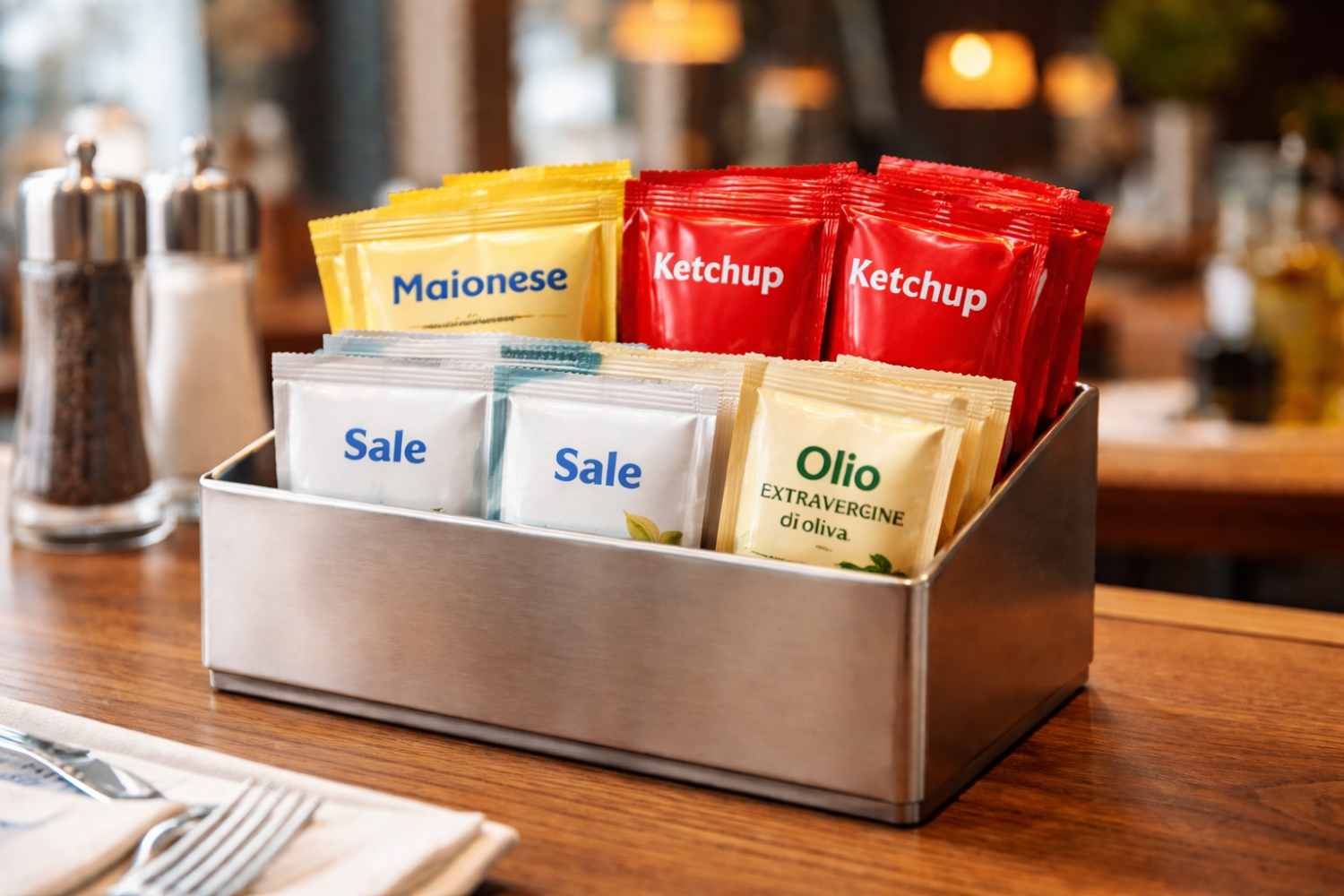
In a few months we will say goodbye to those sachets of ketchup, mayonnaise, salt and oil that we commonly find in restaurants, bars and hotels. This is not a simple recommendation, but an obligation provided for by the new European Regulation on packaging, the Packaging and Packaging Waste Regulation, which marks a decisive turning point in the fight against disposable plastic.
A small sachet, a big environmental problem
Those single-dose packages that seem so convenient and hygienic to us actually represent one of the most significant sources of plastic waste in the restaurant and hospitality sector. Every day millions of sachets are used once and then thrown away, contributing to environmental pollution and the growing plastic waste crisis.
The European Union has decided that the time has come to change course, placing this ban within a broader program that aims for climate neutrality by 2050 and the transition towards a truly circular economy.
When we can no longer find the sachets
The date circled in red on the calendar is August 12, 2026. From that moment on we will no longer find disposable plastic condiment packages in restaurants, bars, hotels and all accommodation facilities. The change also affects other products that we are used to seeing in single-dose formats: jams, sugar and butter will have to be served in reusable containers or in more sustainable alternative formats.
But the green revolution doesn’t stop at food. Even the personal hygiene products we find in hotels, such as shampoo, conditioner and detergents, will have to abandon, albeit with different timing, their small disposable plastic packages in favor of refillable dispensers, a solution that many structures have already successfully adopted.
The challenges for restaurateurs and hoteliers
The transition will not be without obstacles. For restaurateurs, the problem arises of finding alternatives that respect the hygiene standards required by the food sector, while maintaining practicality and portion control. Collective containers do not always represent a viable solution, while dispensers may not be suitable for all types of condiments.
For hoteliers, however, the challenge mainly concerns room service items such as glasses and saucers, which will have to become reusable with all that this entails in terms of washing, maintenance and possible theft.
There is no shortage of criticism of the regulation, especially considering that disposable packaging had been strongly encouraged during the health emergency for hygienic reasons. However, the environmental urgency requires courageous choices, even if they involve sacrifices. The European regulation has foreseen a gradual change in order to allow all operators in the sector to adapt without suffering too heavy economic repercussions.
A gradual process towards 2030
The August 2026 ban is only the first step of a longer journey. Starting from January 2030, the crackdown on disposable packaging will extend to all food, cosmetic and hygiene products, also involving take-away food which for now remains excluded. In February 2032 the European Commission will take stock, evaluating the environmental and health impact of the measures adopted to understand whether the objectives have been achieved.
In the meantime, companies in the sector are already moving to find alternative solutions, from dispensers to compostable and eco-sustainable packaging. As happened with biodegradable plates and glasses or bottles with caps attached, in this case too we will get used to the change. And those who still have stocks of banned products will be able to continue using them until they run out, allowing a smooth transition towards a future with less plastic.
