
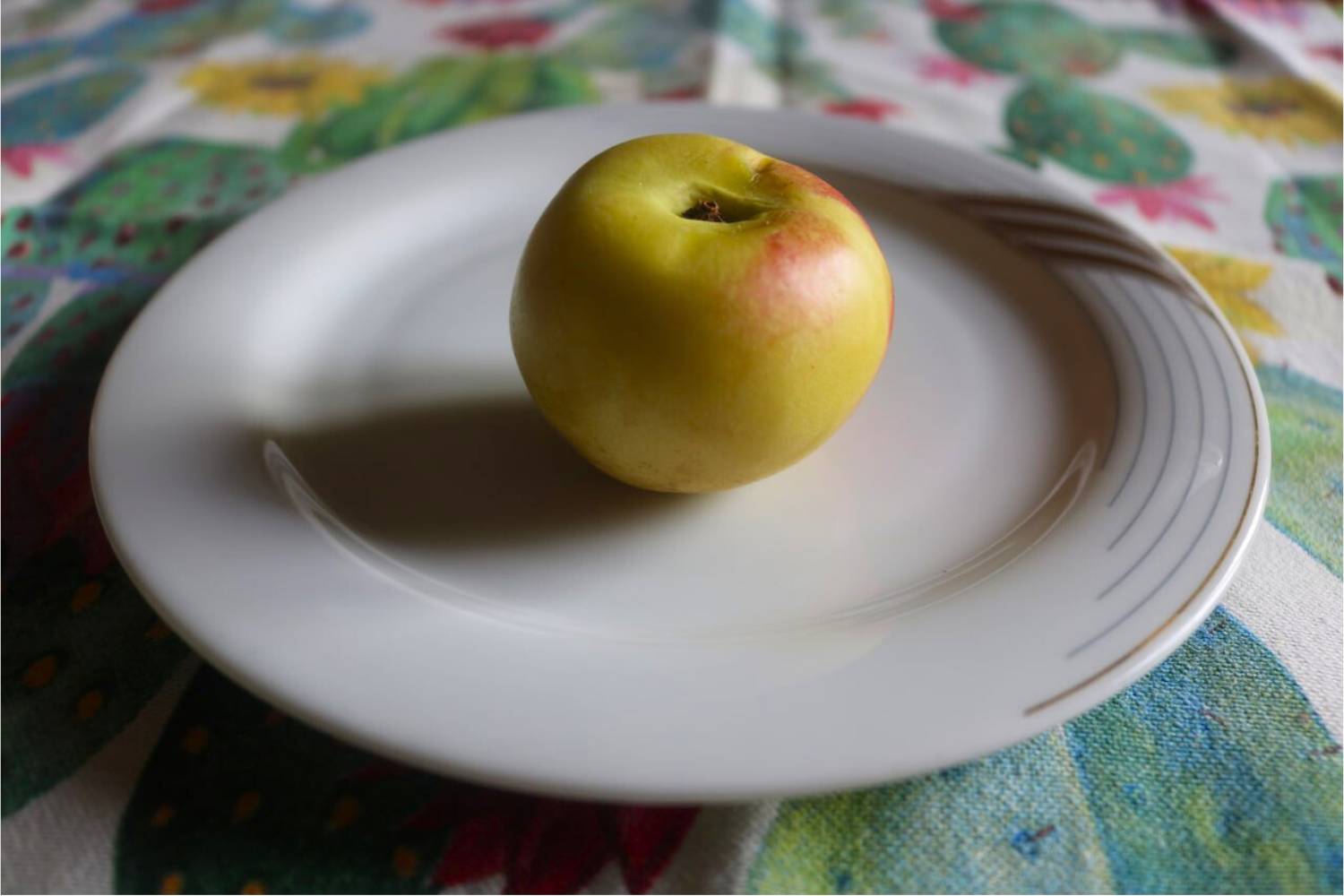
There are fruits that do not need fashions, bio labels or advertising campaigns: memory and palate are enough to consecrate them. The flag is definitely one of these. And no, you will not find it at the supermarket or from your trusted fruit and vegetable. It is a delicious fruit but ignored by agro -industry, which can be enjoyed mainly in Eastern Sicily and in some areas of Calabria (here it is called “Merendella”) from the end of July to early September. If the name of the name already intrigues you, take a couple of minutes to find out more than this gem.
The origins of the legendary Sirgia
The flag is nothing more than an ancient variety of net peach: it is small and rounded, with the thin peel that turns from light green to the rosé and releases an intoxicating perfume. Its pulp is firm, white and juicy.
To introduce the cultivation of the flagie, together with many others that we now consider “ours”, were the Arabs who allocated to Sicily since 965. These trees found a fertile ground and a mild climate in particular in the Niceto valley (in the Messina) and created shadow in the vegetable gardens and family gardens. The same term SERRGIA would derive from the Arabic “Al-Birchiga”, then transformed into the French “Alberges” during the Angevin domination.
A flavor that is not forgotten
Anyone who has tasted an flag can confirm it: it is an explosion of freshness, with that right balance between sweet and acidic that makes it inimitable. It is not cloying, it is not anonymous as certain bench peaches that we find at the supermarket today.
Sirgia is not just a fruit, it is a collective memory. It is the improvised snack in the countryside or the house of the grandparents. The flagship smells of spontaneity, simplicity, a Sicily that existed before plastic and labels with a barcode.
A fruit that risks disappearing
Today the flag is almost nowhere to be found. The cultivation of this fruit is limited to some areas of Sicily and Calabria, mainly to the provinces of Messina, Catania and Reggio Calabria. And not all those who live in these areas of the South have tasted it. If you now ask the young people of the new generations if they love this fruit, they will answer “and that it is the flag? I have no idea”.
I tried several times and the answer has left me with a bitterness in the mouth. And of course, I encouraged them to taste it. And it is the advice that I also give to you: if you come to the south in the summer, do not go away without having tasted a flag. Small warning: one pulls the other …
