
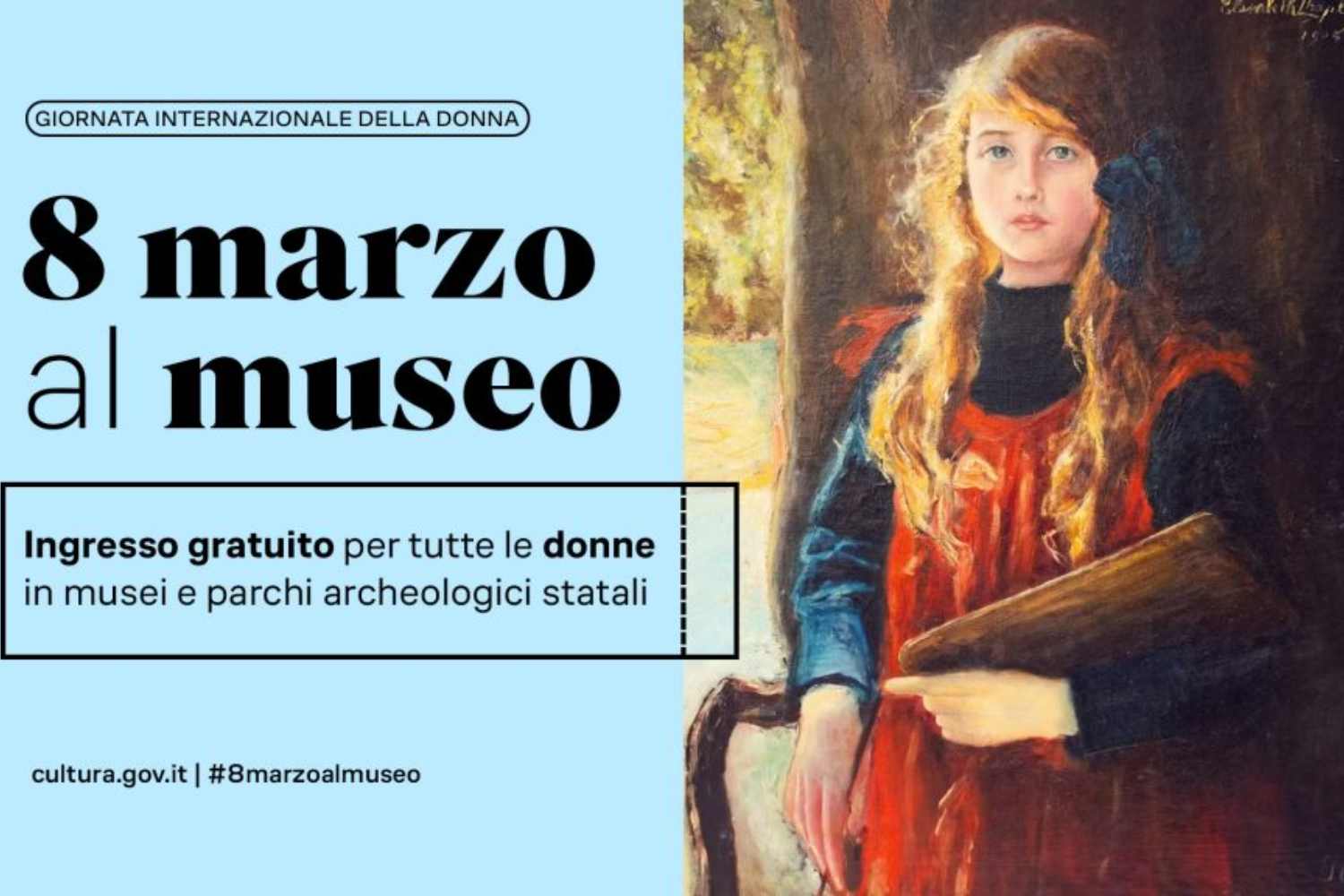
On Sunday 8 March 2026, on the occasion of International Women’s Day, state museums and places of culture throughout Italy will open their doors free of charge to the female public. An initiative promoted by the Ministry of Culture which transforms the festival dedicated to women into an opportunity to rediscover the country’s cultural heritage.
In fact, free entry represents a concrete invitation to experience museums as spaces of knowledge, dialogue and reflection, where history and creativity are intertwined with the story of the female role in society. From archaeological parks to monumental complexes, passing through castles, historic villas, gardens and museums, March 8th will offer thousands of visitors the opportunity to explore some of the most fascinating places of Italian cultural heritage for free.
View this post on Instagram
A journey into culture between events, exhibitions and guided tours
The initiative is not limited to free access. In numerous Italian cities, special events, thematic visits, shows and concerts have been organized specifically to celebrate the presence and contribution of women in history, art and culture.
Many cultural institutes will offer guided tours dedicated to the female figure, telling stories that are often forgotten or little known: artists, muses, protagonists of the social and cultural life of different eras. These events also represent an opportunity to reflect on the value of culture as a tool for inclusion and awareness, capable of highlighting the role that women have had in building society.
The visits will take place during the normal opening hours of the museums and, where applicable, it will be possible to access by reservation. To organize your own cultural day, it is advisable to consult the Italian Museums app or the official websites of individual institutes, where updates on events are published. The detailed schedule of events, constantly updated, is also available on the dedicated page of the Ministry of Culture website.
Palazzo Milzetti in Faenza between female myths and contemporary music
Another original proposal comes from Palazzo Milzetti in Faenza, in the province of Ravenna, where Women’s Day will be celebrated with an event that combines art, storytelling and music. The day will begin with a guided tour of the palace rooms, during which we will be told about the female figures depicted in the frescoes: goddesses, heroines, nymphs and vestals who populate the vaults of the building.
These images, full of symbolism and pathos, represent women of different eras and conditions, united by passions, dramas and destinies often marked by tragedy. The concert “La Llorona beyond the legend” is scheduled to follow, a chamber work that reinterprets the famous figure of Mexican folklore. The story tells of a mother who, overwhelmed by desperation after being abandoned, makes an extreme gesture.
In the musical story, La Llorona becomes the universal symbol of maternal pain, an image that crosses cultures and centuries to speak of loss, war and loneliness. The performance will be entrusted to the WunderKammer Orchestra – Camerata degli Mutinati, an ensemble known for its performances that blend contemporary music and audience involvement.
View this post on Instagram
Women in the Mario Praz House Museum in Rome
In Rome, the Mario Praz House Museum offers an intimate journey among the female presences that animate the scholar’s collection. The guided tour will accompany visitors among portraits, sculptures and works of art that tell the story of the women who marked Praz’s life and imagination: family figures, muses and artists who span the history of art. Among these, his mother Giulia Testa and daughter Lucia stand out, remembered through photographs and personal stories that provide a private look at the scholar’s life.
Alongside them, there are artists and personalities of the twentieth century such as Leonor Fini, Leonetta Cecchi Pieraccini and Colette Rosselli, protagonists of a lively and innovative cultural season. The journey then expands to include the great interpreters of the past, such as the wax modeller Anna Fortino and the painter Marguerite Gérard, offering a narrative that intertwines art, memory and female identity.
View this post on Instagram
The story of the Samnite woman in the Archaeological Museum of Allifae
Among the most interesting events, the one organized by the National Archaeological Museum of Ancient Allifae, in the province of Caserta, stands out, which offers a series of thematic guided tours dedicated to the figure of the Samnite woman. From 9am to 1pm, educational service operators will accompany visitors on a journey that tries to reconstruct the social role of women in the ancient Samnite civilisation, a historical reality of which few direct testimonies remain.
Thanks to archaeological findings and some Latin literary sources, such as the writings of Horace, it is possible to glimpse some aspects of female life of that era. The Samnite woman was a respected figure within the family and played a central role in the education of her children.
An interesting clue also comes from the necropolises, where many female tombs are marked by a spindle, a symbol of weaving, a fundamental activity in daily life. A detail that tells the importance of domestic work and the production of fabrics in a society linked to sheep farming and the harsh winters of the Apennines.
You might also be interested in:
