
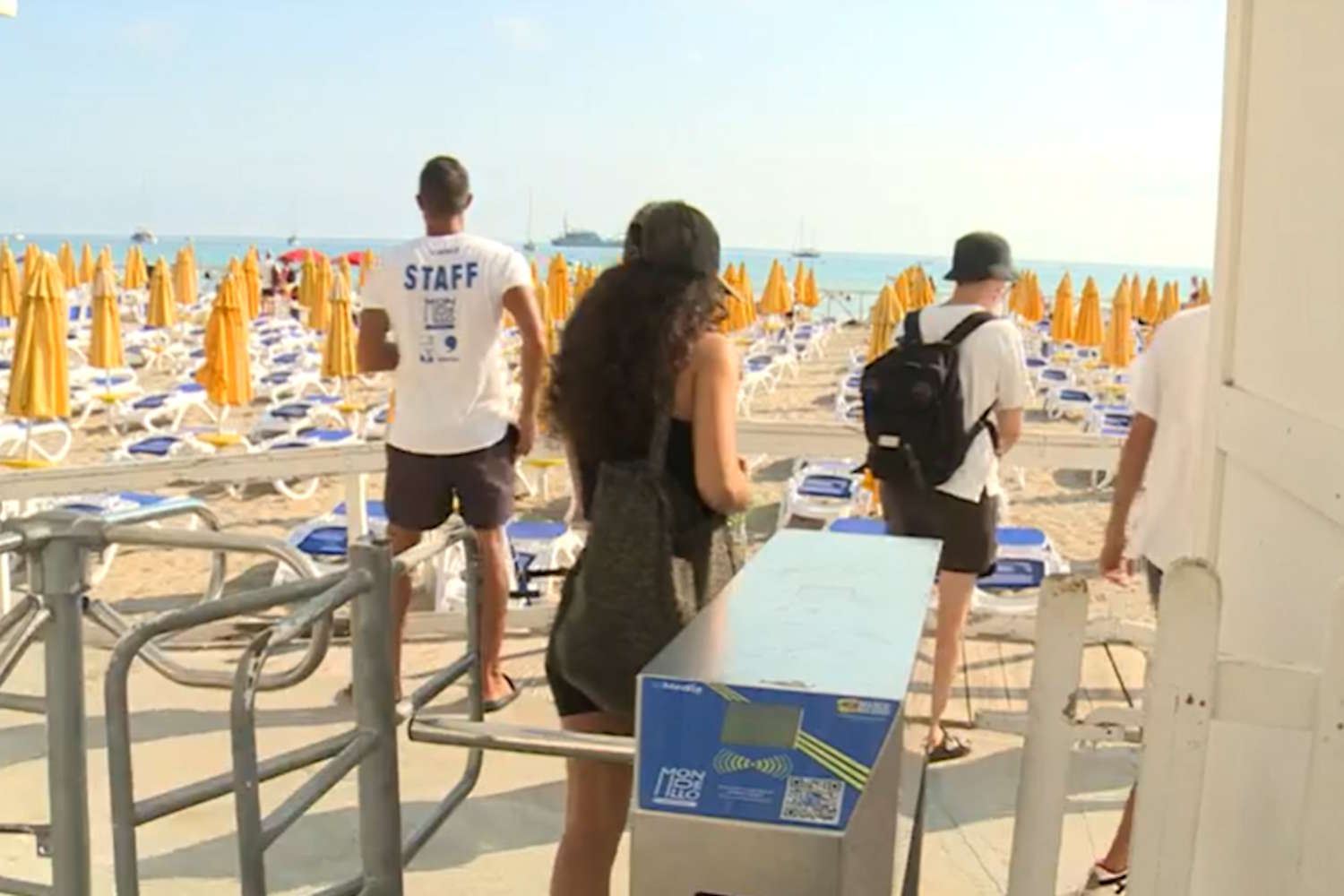
In Sicily, and not only, the sea is becoming an increasingly “common” good. Tours, fences, illegal deckchairs and carpet concessions have long since redesigned the map of our coasts, transforming a right enshrined in law into a privilege for a few. So much so that we don’t even notice it.
The most emblematic case is that of Mondello, the historic beach of Palermo, where for years, access to a large part of the beach has been regulated by gates, fences and even turnstiles, installed by the Italian Belgian mondel, the company that holds most of the concessions.
This summer the protests have finally exploded: parliamentary questions, checks of the coast guard and the Guardia di Finanza, citizens’ appeals. The question is simple: is it legal to put barriers on a public beach?
The law is there, but it remains to be understood how to apply it
The regional legislation is clear: article 5 of the Sicilian law n. 32/2020 requires dealers to guarantee free and free access to the shoreline for everyone, also allowing the transit through the areas given to private individuals. In theory, only additional services such as sunbeds and umbrellas or even cabins should be paid.
In practice, however, the question is played on the definition of “obstacle”: is a turnstile an impediment? And can a marked passage away from the main entrance be considered free access?
According to the Guardia di Finanza, the Region will have to clarify two points:
From the Sicilian region, meanwhile, the first intervention:
Never more fence or turnstiles in the beaches on the beaches of Sicily. I have already given the competent offices of my Department to be granted authorizations to apparatuses of this type that can hinder the access of bathers to the shoreline and possibly, request the modification of the authorizations already issued to make them remove. Citizens must always have the opportunity to access the sea freely and for free.
To say it is the regional councilor for the territory and environment Giusi Savarino who has issued a circular to establish the ban on new authorizations for fixed plants that can hinder the transit of bathers.
In the meantime, the company defends the legitimacy of the fences, supporting both for safety, prevention of theft and internal organization. “Our turnstiles are not digital – explained the CEO Antonio Gristina – And whoever wants can still go to reach the shoreline“.
A problem that goes beyond Mondello
What happens in Mondello is only the tip of the iceberg. Sicily, in recent years, has seen a real race to privatization of the coasts: according to the beaches of Legambiente, concessions have increased by 41% in five years, coming to occupy 22.4% of the coast. If you also consider the interdicts for erosion, pollution or abusiveness, free access is compromised in 76.5% of the coast. And what little remains free is not always really usable.
In San Vito Lo Capo, for example, the “Racket of the deck chairs” is repeated every summer: private individuals and abusive rentals place sunbeds and umbrellas on the free beach since dawn, making it impossible to find space without paying. Even the blitz of the authorities – such as the one that in July led to the seizure of 100 deckchairs and 50 illegal umbrellas – have a temporary effect only: the day after everything he returns as before.
In Syracuse, however, citizens have mobilized with a petition to ask that at least 50% of the beaches will remain free, limiting the concessions and restoring the access closed by private individuals. “It’s not a privilege, it’s a right,” says Marco Gambuzza, promoter of the initiative.
A national phenomenon
The “secession of the sea” does not only concern Sicily. In Liguria, Tuscany, Puglia and Campania, the percentages of the Costa Data in concession are also higher, leaving crumbs for free use. In Liguria, for example, the occupation of the beaches by the beaches exceeds 80%in some municipalities, while in Versilia and on the Lazio coast the reports of closed or obstructed accesses are now annual.
Even in the mountains the script is repeated: the case of the “turnstile in the Dolomites” to make a path paid has raised the same debate on natural goods and public use.
Who is the sea of?
The answer, in theory, is simple: the sea is public state property. But in practice, in Italy, you often have to pay to enjoy it. And while the Cassation reiterates the right of all to freely reach the shoreline, the regional policy – at least in Sicily – seems to be rowing in the opposite direction: the region is preparing new concessions in 54 municipalities, including iconic locations such as Menfi, the Aeolian and the San Vito Lo Capo itself.
Tommaso Castronovo, president of Legambiente Sicilia, warns:
A national law is needed that guarantees at least 50% of free beaches in each municipality.
Without, the risk is that between erosion, privatizations and abuses, the sea becomes a mirage for those who cannot or do not want to pay 30 euros per day for a bed.
And so, while in Mondello there is discussion on the turnstiles, in San Vito the racket of the deckchairs and Syracuse are fought in San Vito, signatures are collected to get public access, the Italian sea moves away every day by people.
Once the place of meeting and freedom, the beach is becoming the symbol of a slow and silent privatization. Not a sudden law, not a striking ordinance, but a daily process, almost invisible, which is transforming a common good into an entrance ticket to be stamped.
Sources: Legambiente / Sicilian Region / Tgr Sicily
Don’t you want to lose our news?
