
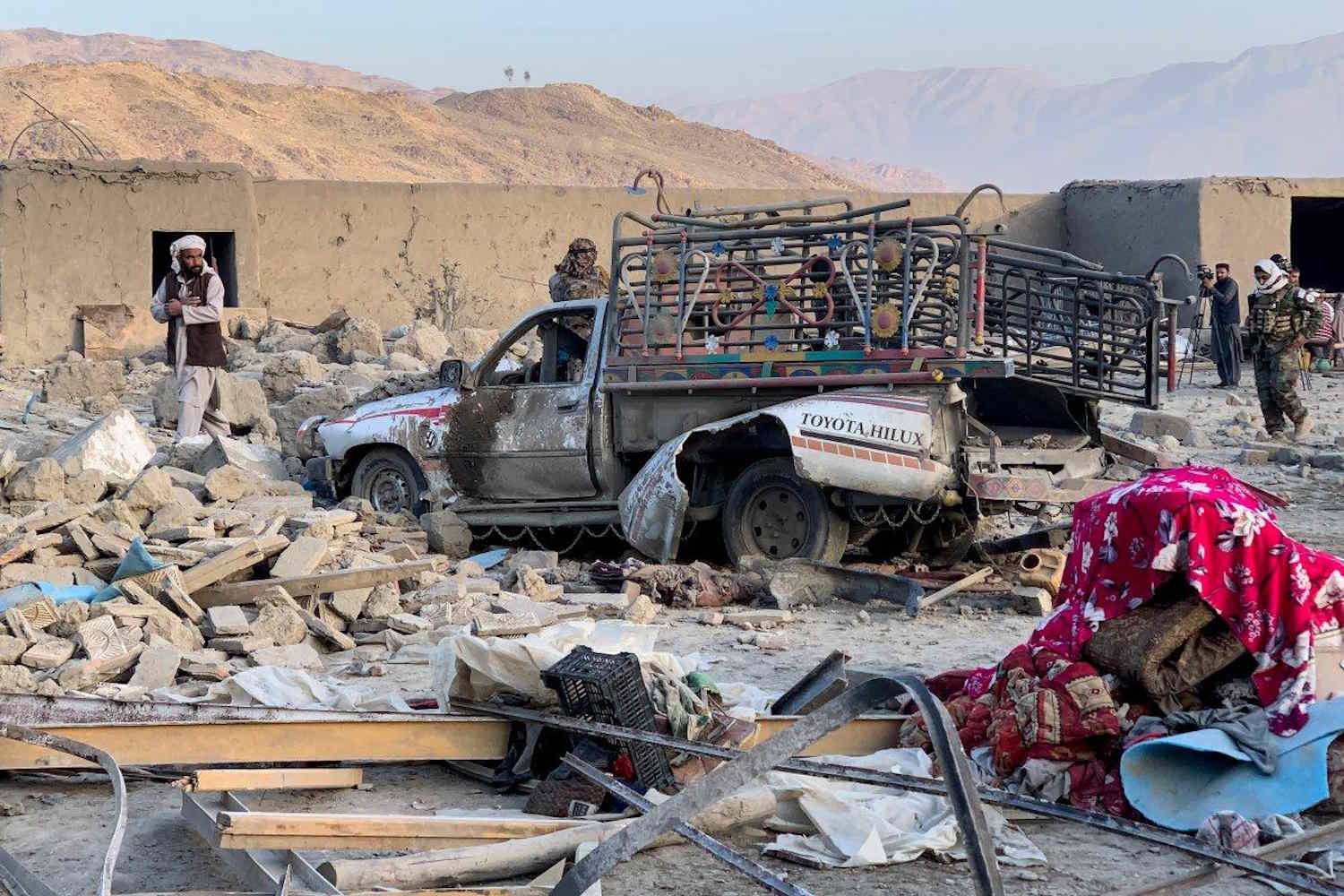
Air raids, artillery along the border, cross accusations of terrorism. Islamabad talks about “open war”, Kabul already reports civilian victims.
In short, the fragile truce mediated months ago seems to have definitively collapsed and the crisis between Pakistan and Afghanistan has once again inflamed the Durand Line, the border drawn in 1893 which separates (and essentially divides) territories with a majority Pashtun for over 2,600 kilometres.
In fact, in the past few hours, the Pakistani air force has hit targets in Kabul, Kandahar and in the Paktika province. According to Islamabad, these were “targeted” operations against bases of the Tehrik-i-Taliban Pakistan (the Pakistan Taliban, TTP), a jihadist group responsible for attacks in Pakistan. While the Taliban government, through the spokesperson Zabihullah Mujahidrejects the accusations: no TTP base on Afghan territory, but bombings that would have hit civilian areas. Local sources also report explosions near the Torkham crossing, a key point for trade and transit of displaced people.
Casualty figures remain divergent and not independently verifiable. Pakistani Prime Minister Shehbaz Sharif declared that the country “has the full capacity to crush any aggressive ambition”, while the Taliban say they do not want to open a large-scale conflict, although they reserve the right to react.
But why now?
In October 2025, a mediation by Qatar and Türkiye had produced a temporary truce. But a shared border control mechanism has never been built. In recent months, clashes and targeted bombings have multiplied.
In fact, Kabul has never fully recognized the border imposed in the British colonial era. The line remains porous: trafficking, militias and tribal networks have crossed it for decades. Islamabad accuses Afghanistan of not countering the TTP; the Taliban speak of violation of sovereignty.
In all of this, since 2023 Pakistan has intensified the expulsions of irregular migrants. According to UNHCR updates, almost 2.9 million Afghans returned to the country in 2025, often in extremely vulnerable conditions. Fighting in border areas worsens an already chronic humanitarian crisis.
View this post on Instagram
Military balances and escalation risk
Pakistan is a nuclear power with a structured and numerous army. The Taliban largely have small arms and equipment left over from the 2021 Western withdrawal, but have long-standing experience in guerrilla warfare. Analysts fear a long phase of low-intensity fighting along the border rather than an open conventional war.
For its part, the United Nations called for immediate de-escalation. Iran reportedly offered to mediate, while Saudi Arabia initiated diplomatic contacts with Islamabad. Meanwhile, the crisis is part of a broader geopolitical framework. India was among the first countries to reopen a diplomatic channel with the Taliban after 2021. According to regional observers, the timing of the Pakistani operations – coincided with the Indian Prime Minister’s trip Narendra Modi in Israel – also reflects strategic rivalries in South Asia.
What’s at stake? Certainly the security of two neighboring countries, but also the stability of an entire already fragile region, affected by humanitarian crises, geopolitical competition and climate change which make the mountainous border areas even more precarious.
Without a credible agreement on control of the Durand Line and a mutual commitment not to host hostile armed groups, the “open war” risks turning into a creeping conflict destined to last. And the ones who pay the highest price, as always, will be civilians.
