
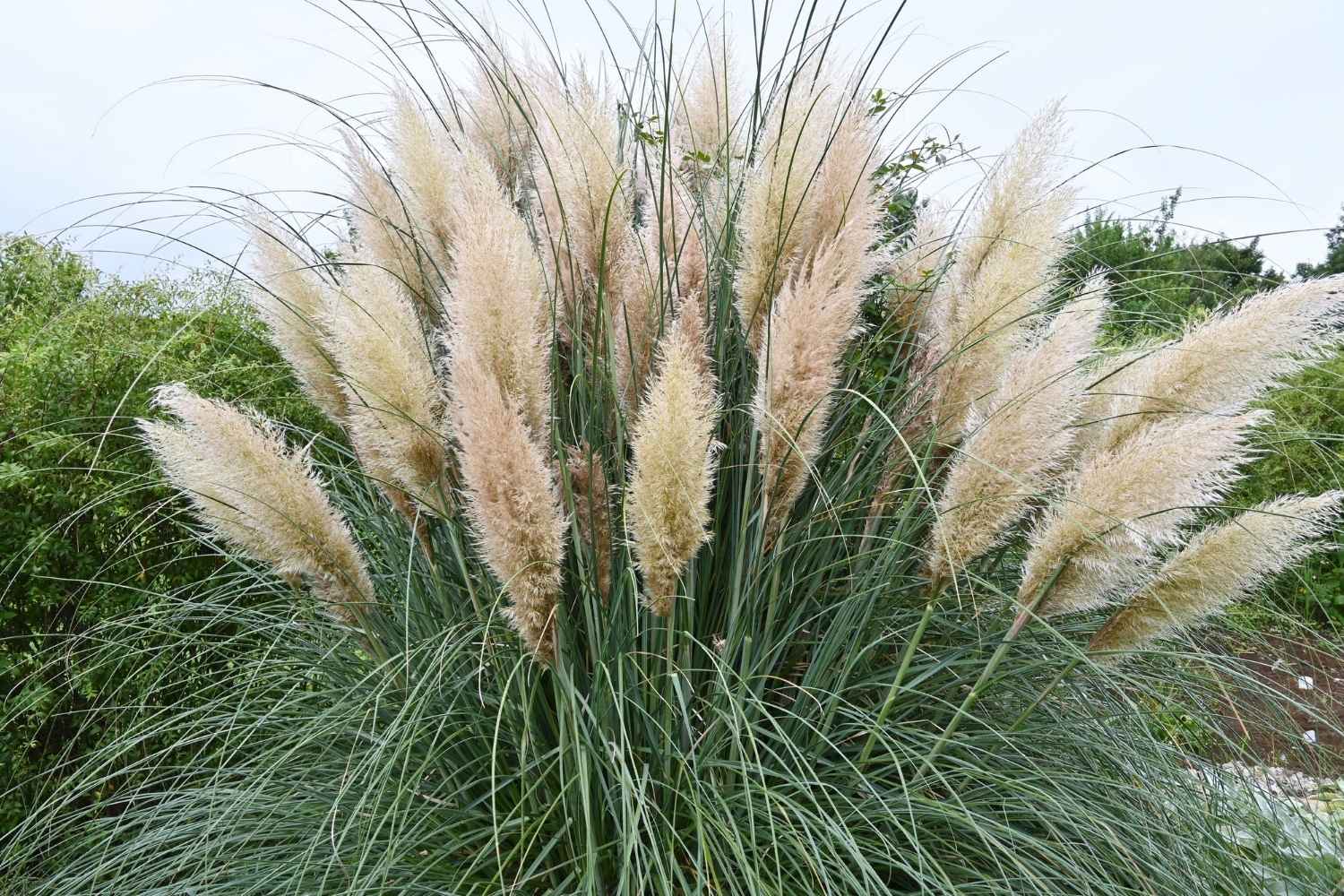
Between the end of August and mid-September the large silver tufts of the Cortaderia selloana they complete flowering, and this, for those who grow it in the garden, is the moment when action should be taken. Those decorative feathers that are so popular in Mediterranean gardens are actually inflorescences: once they reach maturity they produce very light seeds, capable of traveling with the wind for hundreds of meters and colonizing slopes, uncultivated land, river banks, wherever they find a strip of bare soil.
It is the mechanism that has made pampas grass one of the most problematic ornamental plants in Europe: beautiful to look at, difficult to contain. We had already talked about it in an in-depth study on the risks of this plant for the garden and the environment: leaves as sharp as blades, deep roots that make eradication a far from trivial job, ability to resist both drought and frost.
Wanting to look outside Italian territory, we can mention France, where the problem is addressed with a precise regulatory instrument and from 2023 a ministerial decree includes the species among those prohibited, including sale and planting. In Italy there is no equivalent national provision, and the plant can easily be purchased in nurseries, even if this does not mean that it is harmless: the Cortaderia selloana it has appeared for years in the lists of invasive alien flora compiled for the national territory, and various regional and municipal administrations advise against or limit its planting in natural areas and along the coasts, where the risk of colonization is more concrete. In short, the people who grow it do not commit any crime, but they will find themselves managing a plant that environmental bodies keep under observation.
How to intervene without getting hurt
If you don’t want to eradicate the entire head, you can limit yourself, for now, to cutting the inflorescences before they open completely. A couple of precautions make the difference: sturdy gloves, because the leaf edges of the plant are serrated and capable of cutting into the skin without too much effort, and be careful not to shake the freshly cut plumes, an act that would nullify the operation by scattering the seeds into the air anyway.
After cutting, compost is prohibited
The cut plumes never go into the home compost pile, where the seeds would find ideal conditions to germinate. The correct procedure is to close them in a sealed plastic bag before disposing of them. When going to a waste collection centre, the nature of the material should be reported to the operator, so as to separate it from the rest of the plant waste. For those who own a now adult specimen, with the touffe having grown for years, eradicating the stump often requires heavy equipment: at that point, rather than gardening, it is a small construction site. It is worth remembering that a single mature inflorescence can produce several thousand seeds and that the useful window for limiting its spread is precisely this, from now to mid-September. Afterwards, the wind will do the rest.
