
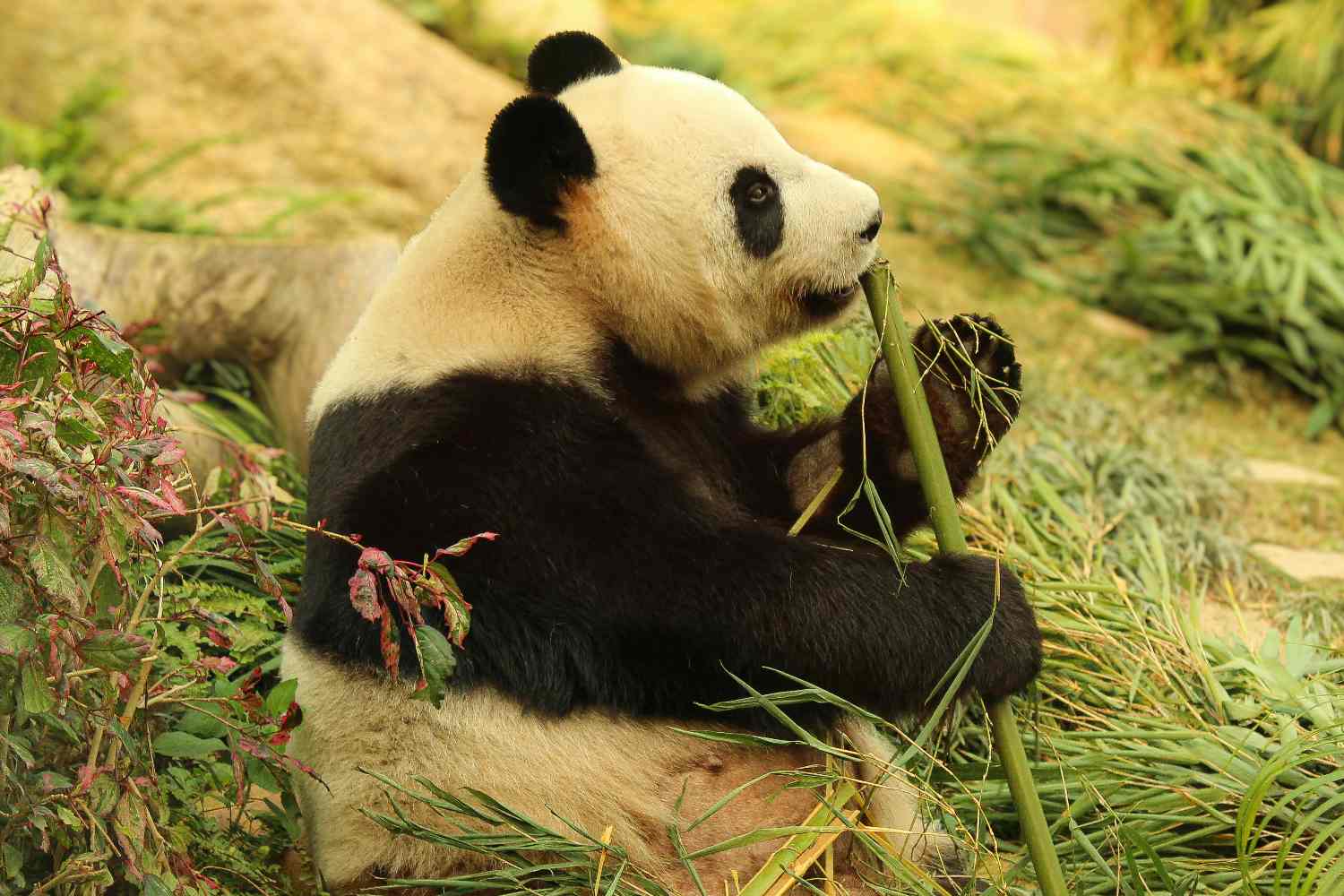
Among the many curiosities that surround the giant pandas, one of the most surprising concerns the phenomenon of pseudogravidanza. Some females, such as the famous Hin of the Chengdu Giant Panda Breeding Research Center, showed all the symptoms of a sweet expectation without however being really pregnant by adopting a particularly “strategic” behavior.
Experts explain that pseudogravidanza is not a rarity between the Panda. Progesterone levels can also rise in the absence of conception, causing signals such as lethargy, loss of appetite and behavior as a future mother. In nature, these episodes take place as a simple hormonal response and do not involve concrete advantages.
Wild pandas do not receive extra treatments or special food: the signals of pseudogravidanza are therefore purely biological and do not influence the survival or attention received. But in the case of Ai Hin, the experts suspected something more: not only biology, but also a form of cunning.
In captivity, the advantages become tangible
In reproduction centers such as that of Chengdu, on the other hand, pregnant females receive single rooms with air conditioning, dedicated treatments day and night and above all a diet rich in bamboo, fruit and snacks. It is therefore not surprising that the HIN showed the typical behaviors of a future mother: it was not only biology, but also an intelligent strategy learned to obtain extra comfort.
The intelligence of the animal, combined with the opportunities offered by captivity, has transformed pseudogravidanza into a real strategy to live a more comfortable life. A behavior that, in nature, would never find application. Only after weeks of observations, did the Guardians suspected that the female was pretending, demonstrating a surprising ability in adapting to the human environment.
It is therefore not surprising that the Hin “took the opportunity”, showing the typical behaviors of a future mother and thus obtaining a period of absolute luxury. After weeks of observations, the Guardians began to suspect that there was no arriving puppy, demonstrating a surprising skill in adapting to the human environment conditioned by the fact that he always lived in captivity.
The real difference between nature and captivity
Of course, it may happen that females show false pregnancies for hormonal reasons, but Ai Hin behaviors seemed too “well calibrated”. As if he had learned that pregnant pregnant is equivalent to receiving extra attentions and a mountain of food. Everything except natural behavior.
What happened highlights a paradox of captivity conservation programs. Resources are allocated to prepare births that often do not take place, and animals learn to “play” with human rules to obtain advantages. Zoo therefore create situations in which natural behaviors are distorted, transforming biology into a show and the management of wellness into an incentive to the strategic calculation of animals.
In nature, pseudogravidanza remains a purely biological phenomenon, without additional rewards. In captivity, however, animals can become “small actors”, manipulating the human environment to obtain extra food and comfort. Ai Hin’s story reminds us that captivity alters natural behavior and raises ethical questions about animal management in zoo, where what seems to be care can become an incentive to act.
Don’t you want to lose our news?
You may also be interested in:
