
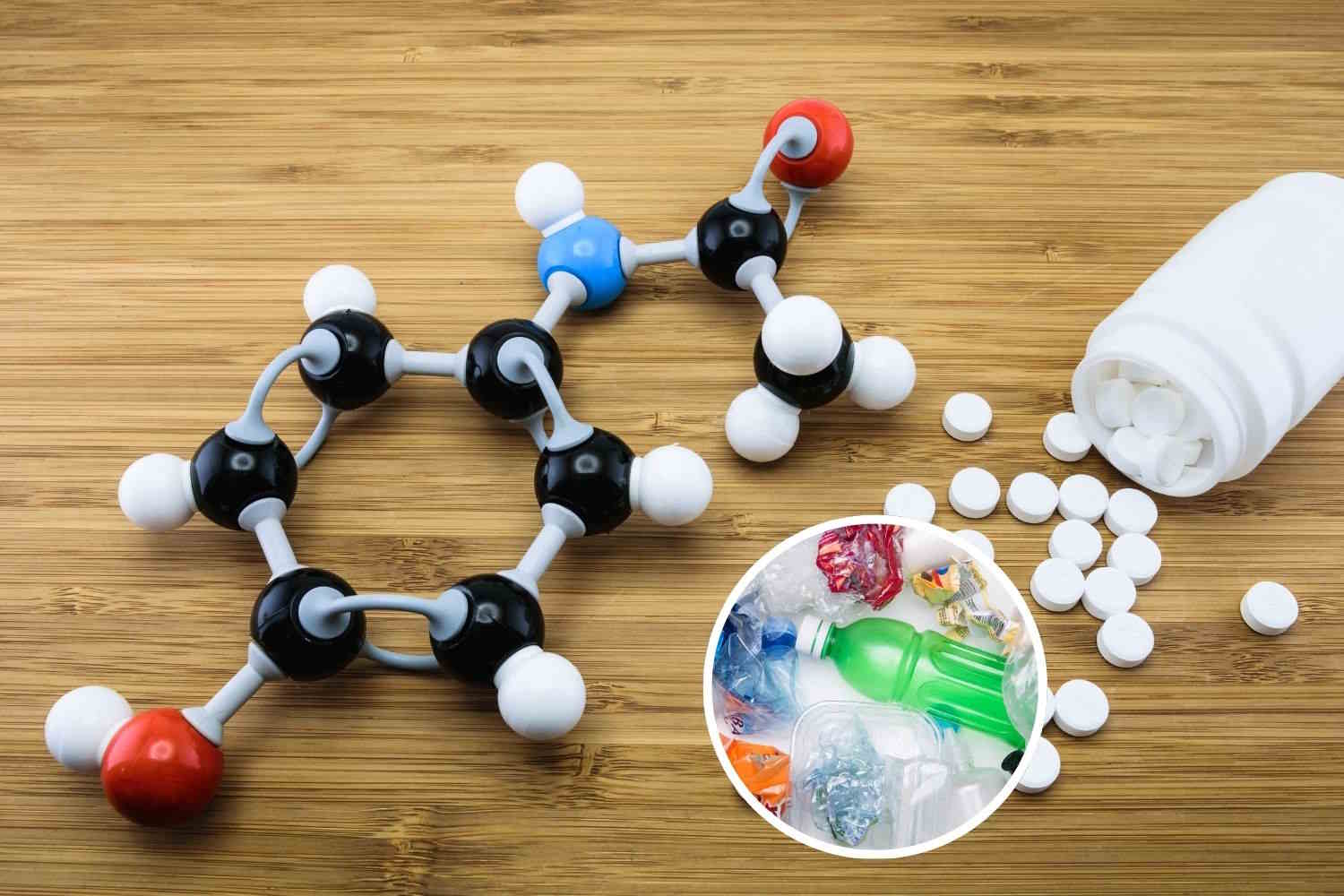
In a surprising intertwining between biotechnology and environmental sustainability, a group of scientists reached a revolutionary goal: they managed to obtain recycled plastic paracetamol, using a genetically modified bacterium, theEscherichia coli. The experiment opens the doors to a future in which Pet waste could become raw material to produce low environmental impact drugs.
How the process works
Currently, paracetamol – one of the most used drugs in the world – is produced starting from oil derivatives, in industrial plants that require high temperatures and consume large quantities of energy. This process emits over a million tons of Co₂ every year, to satisfy a global demand that exceeds 275,000 tons of paracetamol.
The method developed by researchers from the University of Edinburgh, on the other hand, works at room temperature, generates almost zero emissions and is based on waste materials. The heart of the procedure is a chemical reaction known as Lossen rearrangement, discovered in 1872, never used before within a living organism.
Using phosphate as a natural catalyst, the team genetically changed theE. coli In order to be able to convert Tereftalic acid-obtained from the degradation of the PET-in para-aminobenzoic acid (PABA). Later, some enzymes from a mushroom and another microorganism inserted in the bacterium DNA, thus allowing him to complete the transformation into paracetamol in less than a day.
Biotechnology at the service of sustainability
Although the process is still in the experimental phase, the results are extremely promising. According to the authors of the study, published in the magazine Nature Chemistrythis technique could be adapted to also produce other pharmaceutical compounds, inaugurating a new era in the production of low environmental impact medicines.
In addition to paracetamol, the method could open the way to the creation of other value chemicals starting from plastic waste. It is a real example of Upcycling, where plastic is not simply recycled in lower quality materials, but enhanced and transformed into therapeutic resources.
With over 350 million tons of plastic produced every year, of which a significant part in PET, the potential of this approach is enormous. Currently, most of these materials end up incorporating, exported or subjected to recycling processes that however generate harmful emissions. The technique developed by the British team represents an alternative, innovative and zero emissions solution, as Professor Stephen Wallace said, head of the project:
This study shows that PET plastic is not just a refusal destined to become another plastic: it can be transformed by microorganisms into new value products, also useful for human health.
Although the technique is not yet ready to be implemented on an industrial scale, it represents an important step forward towards a cleaner and efficient pharmaceutical production. The concept at the base is similar to the fermentation of beer: to exploit microbial metabolization to obtain complex substances, starting from simple and inexpensive materials.
Don’t you want to lose our news?
You may also be interested in:
