
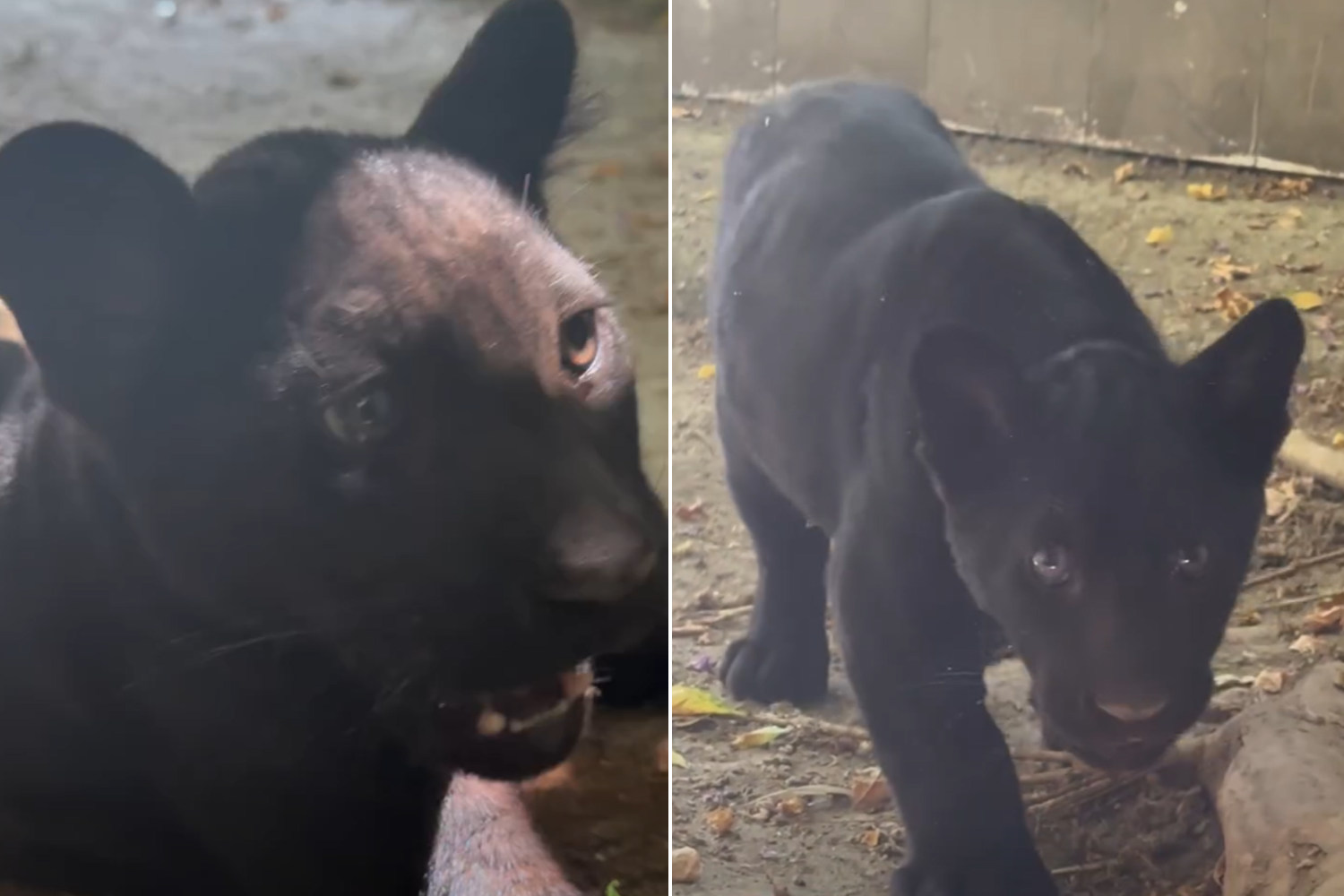
The Naples Zoo celebrates the arrival of Parthenope, a black jaguar cub born last May and officially presented to the public for the first time. The little girl is the third child of Ananga and Ares, the two specimens transferred to the Campania capital in 2021 who represent the only reproductive pair of the species present on the national territory. Before its birth, the structure had welcomed Victor and Romelu, baptized in homage to the football forwards of the Neapolitan team. The characteristic melanistic coat that envelops the cub is the result of a high concentration of melanin, the same genetic peculiarity that commonly transforms these proud predators into the iconic black panthers.
View this post on Instagram
Climate conditioning and management programs
According to the management of the structure led by curator Fiorella Saggese, the rise in temperatures and an increasingly warmer climate may have favored the couple’s frequent reproductions. Already last year the zoo had registered the birth of four pit cubs, a feliform native to Madagascar.
However, to ensure genetic diversity and avoid inbreeding in managed environments, Parthenope will also be destined to leave her mother in the future to reach another center. In the meantime, the managers of the facility plan collaborations with some reserves located in South America, in an attempt to connect captive management to the protection of the Colorado River and large native water basins.
A star to be photographed condemned to imprisonment
Behind the enthusiasm of a pink ribbon that will attract thousands of visitors ready to take photos, however, lies a bittersweet reality that raises profound ethical doubts. Although the Panthera onca species is threatened in its natural habitat by wild deforestation and poaching, Parthenope’s story appears to be that of a queen destined to never know true freedom. Born inside a fenced perimeter, the little girl will grow up far from the dense tropical forests and humid areas of Central and South America, devoid of the vast expanses where her peers hunt and swim freely.
The illusion of conservation and the future of the jaguar
The fate of this creature, transformed against its will into an exhibition star, highlights the paradox of modern zoological structures. Although guided breeding programs attempt to preserve biological variability, protecting an animal inside a cage is not the same as saving it.
The real survival of jaguars does not depend on the flashes of cell phones in city parks, but requires concrete actions in their territories of origin to stop the fragmentation of habitats and stop conflict with humans. Without a real return to nature, the birth of a puppy in captivity remains a half-victory, where the wonder of life collides with the insurmountable border of a fence.
