
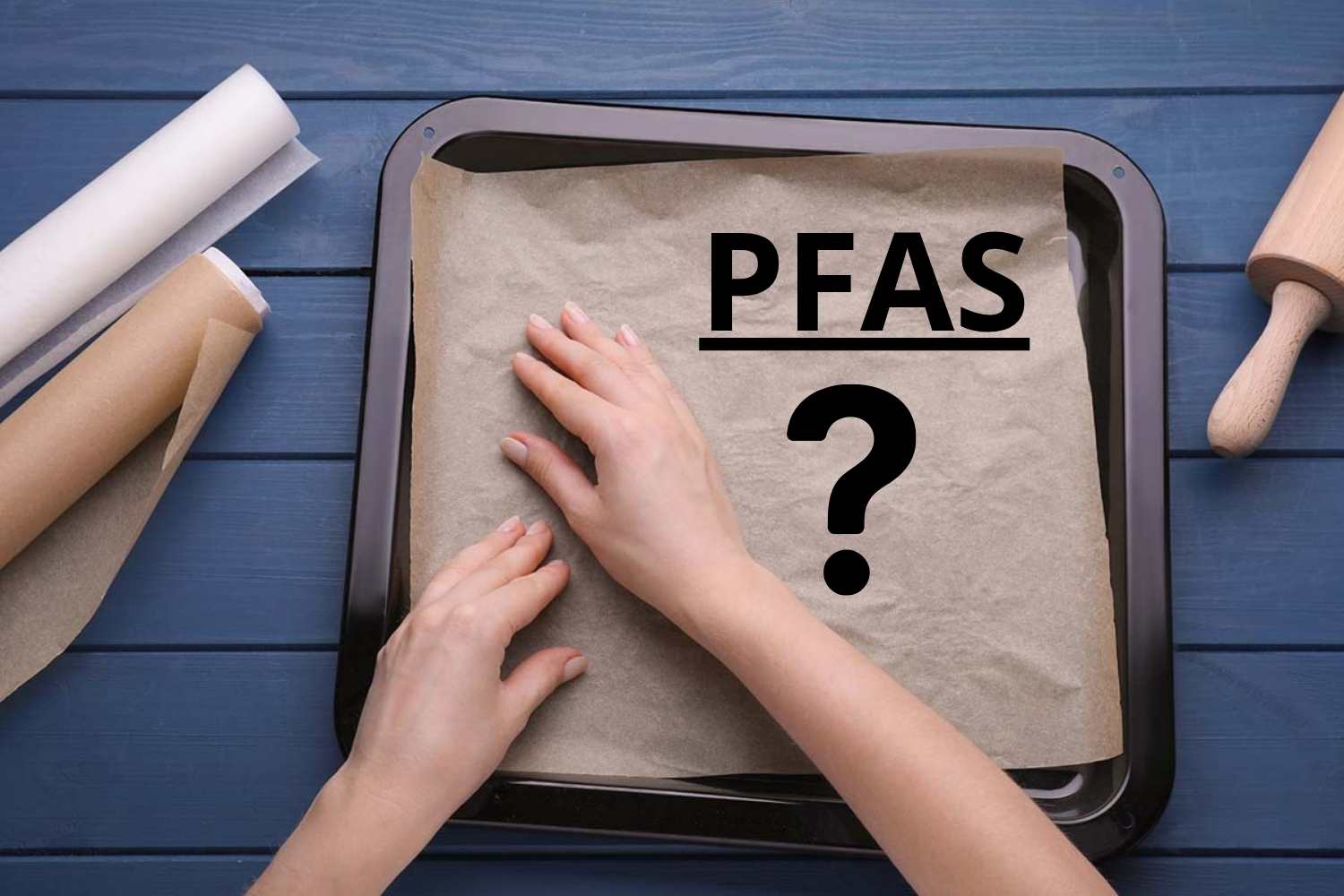
We use it every day to cook vegetables, biscuits or other foods. We are talking about baking paper, a practically inevitable object in our kitchens. Precisely for this reason, the Lifesavera magazine specializing in consumer protection, wanted to verify its safety by conducting a laboratory test on 16 products from different brands.
What did he discover? The widespread presence of perfluoroalkyl substances, better known as PFAS.
PFAS (per- and polyfluoroalkyl substances) are a vast family of chemical compounds, there are around ten thousand of them, used for decades in industry for their extraordinary properties: they resist heat, water, grease and abrasion. This is why we find them in non-stick pans, in food packaging, in waterproof fabrics, in fire-fighting foams, in cosmetics.
The problem is that these compounds do not break down in nature, hence the nickname forever chemicalspolluting forever. They accumulate in the environment, in aquifers, in soils and, through the food chain, in the tissues of living organisms, including the human body. Numerous substances belonging to this group have been classified by international scientific bodies as endocrine disruptors, neurotoxic or carcinogenic for humans.
At the European regulatory level, the response has arrived in a progressive form. Some substances, such as PFOA, perfluorooctanoic acid, have already been banned in the European Union since 2020. While EU regulation 2025/40, specifically aimed at packaging and materials in contact with food, will introduce new binding limits starting from 12 August 2026: 50 milligrams per kilogram for total fluorine and 250 micrograms per kilogram for the sum of PFAS targeted (the approximately fifty substances considered most dangerous to human health).
As Il Salvagente reminds us, baking paper sheets are generally made of silicone-coated cellulose fiber or parchment-type paper treated with chemicals such as sulfuric acid. Whoever produces or markets them must provide a declaration of conformity, certifying that the product contains only substances permitted by food legislation. However, what does not appear on the labels is the possible presence of PFAS, traces of which are actually found in many sheets of baking paper.
The test
Il Salvagente purchased and had the baking papers of 16 brands analyzed in the laboratory, including private labels from large-scale retail trade and national brands: Domopak, House, Ottimo, Arkalia Casa (Pam), Cuki, Home&Style (Todis), Lidl, Sistema Casa (Eurospin), Frio, Casa Coop, Esselunga, Conad, Selex, Ecor, Carrefour and Cuki natural baking paper.
The analyzes followed two complementary approaches. The first, total and organic fluoride screening, measures how much “fluorinated substance” is present in the material overall, including molecules that more specific tests do not identify. This method does not identify individual PFAS, but it does provide insight into the potential risk of migration: the more total fluoride there is, the more may pass into the food during cooking. The second instead aimed at identifying approximately fifty known PFAS, those for which regulatory references already exist.
In 14 out of 16 samples, traces of at least one perfluoroalkyl substance were detected. Only Carrefour and Domopak showed values below the laboratory’s quantification limits, effectively resulting in them being “undetectable”.
There are three substances identified: PFBA (perfluorobutanoic acid), the main degradation product of PFOA, already banned in Europe. It is among the 24 PFAS restricted for drinking water protection, is extremely mobile in the environment and tends to infiltrate groundwater easily. Animal studies associate it with changes in the thyroid and liver, as well as effects on development and blood composition.
FTOH 6:2 (fluorotelomer alcohol) is instead a volatile substance, widespread in the air, which can degrade into other more persistent PFAS. In particular, it turns into perfluorohexanoic acid (PFHxA), already banned by the EU in several sectors, including materials in contact with food.
Finally, FTOH 8:2 (fluorotelomeric alcohol) is a direct precursor of PFOA, classified by the IARC as carcinogenic to humans. It is also volatile and capable of biodegrading into persistent compounds found in human blood and wildlife.
Flavored Lidl baking paper was the most loaded, with all three PFAS present at the same time.
It should also be noted that the two brands that leverage a “natural” or ecological positioning – Ecor and Cuki natural baking paper – did not stand out positively compared to the others with regards to the PFAS found.
The values remain below the limits
The good news – and it is important to say this clearly – is that none of the 16 samples exceeded the thresholds set by EU Regulation 2025/40, both for total fluoride and for the sum of targeted PFAS. All samples are therefore formally compliant with the legislation which will come into force next August.
But the issue, as often happens with PFAS and other chemicals, is not so much about the individual product as it is about the bigger picture. The risk is not so much the direct migration of these substances into the food during cooking – which from analyzes appears limited – but rather the cumulative exposure. In fact, we live surrounded by PFAS, present in dozens of everyday objects, and baking paper represents a further source to add to the count.
Then there is the environmental issue. When these materials are disposed of or recycled, the PFAS they contain can escape into the environment, contributing to the contamination of soil, water and air. A problem that does not end with the act of baking a dessert, but extends over time and space.
To find out in detail how each of the 16 brands analyzed performed, with the precise PFAS values detected for each sample, you can consult the comparative ranking, published in the March 2026 issue of Salvagente.
