
There is a paradox that says a lot about us: we invest billions to search for life in space, on very distant planets, and at the same time we struggle to really look at what lives here, under our feet. Or rather, under our waves. Because the ocean is not just “sea”: it is a world apart, deep, complex, fragile. And often ignored.
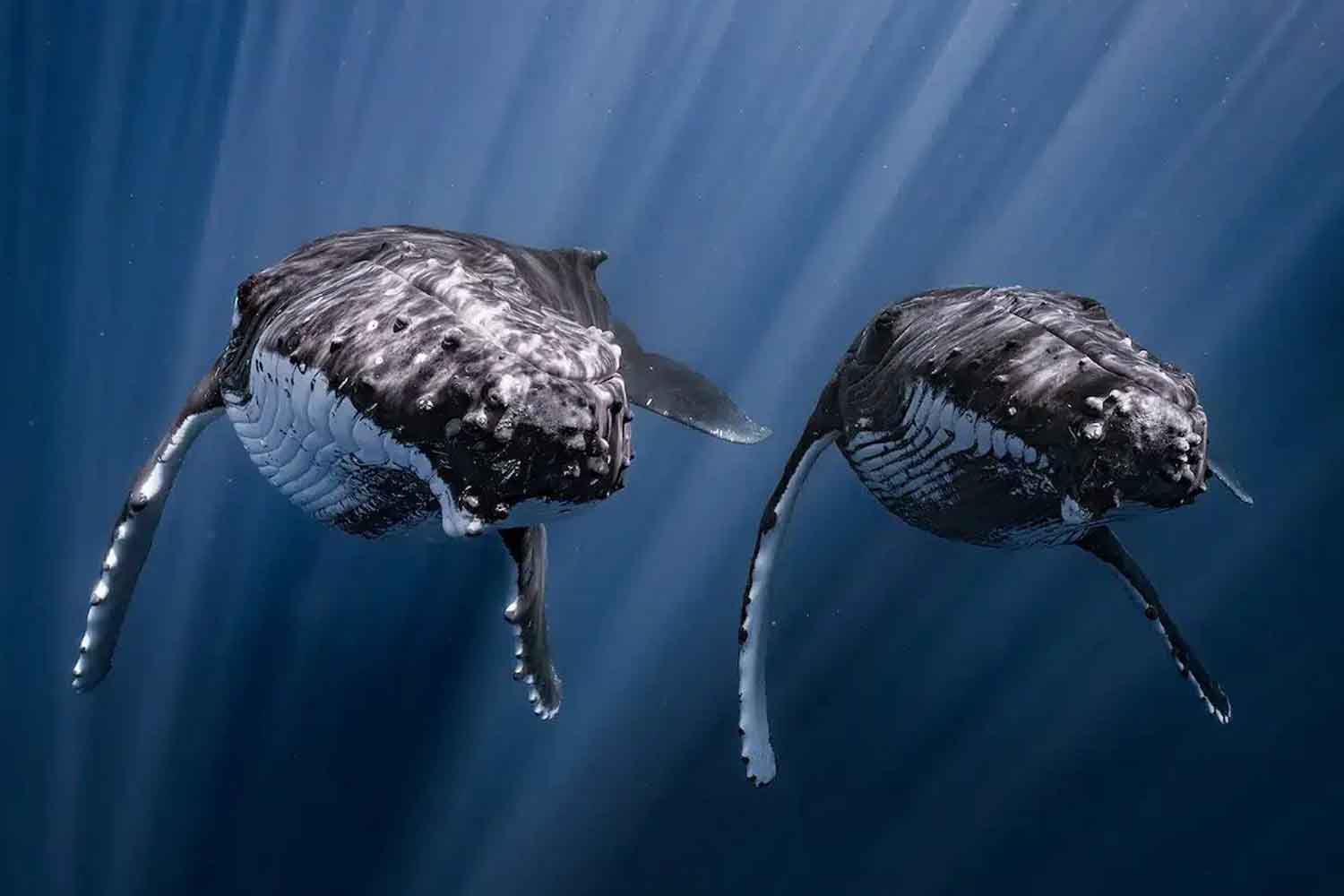
Some extraordinary images arrive to remind us of this, awarded in the most important international underwater photography competitions of 2025. Among all, one in particular has captured global attention: two humpback whales swimming perfectly synchronized, as if they were mirroring each other.
An image, two whales and a bond that goes beyond words
The shot comes from the crystal clear waters of Mo’orea, in French Polynesia, and earned photographer Yuka Takahashi the title of Grand Master 2025 at the 2025 Dive Photo Guide Masters Underwater Imaging Competition, as well as gold in the wide-angle category.
Every year humpback whales from the Southern Hemisphere come to these warm waters to rest and raise their young. But this is not the usual “postcard” photo. The two whales advance side by side, replicating the same movements with almost touching precision. A behavior that biologists call mirroring and which indicates a deep social bond. Looking at them, it comes naturally to think: it’s not just swimming. It’s communication, intimacy.
From the darkest abysses to the giants of the sea
While Takahashi chased the giants in sunlight, other photographers worked in total darkness. Like Steven Kovacs, overall winner of the Ocean Art Underwater Photography Competition.
His photo, Tired Fishportrays an anglerfish larva, almost transparent, suspended in thin air. He took it during one blackwater dive off the coast of Kumejima: night dives in the open sea, where we witness the largest daily migration on the planet, that of creatures from the deep that come to the surface to feed.
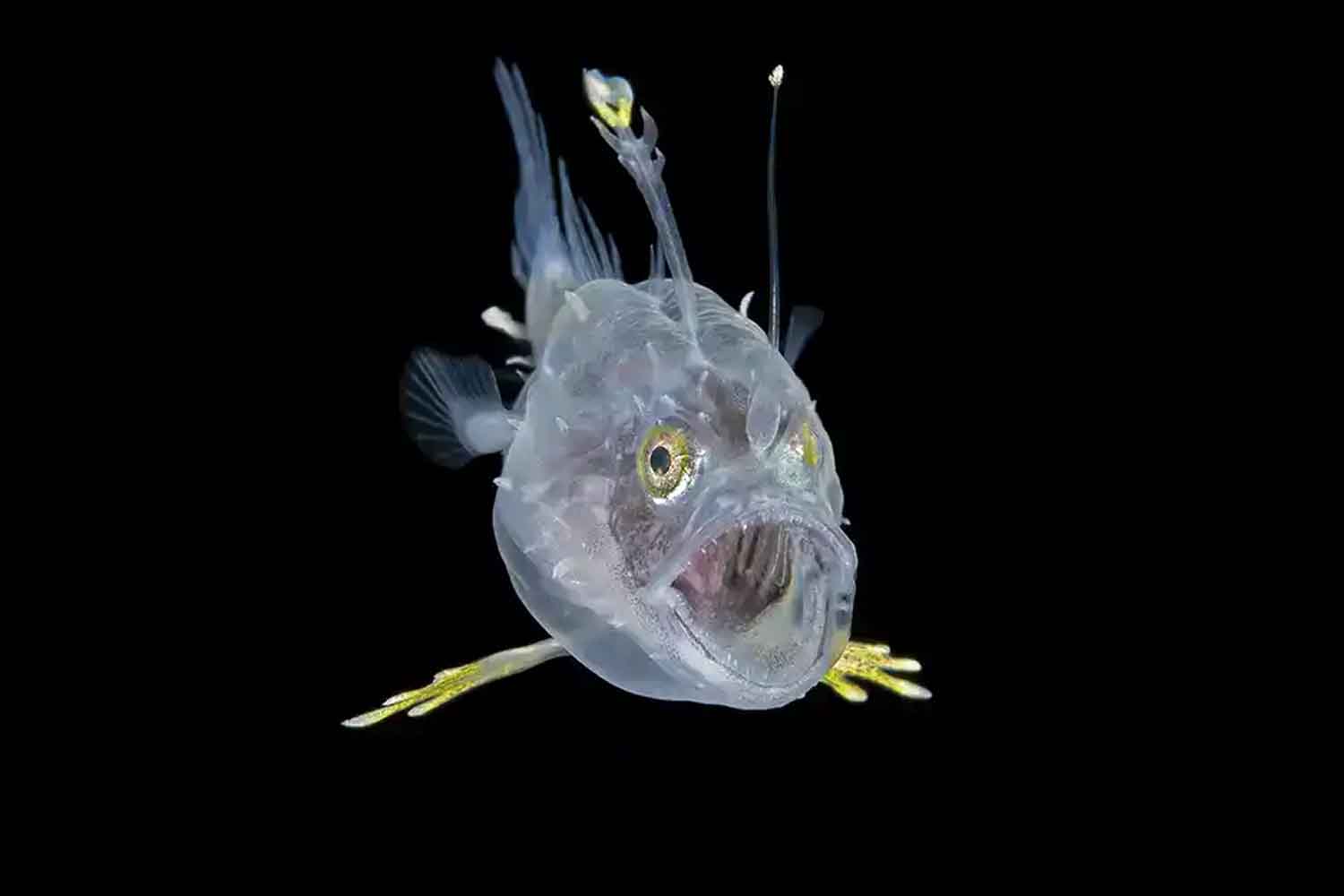
It is not a “beautiful” image in the classical sense. It is hypnotic, disturbing, fragile. And it is also very precious from a scientific point of view: the larval stages of deep-sea fish are almost impossible to study without destroying them, and these photographs allow researchers to observe what would otherwise remain invisible.
The ocean made of small gestures, rare mutations and silent work
Among the awarded images there are some that describe a less spectacular, but fundamental ocean. Like the shot by Francesco Visintin, which documents a very rare freshwater blue shrimp. A genetic anomaly which, in nature, can turn into a condemnation: that bright color makes the animal visible to predators. Photographing it means telling the story of biodiversity even in its errors, in its deviations.
View this post on Instagram
Some images look ahead, to the future of the ocean. There is the pregnant pygmy seahorse photographed by Wojtek Męczyński, perfectly camouflaged among the corals.
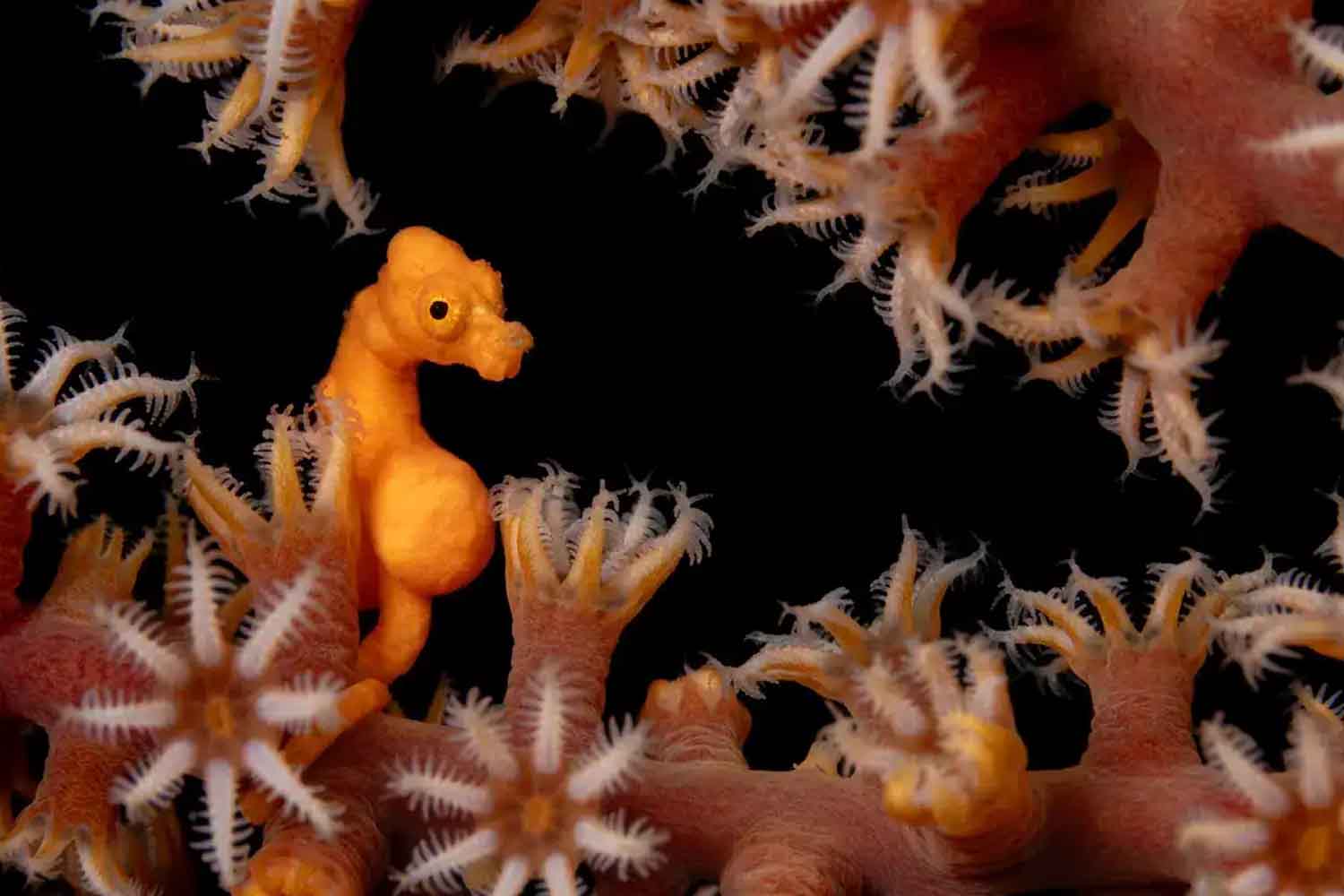
They are images that speak of birth, but also of precarious balance. Because today every natural cycle is under pressure.
The other side of the sea: ghost nets and wounds of the Anthropocene
Not all photos are good for the heart. One of the strongest is that of James Ferrara, winner in the Conservation category. The shot shows an olive ridley turtle trapped in a ghost net, a residue of industrial fishing. He has already lost a fin, probably in a previous accident.
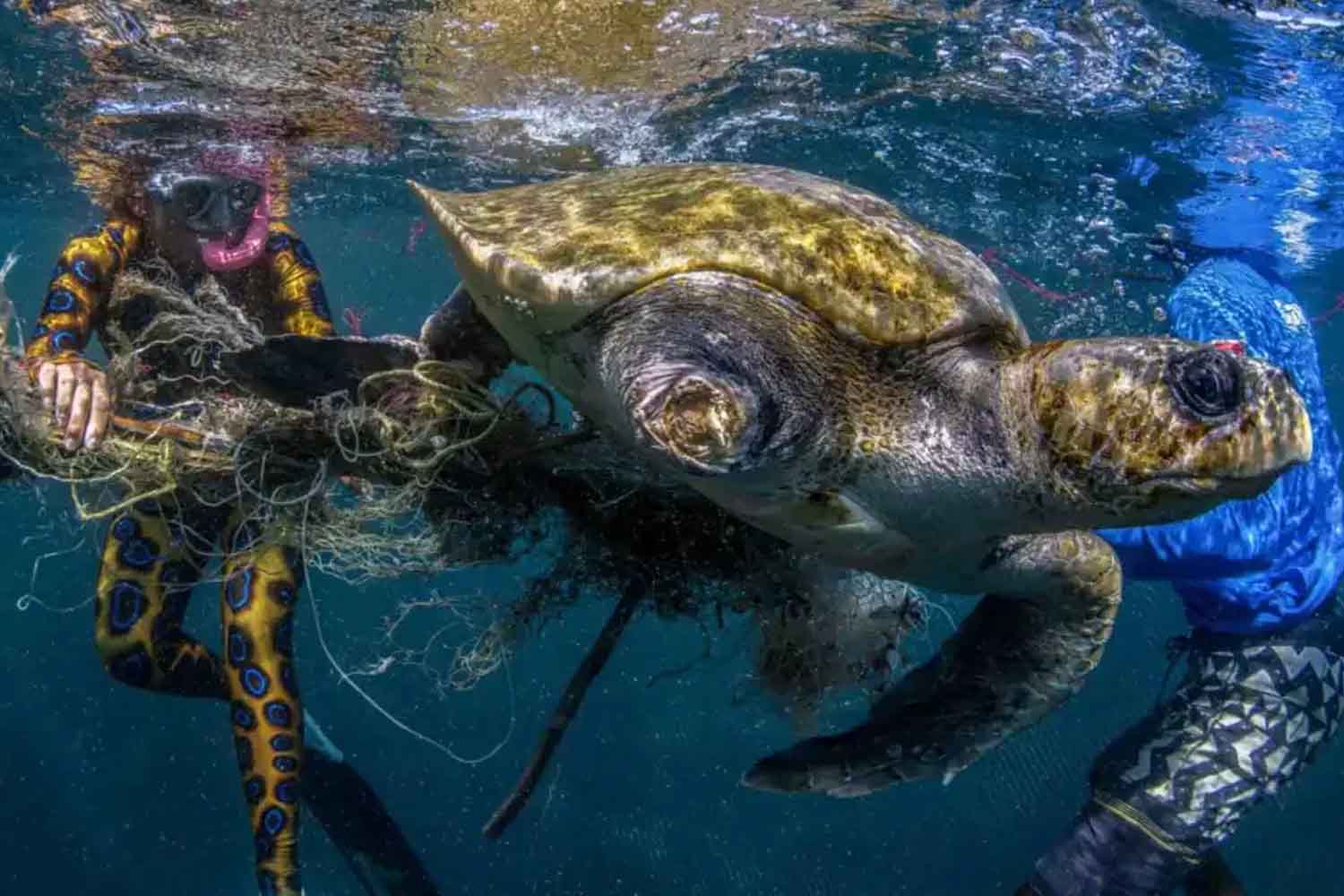
The so-called ghost gear they continue to kill for decades, even when no one uses them anymore. For this reason, the Dive Photo Guide has decided to donate 15% of the participation fees to marine protection projects. A concrete gesture, not decisive, but necessary.
From synchronized humpback whales to the fragility of a transparent larva, these photographs remind us of something simple and uncomfortable: the ocean is not a backdrop. It is a living, intelligent, interconnected system. And he’s trying to talk to us.
Maybe we should just stop for a moment. And learn to listen.
You might also be interested in:
