
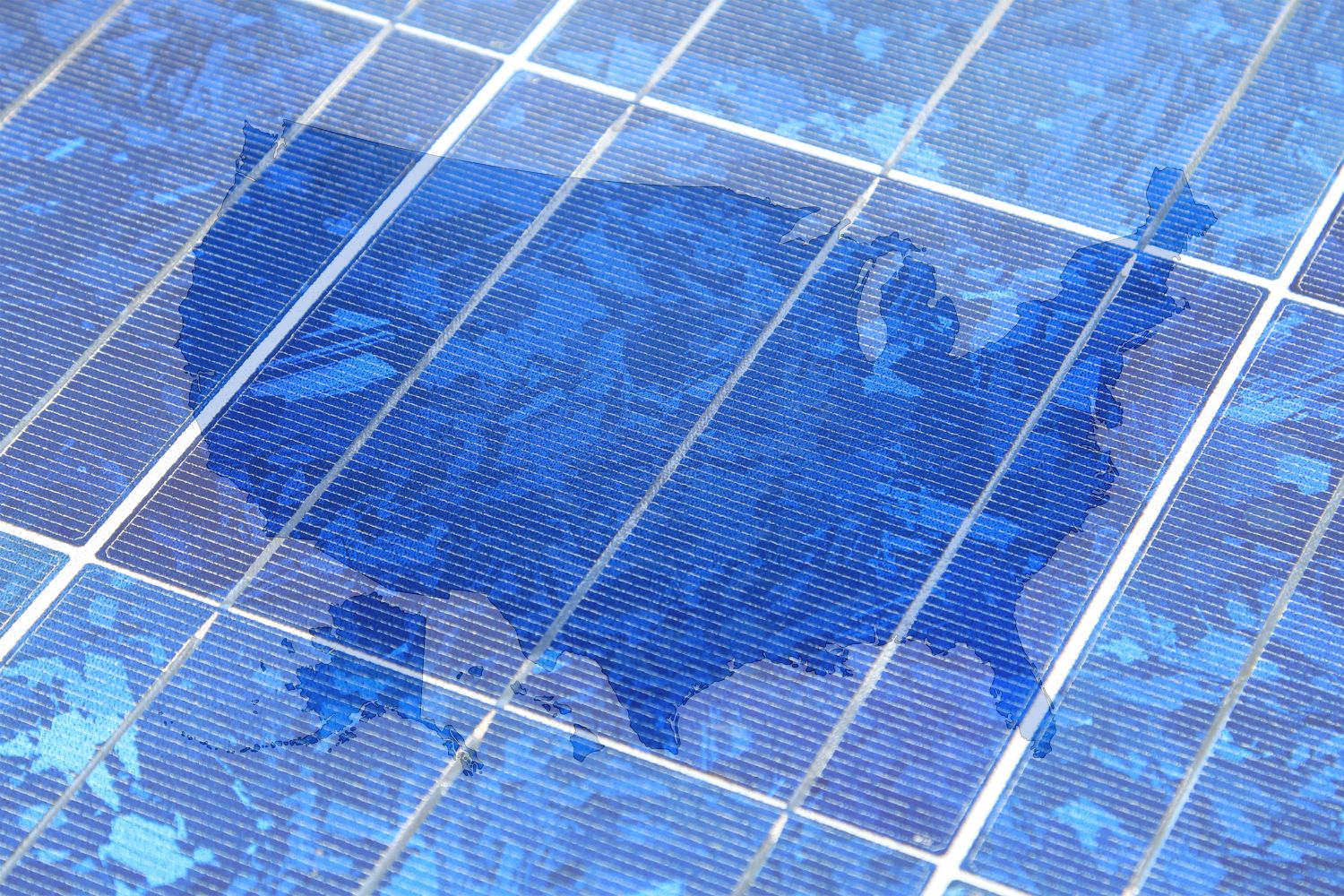
The United States government is actually blocking the import of solar panels from Southeast Asian countries.
In particular, Vietnam, Cambodia, Malaysia and Thailand are the producers for which it was deemed appropriate to implement anti -dumping policies, since they are accused of damaging the local industry by selling products at prices lower than normal market value.
The new rates
Preliminary rates had already been announced last December, but a few days ago Italy – the International Trade Administration, the main US government agency to support the American companies that compete on the global market – has published new increases, following the investigations on the photovoltaic cells from the four countries mentioned above.
The Department of Commerce of the United States, following “transparent investigative proceedings” – as reported by the Aita website – has established that the imports of solar cells from Cambodia, Malaysia, Thailand and Vietnam receive subsidies from the Chinese government. Therefore, the US authorities have decided to impose rates equivalent to the subsidies received: it ranges from almost the 652% for Cambodiaal 34.5% for Malaysiawith the Thailand at 375% and the Vietnam at 395%.
“The Department of Commerce is asking China for its subsidies, disbursed through other countries, which damage the American industry. Sleal commercial practices and distorts of the market against America have no place to hide.”
The Secretary of Commerce declared Howard Lutnick.
The case of Cambodian companies
Cambodia is the country affected by the highest customs tariff, with two companies in the Solar Sector particularly involved: Solar long pv tech And Hounen Solar. According to what reported by World Energy News, these companies have communicated to the US authorities last October that they could no longer allocate resources to the anti -dumping investigation. To this decision, the US lawyers replied, warning that this could have involved heavy penalties.
The warning proved to be founded: both companies saw their tariff rates ascertained dramatically, as made known a few days ago by the Ministry of Cambodia Commerce. According to the results published, not only the companies mentioned are subject toProvisional rate of 3.521%but they would also be involved Jintek And ISC CAMBODIA.
Facade taxes, but prohibitions in fact
Beyond the Cambodian case, imposing such high duties does not equate to tax products in contrast to dumping: it is rather a ban on masked import. Chinese companies are diverting most of production to Southeast Asian countries to get around existing duties.
If on the one hand these duties could give a push to the US solar industry, on the other they involve significant side effects. One of the main falls on citizens: the increase in costs for the installation of solar systems. Families, businesses and operators in the sector will find themselves paying more for panels and components. It is undeniable that this can slow down the production of solar energy and curb the energy transition.
