
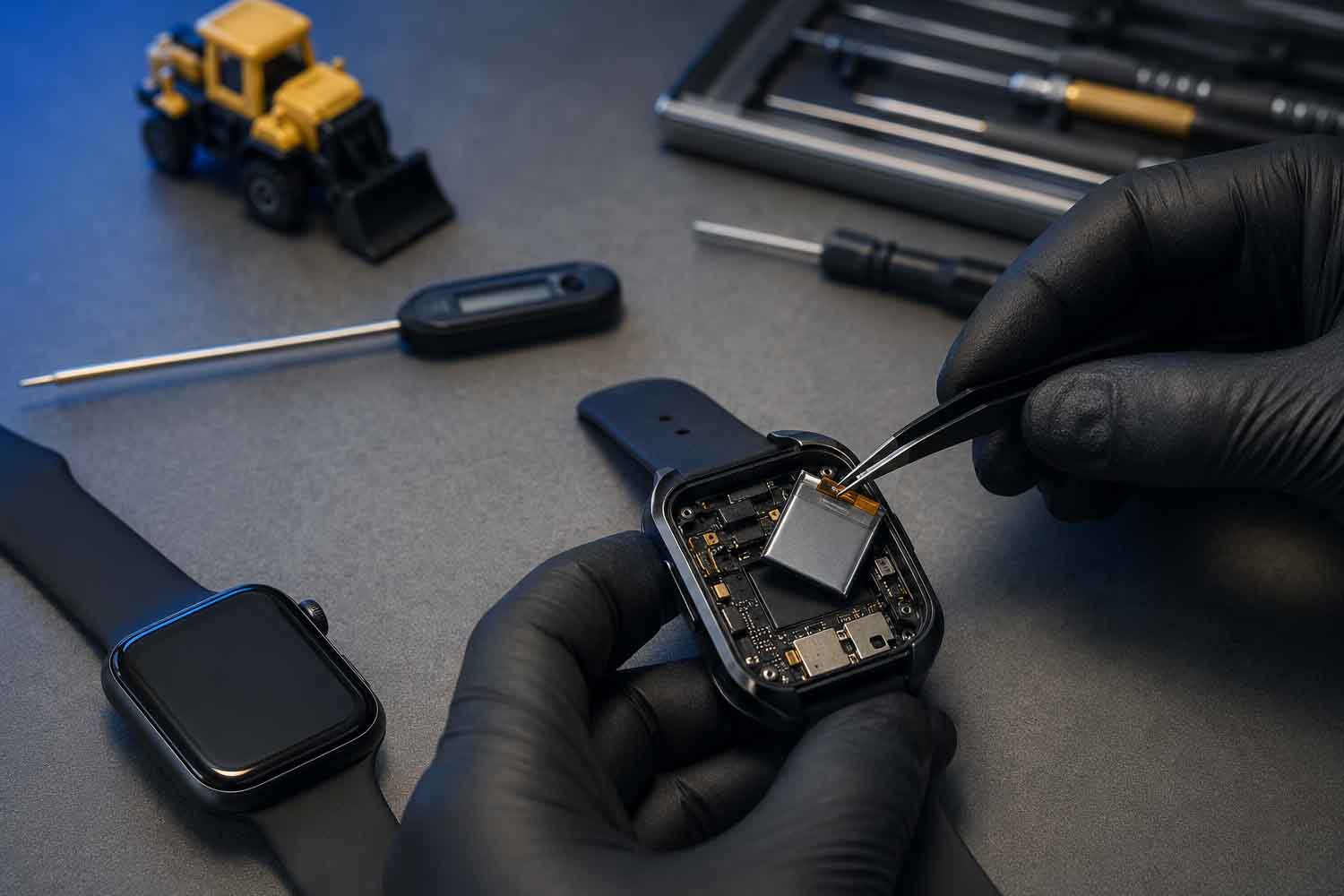
We all know the scene: a battery a few centimeters old stops holding a charge and takes with it a still functioning device. From 18 February 2027, the European Regulation on batteries should break this chain: anyone who places a product on the market, smartphones and tablets first and foremost, will have to ensure that the portable battery can be easily removed and replaced by consumers themselves.
The obligation has yet to come into force. The first exceptions, however, are already ready. On 14 July 2026, the European Commission adopted the first delegated regulation which adds six product categories to exceptions. In the lead are smartwatches and fitness trackers, followed by electric toys, kitchen thermometer probes and decidedly less domestic devices.
The calendar is quite eloquent: rule in 2027, exceptions in 2026. The battery, however, will have to continue to be able to be changed. For products eligible for the exception, the intervention may be reserved for a independent professional. Who puts their hands inside the device changes, not the fate of the device itself.
It’s a substantial difference. The regulation was created to extend the life of products and facilitate the collection of used batteries, including small lithium batteries which, when they end up still hidden inside the devices, can cause fires in treatment plants. Better sealing the smartwatch and then delivering it whole to the shredder would be a rather creative solution.
The smartwatch can remain closed
The word “smartwatch”, alone, does not open the exemption. The text provides precise conditions, although flexible enough to affect a large part of the market. User access to the battery should risk compromising the safety, durability, or water resistance of the device. The wearable must also be too small to allow for safe replacement or depend on a compact, sealed enclosure to protect against dust and shock. The derogation must be necessary for the safety of the user and the product.
This definition may include smartwatches, fitness trackers, smart glasses and electronic devices integrated into clothing or accessories. The Commission’s updated guidance also adds wireless earbuds, heart rate monitors and other wearables designed especially to operate in humid environments.
IP certification is not enough. The manufacturer will need to demonstrate that the device works primarily in the presence of water, is intended to be washed or rinsed, and cannot be redesigned without compromising safety or functionality. A drop drawn on the packaging, at least on paper, should not automatically turn into an exemption.
When the conditions are respected, the battery may remain inaccessible to the owner. However, it must be reachable by a repairer with technical skills who operates on the market. The standard therefore does not necessarily deliver the device to the official assistance center. The independence of the technician is one of the few screws that Brussels has chosen not to leave to the manufacturer.
The other five side doors
Electric toys with rechargeable batteries get a temporary exemption, valid until July 31, 2030. Again, this does not apply to any toy that charges with a cable: the nature and size of the toy must make it necessary to prevent the child from reaching the battery. From 1 August 2030, the new European rules on toy safety will come into force, with specific provisions for batteries small enough to be swallowed.
From games we move on to wireless thermometer probes inserted into food during preparation. If the opening intended for replacement damages the seal, battery chemicals could end up directly in your food. Here the closed casing has a slightly more substantial argument than the tapered line of the product.
The fourth category includes equipment subject to the ATEX directive, designed to work in potentially explosive atmospheres: motors, pumps, sensors and industrial forklifts. A poorly removed battery in these environments can produce less metaphorical consequences than a smartwatch that turns off in the middle of the day.
This is followed by wearable systems that administer medicines subcutaneously. An incorrect intervention could alter its functioning and the dose delivered. The list ends with telematic devices installed on the roof of agricultural or construction machinery, exposed to vibrations, water and dust and normally entrusted to trained personnel.
The requests presented to the Commission were many more. The preparatory technical report contains 81, some referring to multiple products. Six categories are included in the act. Other invitations will be published periodically, so the list can grow while the general obligation is still waiting its turn.
A replaceable battery, without going back to the old cover
The regulation does not require the return of the battery that came out by lifting the cover with a fingernail. From 2027 the user will be able to use normal commercially available instruments. Any special tools must be provided free of charge with the product. Glue to heat, solvents and proprietary tools should instead go out of the picture. A battery that requires a heat gun and a crash course in electronic microsurgery has a hard time calling itself “easily removable.”
The spare part may be original or compatible and the software must not prevent its installation. The systems of parts pairingwhich associate a component with a single device and limit its functions after replacement, cannot be used to block a compatible battery. The manufacturer may warn that the spare part is not original; you won’t be able to punish it by turning off some function.
Spare batteries must remain available for at least five years after the last unit of the model was placed on the marketat a reasonable and non-discriminatory price. Without a spare part, the technical possibility of opening the product is more useful to the instruction manual than to the owner.
Smartphones and tablets already follow a specific track. From 20 June 2025, the European Regulation on eco-design applies, which requires replacement by people with no experience or by unskilled technicians, depending on the durability characteristics of the device. For these products, spare parts must remain available for at least seven years from the end of sale of the model. In short, consumer electronics will not all arrive on the same starting line in February 2027.
The exemptions are not yet law
The act was adopted by the Commission and now passes to the scrutiny of the European Parliament and the Council. If neither institution objects, it will be published in the Official Journal of the European Union and will enter into force twenty days later. To say today that all smartwatches are already exempt would be twice as premature. The delegated regulation is not yet operational and the exception for wearables depends on the technical and safety conditions foreseen by the text.
From 2027 the battery should no longer decide by itself when a product dies. In the case of smartwatches, the screwdriver will pass from the owner’s hands to those of the technician. However, there must be a spare part, an independent repairer and that “reasonable price” promised by the regulation. If one is missing, the battery will remain replaceable especially in the Official Gazette.
