
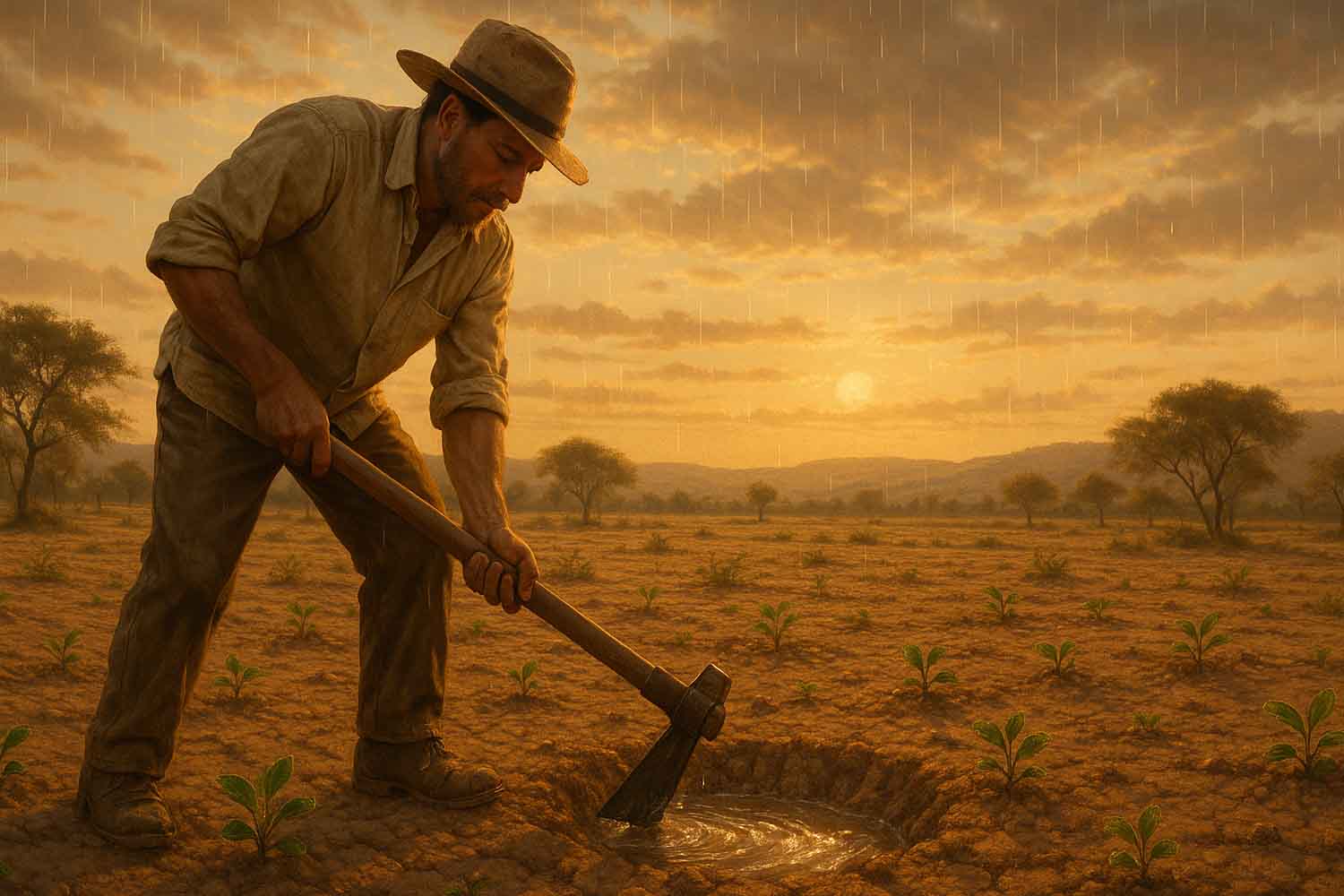
In a time when climate changes make themselves feel strongly and the drought advances inexorable in many areas of the planet, there are those who look to the past to find concrete solutions. Plant rainwater It is not only a poetic gesture, but a real water conservation technique that has its roots in ancient practices, capable today of offering real answers to environmental emergencies.
Read also: these Peruvian engineer sisters “take care of” water, reviving ancient and sacred Andine techniques
It is a simple but brilliant method, which consists of dig small basins in the ground To welcome rainwater, favoring infiltration and conservation in the subsoil. A natural, economic solution, accessible to everyone, which can make the difference in the regions most affected by desertification.
How rain water is “planting”: basins, basins and micro-stures that retain the humidity where you need
The idea at the base is as simple as it is powerful: intervene on the landscape by modeling it In order for the rain to flow away, but be retained and “cultivated” in the ground. This happens through hand-dug micro-abaciniknown in India as Johadswhich slow down the outflow of rainwater, allowing them to slowly penetrate the ground and recharge the aquifers.
Among the maximum promoters of this technique there is Rajendra Singhknown as the “Waterman of India”, which in Rajasthan has contributed to bringing back over 10,000 disappeared waterways, simply restoring value to this ancient practice. His actions have transformed semi-arid areas into fertile areas, returning dignity and possibility to entire rural communities.
But it’s not just a water issue: planting rainwater also helps biodiversitypreventing the erosion of the soil and promoting the natural growth of plants and trees. The earth, retaining humidity, becomes more alive, richer, more fertile.
: Smiles of the earth: so they are fighting desertification with simple “holes” in the ground (incredible results)
A sustainable response to the climatic crisis: the return to the roots to save our future
Today, while in many regions of the world the collections fail for the lack of water and the ecosystems degrade, plant rainwater returns to being A revolutionary gesturewithin reach of farmers, local communities and simple citizens. In West Africa, for example, farmers use the so -called zaismall holes filled with compost that attract and retain the water, improving the yield of the fields even in the presence of scarce rains.
Even in Latin America and in the Middle East this practice is gaining land: it is a sweet, low impact technologywhich starts from respect for nature and adapts to local climatic conditions.
Faced with a future in which water resources will become more and more precious, Rediscover ancient knowledge can become an act of resistance and care. It is not a question of going back, but of looking forward, with new and aware eyes. Because every drop of water saved today can become life tomorrow.
