
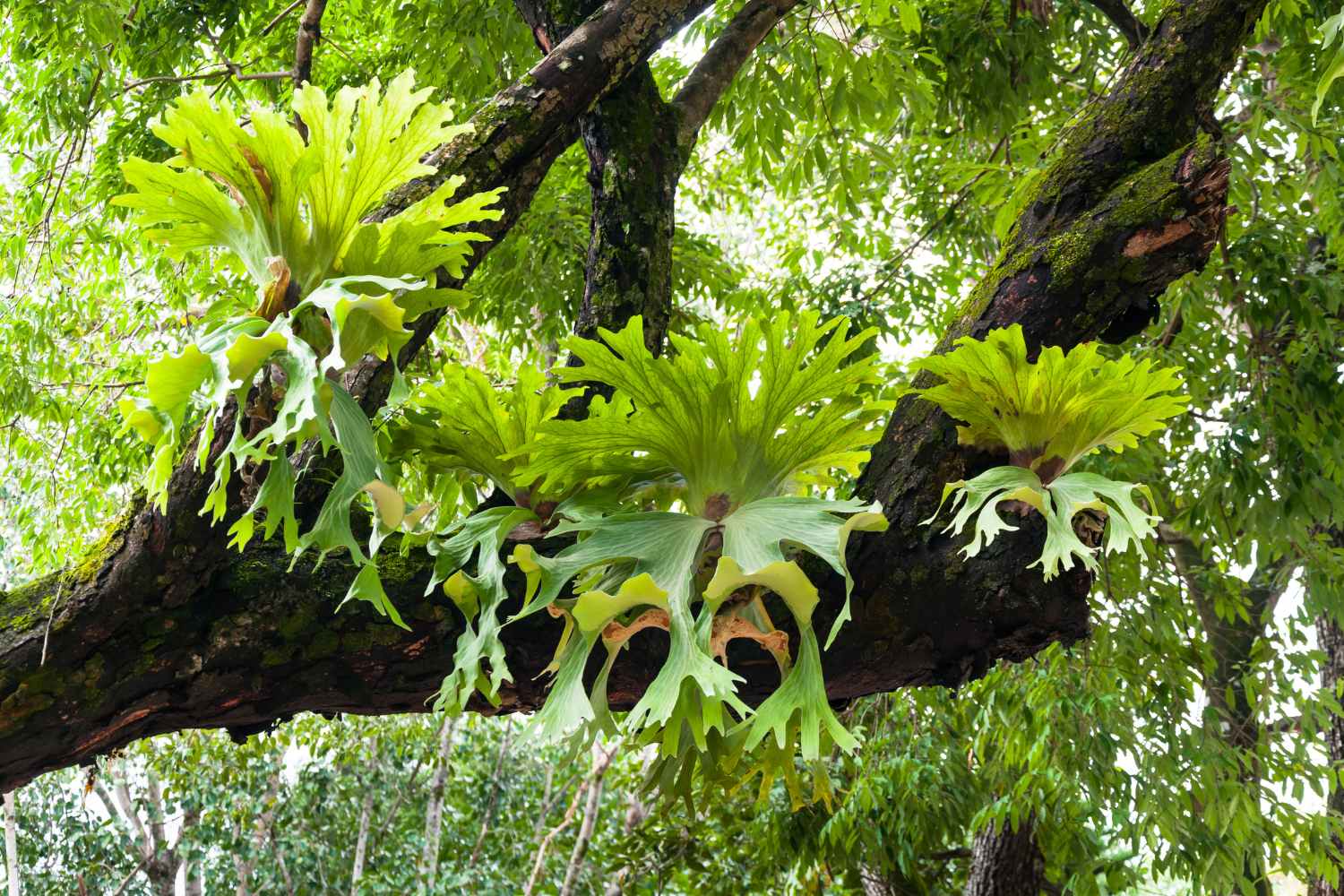
At first glance it might seem like a succulent, but it is not: Platycerium is a fern belonging to the fern family. Polypodiaceae – the same as, among others, the Boston fern – also called staghorn fern due to the bizarre shape of its large leaves. Although it can be grown in the garden, Platycerium is actually perfect for growing at home thanks to its characteristics, because it does not need a large amount of light (in nature, in fact, it grows in the undergrowth), it prefers temperatures between 20 and 22 degrees and cannot tolerate much cold.
The name of the plant itself reveals its peculiarity: Platycerium derives from Greek platis (large) e keras (horn), a clear reference to the lobed leaves that resemble the antler of a deer or elk. Those who observe it for the first time are struck by its unusual appearance: the fleshy and robust leaves could deceive and make people believe that they are, as mentioned at the beginning, in front of a succulent plant.
Description of the Platycerium
The most fascinating characteristic of Platycerium lies in its epiphytic nature, a botanical term that indicates those plants that grow on other plants, without however parasitizing them. In the tropical forests of South America, Africa, south-eastern Asia, Australia and New Guinea, these ferns colonize the forks of large trees, clinging to the branches thanks to a root system that develops from a central rhizome, where they find the small quantity of organic material necessary to survive.
The plant produces two distinct types of leaves, each with a specific function. The basal fronds are sterile, rounded in shape and spongy in consistency, they adhere closely to the support on which the plant grows and form a protective shield for the roots. In some species, the upper edge of these leaves rises, creating a sort of natural cup where rainwater and organic debris collect, which the plant uses as nourishment.
From the base of these protective leaves, fertile fronds develop, the ones that immediately capture attention. Erect or hanging depending on the species, they take on that particular lobed shape which inspired the common name of the plant. They are imposing leaves, dark green in color and opaque in appearance, with a surface covered in light fuzz similar to the skin of a peach, the function of which is to protect the leaves from direct sunlight and help retain humidity.
Temperature and position of the Platycerium
The apartment represents the ideal habitat for the Platycerium. The optimal temperature is around 20°C, perfect for domestic environments. The plant, however, suffers when the thermometer drops below 12°C, so you will have to keep it protected from cold winter drafts. During the summer it can be moved outside, but it is preferable to choose a shaded position, especially in the hottest and sunniest areas of the country.
As far as exposure goes, Platycerium doesn’t require a lot of light. It grows spontaneously in the undergrowth, where the sun’s rays barely filter through the canopy of the foliage, making it the ideal plant for those less bright corners of the house, where other species would struggle to survive. However, in good lighting conditions it gives its best, showing more vigorous and colorful leaves.
Pot and substrate for Platycerium
Contrary to what one might think by looking at the imposing foliage, the Platycerium does not require particularly large pots. Better to opt for a large but shallow container, given that the root system is quite contained. Do you want to take advantage of the splendid effect given by the falling leaves? Use hanging pots!
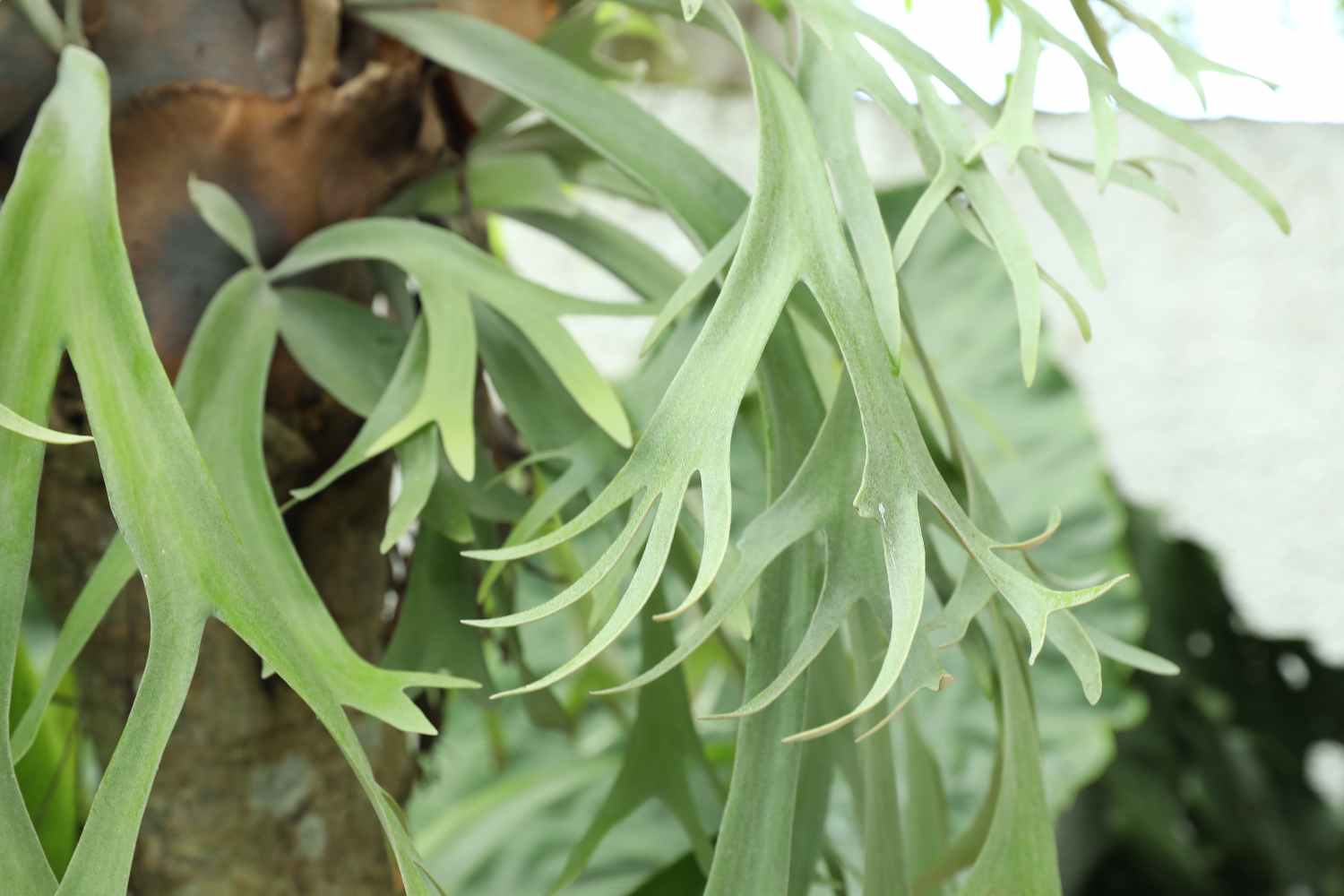
The real challenge lies in balancing the light roots with the considerable weight of the fronds. A gust of wind or a sudden movement could cause the pot to overturn, especially if it is hanging, therefore, to avoid accidents, we suggest fixing the plant to the container with ropes or cable ties, to guarantee the necessary stability.
As for the substrate, forget about universal potting soil. Platycerium needs the same type of compost used for orchids, i.e. a specific mix for epiphytic plants, light and draining. This substrate reproduces the natural conditions in which the plant lives, allowing the roots to breathe and absorb nutrients without water stagnation.
How to water and feed the Platycerium
Watering requires attention and consistency. Coming from tropical forests, Platycerium loves humid and cool environments, and the substrate should always be slightly moistened, never completely dry. The plant survives even short periods of drought, but reacts by folding the leaves on themselves to conserve residual humidity.
Leaves benefit from regular misting, just like orchids. This practice becomes even more important during the sultry summer days, and when the home has heating or air conditioning, which tends to dry the air. For fertilization you can use a liquid fertilizer for green plants, to be diluted in irrigation water every fortnight from March to September.
Beneficial properties of Platycerium
In addition to its undeniable aesthetic value, Platycerium offers concrete benefits for home air quality. Like many broad-leaved plants, our fern contributes to the purification of closed environments, absorbing pollutants and keeping the air fresh and clean. The ability to improve the quality of the atmosphere is combined with the natural function of regulating humidity levels, a particularly useful feature in spaces where the air tends to become dry due to heating or air conditioning.
The presence of plants such as Platycerium in domestic environments and offices therefore represents a choice that combines aesthetic pleasure with physical well-being. The broad fronds absorb carbon dioxide and release oxygen through photosynthesis, while the basal leaves create a humid microenvironment that helps maintain the balance of the surrounding air.
Symbolic meaning and traditions linked to the Platycerium
In the language of flowers, the fern represents sincerity, precisely because of its spontaneous and natural way of growing in the woods, and for this reason, since ancient times, it has been associated with concepts of protection, good luck and prosperity.
Platycerium, in particular, takes on special significance in some indigenous cultures. In the areas of Malacca, Malaysia, and Peru, this plant is venerated by local populations who consider it sacred. The staghorn fern grows embracing the bark of some trees which, according to indigenous beliefs, are “Forest Gods” who watch over the fate of travellers, a link between plant and host trees which is interpreted as a symbol of spiritual protection and connection with natural forces.
In many popular traditions it is believed that having a fern at home brings good luck and wards off negative energies. The particular shape and the ability to survive in difficult conditions have made it a symbol of resilience and adaptability, and some cultures also associate it with fertility and rebirth, due to reproduction through spores and the spiral shape of the fronds, which recalls the cycle of life.
