
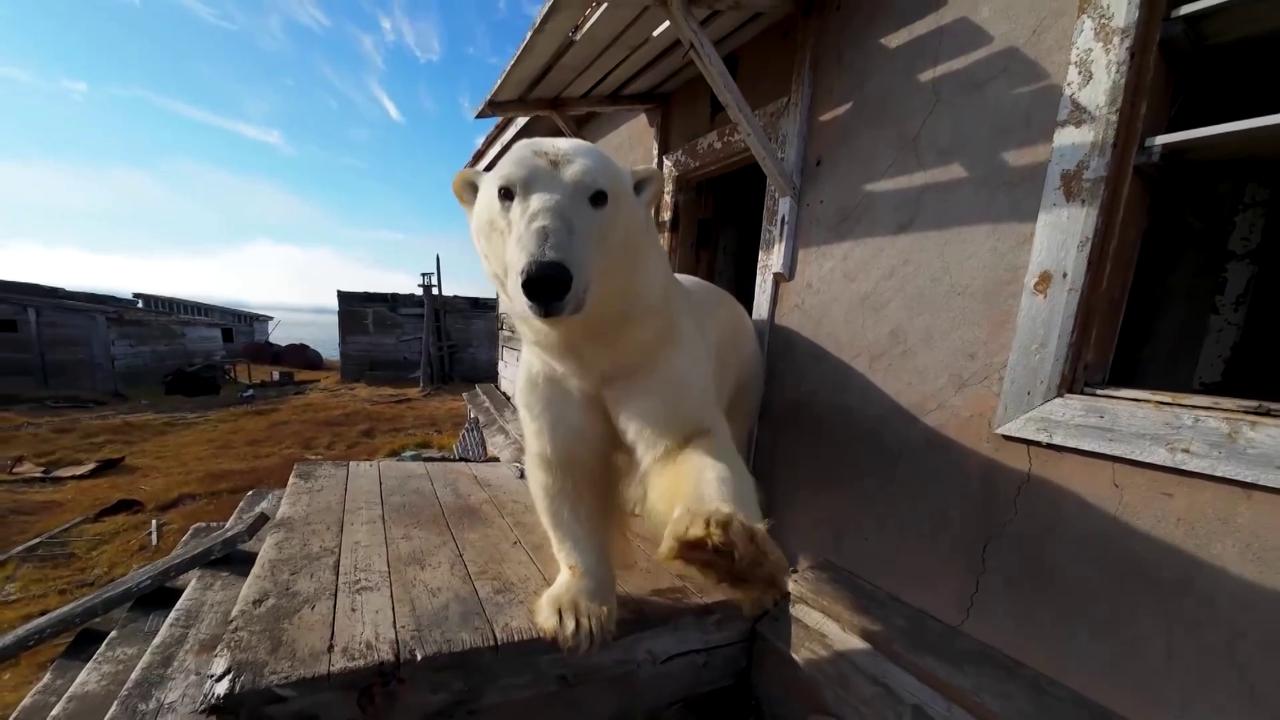
A group of polar bears has transformed an old Soviet meteorological station, now in ruins, into your home. The spectacular images were taken up by Travel Blogger Vadim Makhorov through a drone, on the island of Kolyuchin, in the sea of Chukchi, north-east of Russia. The animals were immortalized as they moved between windows and corridors, someone intrigued by the goal and almost trying to capture it, others more intent on resting shelter from the wind.
Makhorov told Reuters to believe that they take refuge there to find shelter from the wind, rain and cold and that all in all they seem to be well. The settlement, built for scientific monitoring, had been left by scholars after the collapse of the Soviet Union.
View this post on Instagram
A new “home” to survive
The presence of bears in such an unusual place is not accidental. The climatic crisis forces them to look for new shelters and sources of food, given that the Aric ice are reduced to increasing speed. The frozen Banchisa, a natural habitat of the white bear, melts longer every year, removing them access to traditional prey like seals. The old Soviet structures, although decadent, offer minimum protection from atmospheric agents. Thus polar bears adapt, showing an impressive resilience, but also growing vulnerability.
View this post on Instagram
The study on the decline of body weight
A recent study published on Nature Communication And led by the biologist Anthony Pagano monitored twenty polar bears in the bay of Hudson between 2019 and 2022. Thanks to GPS collars with cameras, the researchers observed that, during long periods without ice, the animals tried different strategies: reduce movements, swim in search of seals, predict birds or feed on carrion, algae and berries. However, 19 out of 20 have lost about one kilo a day, while only one managed to fatten thanks to the discovery of a seal carcass.
An increasingly uncertain future
Polar bears need prey rich in fat to survive and alternative solutions are not sufficient. If the periods without ice continue to stretch, this species risks extinction. Their disappearance would have consequences not only for the Arctic ecosystem, but for the entire balance of biodiversity: as great predators, in fact, they keep the population of the seals stable and, in cascade, of many other species. Their fate thus becomes an alarming indicator of the future of the planet.
You may also be interested in:
