
After the abundant Christmas lunches, many find themselves wondering whether skipping dinner or fasting could be a solution to “compensate” for the excesses. The answer is not so simple, and it is important to understand the pros and cons of these choices.
Fasting after Christmas and New Year’s meals: right or wrong?
It’s perfectly normal to eat a lot during Christmas, and it’s equally understandable to feel a little weighed down. However, applying a fasting period immediately after festive meals is not the correct solution.
Not only is fasting not effective for reducing your waistline, but it is not particularly good for our body. While fasting may seem like a “break” for the body, it is often confused with a “detox” process. In reality, instead of relieving the feeling of heaviness, fasting can actually make it worse.
Experts advise not to overdo fasting after Christmas lunches, because it could cause unnecessary stress to the body and because, in reality, we need energy to recover from the holidays. Furthermore, during the holidays, especially if we have not consumed all the necessary nutrients, the body needs to replenish its reserves.
The cons of post-Christmas fasting
There are two main contraindications linked to fasting immediately after Christmas lunches:
- Increased hunger: Skipping meals can lead to an even more intense feeling of hunger, prompting you to consume even larger portions when you start eating again. This behavior only frustrates attempts at control.
- Metabolic and psychological imbalances: Fasting, if not correctly prescribed and monitored by an expert, can cause imbalances in our body. This can lead to metabolic problems and, psychologically, a dysfunctional relationship with food.
The best strategy: balance, not total deprivation
The key to managing post-holiday excesses is balance. It is not necessary to completely deprive yourself of food, but it is advisable to reduce the quantities and make more conscious choices. Avoid exaggerating with fats and sugars, focusing on nutritious, light and easily digestible meals.
Foods such as fruit, vegetables, soups and soups are perfect for supporting digestion and the immune system, without further burdening the body. Light soups and fresh salads are ideal choices for getting back into shape without sacrificing taste.
The real question: why not enjoy Christmas without thinking too much about your figure?
During the holidays, you don’t need to stress yourself by constantly thinking about your figure. It is possible to enjoy the pleasures of food without overdoing it by learning to moderate yourself. A small dessert or a traditional dish must not become an obstacle to your health, you just need to know how to indulge without feeling guilty.
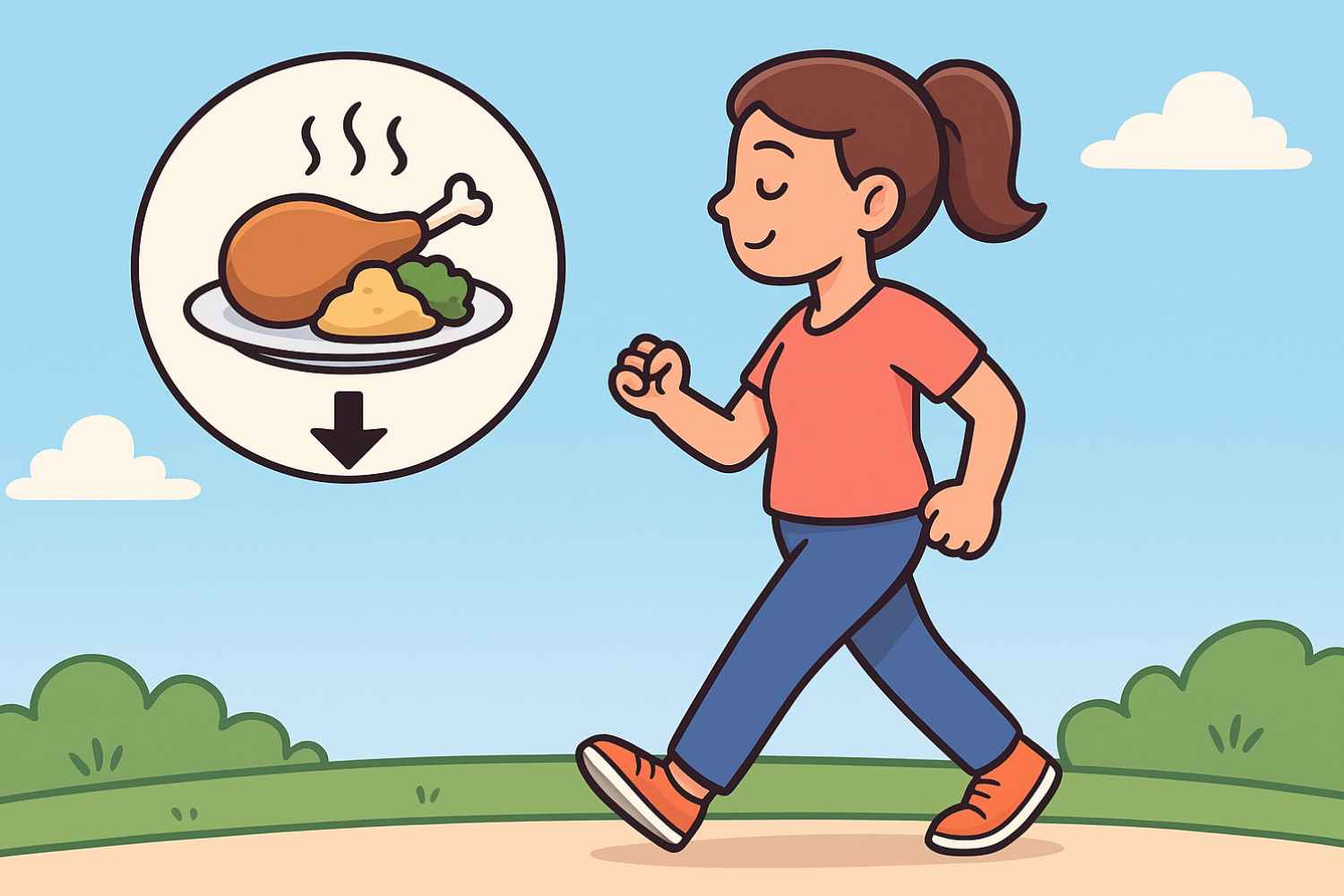
After a large meal, the first instinct is to sink onto the sofa, with a swollen belly and a heavy stomach: the only thing that seems reasonable is to remain still and wait for it to pass. Yet, this widespread habit could be the main cause of the discomfort we try to avoid, because after eating we should move and do light physical activity. Just get up and walk for just ten minutes, and with such a simple gesture it will be possible to reduce abdominal swelling, promote digestion and improve the general state of the body.
Because movement really helps
When we eat, the digestive system gets to work. The stomach produces acids, the intestine contracts rhythmically to push food along the gastrointestinal tract, intestinal bacteria begin to break down nutrients, producing gas as a natural byproduct. This process, called peristalsis, works best with outside help.
Walking stimulates this activity. A study published in Gastroenterology and Hepatology from Bed to Bench showed that walking for 10 to 15 minutes after a meal significantly reduced gastrointestinal discomfort, including bloating and cramping. The mechanism is twofold: on the one hand, movement accelerates intestinal transit, allowing food to pass through the digestive system more quickly. On the other hand, it promotes the expulsion of gases that form naturally during digestion.
Intestinal gas is often the main culprit behind bloating. Research from the University of Barcelona compared patients who suffered from abdominal bloating during rest with those who practiced light physical activity, finding that moderate exercise significantly reduced gas retention in the intestine. In practice, when we sit after eating, gas tends to accumulate. When we walk, the pressure exerted by physical activity and the upright posture facilitate the progression and elimination of gases.
The right time makes the difference
There’s no need to wait hours before moving. Indeed, maximum effectiveness is achieved when the walk begins shortly after finishing eating, ideally within 30 minutes of the meal. This timing allows you to intercept the moment in which the stomach begins to release food into the small intestine, when digestion is still in the initial stages.
Duration also matters, even if you certainly won’t have to face a marathon. Several studies have shown that 30 minutes of moderate-intensity walking started 15 minutes after the start of the meal substantially reduces the post-prandial glucose peak. In reality, even shorter periods are effective: 10-15 minutes are enough to obtain concrete benefits on swelling and the feeling of heaviness.
The intensity must be moderate, therefore you will have to maintain a constant pace, one that allows you to converse without difficulty. Too fast a speed can have the opposite effect: blood is diverted from the digestive system to the muscles, slowing digestion and potentially causing heartburn or cramps.
The effects on blood sugar
The benefit of post-meal walking isn’t limited to bloating. A systematic review published in Sports Medicine highlighted how physical activity, practiced after meals, is capable of reducing glycemic peaks compared to remaining seated. This happens because movement stimulates the uptake of glucose by the muscles, stabilizing blood sugar levels.
For healthy people, this translates to greater energy in the afternoon and reduced post-prandial sleepiness. For those who have problems with insulin resistance or type 2 diabetes, the effect is even more relevant: even just two minutes of light walking can improve the glycemic response.
A strategy accessible to all
The beauty of this approach lies in its simplicity. There’s no need to join a gym, buy expensive equipment or revolutionize your routine. Just get up from your chair and walk around the block, walk the office corridors, even just move around the house for a few minutes. If you work from home you could take advantage of the lunch break for a short walk outdoors, those in the office can take the stairs or take a walk in the car park.
The difference between theory and practice
An Iranian study compared the effectiveness of postprandial walking with the use of prokinetic drugs, demonstrating that physical activity was superior in reducing the sensation of postprandial epigastric fullness. This data is particularly interesting because it underlines how such a simple intervention can be more effective than some pharmacological solutions, without side effects and without costs.
Of course, not all types of physical activity are the same. Walking is certainly the most effective and practicable option, other exercises, such as cycling or stepping, can have positive effects, but require equipment, therefore economic investment, and dedicated spaces. Walking, however, is universally accessible.
When to avoid walking
There are situations where it is best to pay attention. Anyone suffering from gastroesophageal reflux should wait a little longer, because it could worsen the symptoms: in these cases, it is better to wait 10-15 minutes before starting walking, giving the stomach time to start digestion. Even those who have just eaten an exceptionally heavy meal should moderate the intensity, since the goal is to aid digestion, not to overload a body already busy managing a significant digestive load.
A habit to build
The real benefit of post-meal walking emerges with consistency. It is not the single episode that makes the difference, but rather the habit repeated over time. If you begin to integrate this practice into your daily routine, there is a very good chance that you will be able to experience a progressive reduction in bloating, a general improvement in digestion and greater intestinal regularity.
The psychological aspect should not be underestimated. Getting up and moving after lunch breaks the vicious circle of sedentary lifestyle and creates a mental space that separates meal time from the return to work or domestic activities. This helps reduce stress and improve body awareness.
We remind you that in the presence of the aforementioned pathologies you should always consult a specialist, so that you can find the causes and start any therapy.
