
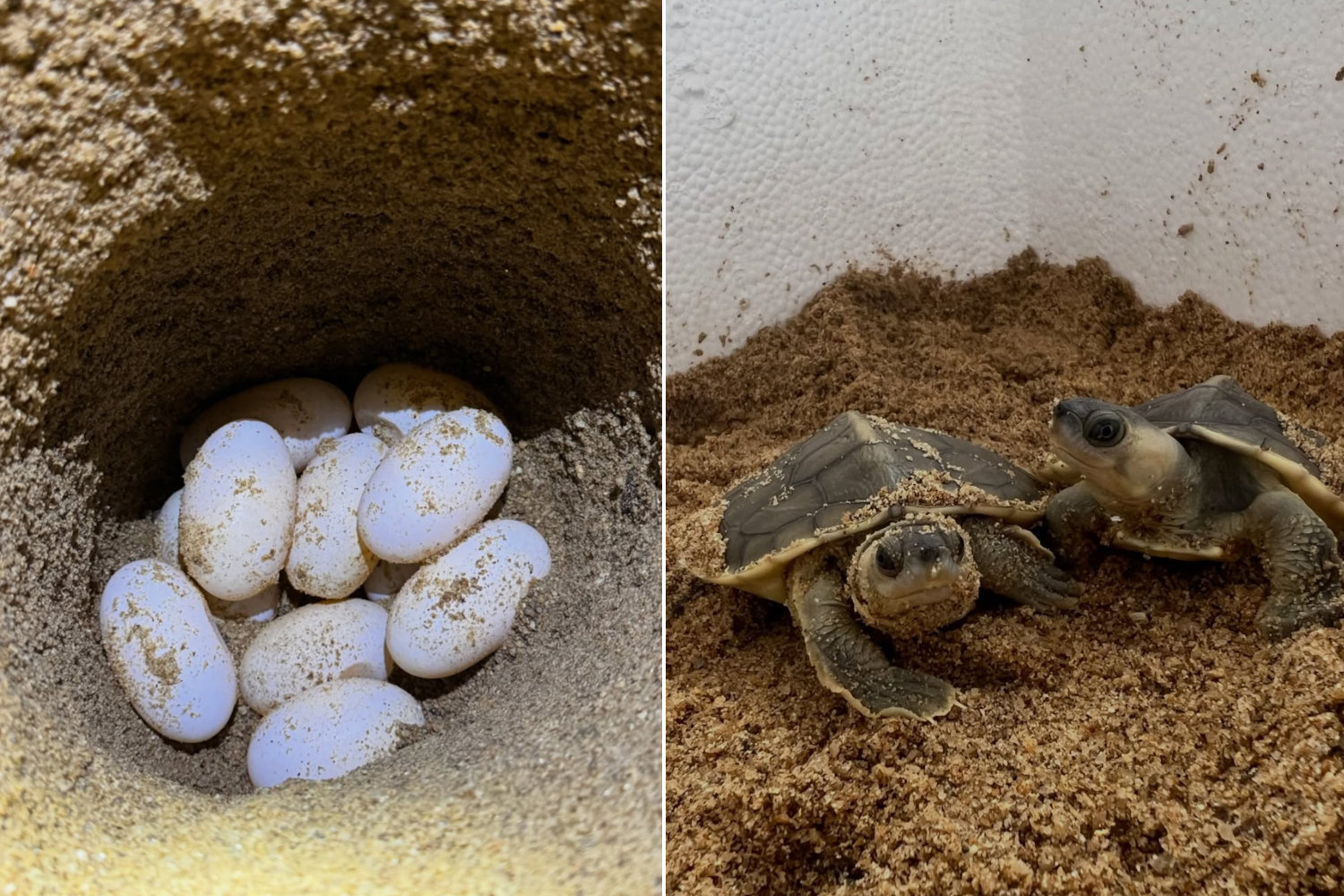
At Kampung Pasir Gajah in Terengganu state in Peninsular Malaysia, Samsul bin Hamid and 12 other wardens – a total of 13 members known in Malay as Geng Tuntung – patrol the coast at night from 10pm to dawn during the January to March nesting season, following tracks left in the sand by the critically endangered southern river turtle (Batagur affinis) listed on the IUCN Red List. and protected since 2010 under the Wildlife Conservation Act.
View this post on Instagram
Samsul bin Hamid once collected eggs as a tradition shared within the family and among neighbors without commercial purpose – with typical clutches of 35 eggs divided into up to 10 people or 3 or 4 eggs each, with a hypothetical value of 8-10 ringgit each (around 2.20 euros), for a total of 24-40 ringgits (5-9 euros), a far cry from the 350-500 ringgits (78-111 euros) of a green turtle brood -, but thanks to the Turtle Conservation Society of Malaysia (TCS), co-founded and led by Chen Pelf Nyok, it has changed its role and lives protection also in light of the Muslim faith. Since 2011, the program has collected and incubated 13,224 eggs and released more than 8,200 young turtles.
View this post on Instagram
The social impact on the territory
When a keeper spots a female Batagur affinis laying along the Kemaman River (where TCS monitors 6 reaches and works with the wildlife department), he waits for nesting to be completed, weighs, measures and microchips the animal before transferring the eggs to the TCS hatchery for 3 months and caring for the hatchlings until reintroduction.
Also working alongside Samsul bin Hamid is 29-year-old Mohd Azriezal bin Wazel, a 2nd generation keeper who officially joined this year after having followed his father Pak Wazel’s work as a child since 2011. As underlined by Chen Pelf Nyok and Natalia Gallego-García of the IUCN’s Turtle and Freshwater Turtle Specialist Group, the central value of these community initiatives lies in the lasting change in behavior local, in education and in the sense of responsibility towards the species.
View this post on Instagram
The danger associated with sand extraction
However, serious threats remain along the Kemaman river: natural predators, such as monitor lizards with a very powerful sense of smell and capable of quickly identifying nests, and above all the extraction of sand for construction. Sandbanks are irreplaceable reproductive infrastructures due to the stability of the banks, sediments, humidity and temperature: since turtles take 15-20 years to reach reproductive maturity and cannot move to another river when the habitat disappears, the lack of legal protection of sandbanks risks frustrating generations of work.
View this post on Instagram
